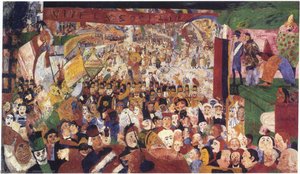
Håndmalet olie på lærred i din valgte størrelse og ramme, udført efter bestilling af vores kunstnere. ( Skift til print Skift til billede)





























Vælg mellem vores forudindstillede størrelser, der matcher kunstværkets originale proportioner.

Du kan indtaste dine egne mål for at passe til en bestemt ramme eller plads. Hvis den valgte størrelse ikke stemmer overens med det originale billedes proportioner, vil vi enten beskære kunstværket eller udvide maleriet med yderligere håndmalede elementer. En digital skitse sendes til din godkendelse, før produktionen påbegyndes.
Bemærk venligst, at forhåndsvisningen på skærmen ikke afspejler den faktiske beskæring eller udvidelse. Kun skitsen vil nøjagtigt vise den endelige komposition.
Selvom specialmål er mulige, anbefaler vi at vælge en dimension fra den foruddefinerede liste for at bevare de originale proportioner.
Levering i hele verden () på 3/4 uger i stedet for de standard 5 uger. (5 august). Ingen kompromiser med kvaliteten.


Le Brise' lame
Størrelse på reproduktion
James Ensor's "Le Brise' lame" – “The Broken Breeze” – is not merely a depiction of the ocean; it’s an immersion into a world brimming with psychological tension and unsettling beauty. Painted in the late 19th century, this large oil on canvas captures a dramatic seascape dominated by crashing waves against jagged rocks, yet it transcends simple naturalism to become a potent exploration of human anxiety and the raw power of nature. Ensor, a pivotal figure bridging Symbolism and Expressionism, masterfully employs color, composition, and subject matter to create an atmosphere thick with unease – a hallmark of his distinctive artistic vision.
Born in Ostend, Belgium, Ensor’s early life was deeply intertwined with the vibrant spectacle of the seaside resort town. His parents operated a souvenir shop overflowing with carnival masks, shells, and exotic objects—a veritable treasure trove that profoundly shaped his artistic sensibility. This fascination with disguise, theatricality, and the unsettling juxtaposition of the familiar and the bizarre would become recurring themes throughout his oeuvre. “Le Brise’ lame” feels directly rooted in this environment; the figures observing the waves are not simply spectators but participants in a silent drama, their postures suggesting both awe and apprehension.
Ensor's technique is immediately striking. He abandons traditional academic realism, opting instead for a deliberately distorted perspective and an intensely chromatic palette. The sky is a swirling vortex of bruised purples, grays, and ominous blues – a visual representation of the turbulent emotions simmering beneath the surface. The waves themselves are rendered with thick, impasto brushstrokes, conveying their immense force and chaotic energy. Notice how he uses contrasting colors—the stark white foam against the dark rocks—to heighten the drama and create a sense of immediacy. The figures in the foreground are painted with a slightly flattened style, almost as if they’re emerging from the canvas itself, further blurring the line between observation and participation.
The composition is deliberately unbalanced, drawing the viewer's eye to the violent collision of water and rock. The placement of the figures—some clustered near the cliff edge, others receding into the distance—creates a sense of spatial ambiguity and reinforces the feeling that we are witnessing an event unfolding beyond our comprehension. The use of diagonals – particularly in the lines of the waves – adds to the dynamism and contributes to the overall impression of instability.
Beyond its visual impact, “Le Brise’ lame” is rich in symbolic meaning. The masks, so central to Ensor's artistic vocabulary, are subtly present in the figures’ expressions – a suggestion that they are concealing their true emotions or perhaps attempting to adopt different roles within this dramatic scene. The skeletons, hinted at by the composition and the overall atmosphere, evoke mortality and the transience of human existence. The painting can be interpreted as an allegory for the anxieties of modernity—the feeling of being overwhelmed by forces beyond our control.
Ensor’s work frequently engaged with social commentary, often using grotesque imagery to expose hypocrisy and challenge conventional values. While “Le Brise’ lame” doesn't explicitly address a specific political issue, it certainly reflects the broader sense of unease and uncertainty that characterized Europe at the turn of the 20th century. The painting speaks to a deeper human experience—the confrontation with nature’s power and the fragility of our own existence.
BuyPopArt offers meticulously crafted, hand-painted reproductions of “Le Brise’ lame,” allowing you to bring this captivating artwork into your home or office. Our skilled artists replicate Ensor’s distinctive style and vibrant palette with exceptional accuracy, ensuring that the emotional impact and visual richness of the original are faithfully preserved. Whether you're an art collector, a design enthusiast, or simply someone seeking a piece of art that sparks conversation and evokes emotion, a BuyPopArt reproduction of “Le Brise’ lame” is a stunning addition to any space.
Explore more works by James Ensor on our website: Le Foudroiement des anges rebelles ou La Chute des anges rebelles.
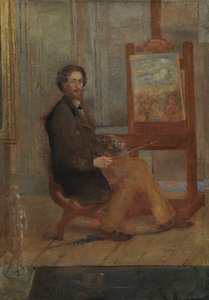
1860 - 1949 , Belgien
Oplev James Abbott McNeill Whistlers 25 mest ikoniske kunstværker. Fordyb dig i æstetismens verden, tonale malerier & harmoniske kompositioner. Find reproduktioner af højeste kvalitet og inspiration til din indretning på BuyPopArt.com.

Oplev Sir Alfred James Munnings' 25 mest ikoniske værker – fra betagende hestemalerier til engelske landskaber. Lær om kunstnerens historie, teknik og stil. Find luksus reproduktioner & inspiration til dit hjem på BuyPopArt.com

Oplev 10 ikoniske mesterværker malet på træ – fra Van Gogh til Monet! Lær historien bag disse klassiske kunstværker og find inspiration til din indretning. Museumskvalitet reproduktioner hos BuyPopArt.com. Udforsk samlingen online!
Oplev de 25 mest ikoniske kunstværker fra Metropolitan Museum of Art i New York! Fra Monet til Van Gogh – lær historierne bag mesterværkerne og find inspiration til dit hjem. Køb museumskvalitets reproduktioner på BuyPopArt.com.
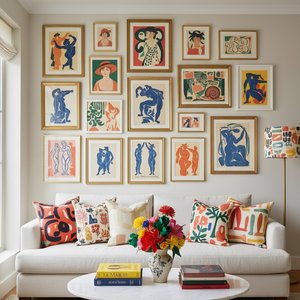
Oplev Henri Matisse' 25 mest ikoniske kunstværker – fra Fauvisme til Paper Cutouts. Lær historien bag farvernes mester og find inspiration til din boligindretning med museumskvalitets reproduktioner på BuyPopArt.com.


Hold dig opdateret med de seneste kunstnyheder, eksklusive tilbud og indretningsideer.
Fortæl os om dit projekt, og vores kunsteksperter vil give dig 3 personlige kunstforslag.
Vi kuraterer 3 valgmuligheder kun til dig – Gratis!


 Se i fuld skala
 Del
Del Del
Del
 Detaljer

 Download
 Lignende værker
 Røntgenundersøgelse
 Diasshow

 Se mere







 Glasmulighed er kun tilgængelig i størrelser under 110 cm