
x

 Oil On CanvasWallArtBaroque
 1630Early Modern
 55.0 x 30.0 cm
 Hermitage Museum
Giclée- eller lærredstryk i museumskvalitet med hurtig produktion og fleksible muligheder for finish. ( Køb håndlavet maleri Køb billede)





























Vælg mellem vores forudindstillede størrelser, der matcher kunstværkets originale proportioner.

Du kan indtaste dine egne mål for at passe til en specifik ramme eller et bestemt område. Hvis den valgte størrelse ikke stemmer overens med det originale billedes proportioner, vil vi enten beskære kunstværket eller udvide billedet med en spejlet eller ensfarvet kant. En digital mockup vil blive sendt til din godkendelse, før produktionen påbegyndes.
Bemærk venligst, at forhåndsvisningen på skærmen ikke afspejler den faktiske beskæring eller udvidelse. Kun mockuppen vil nøjagtigt vise den endelige komposition.
Selvom specialmål er tilgængelige, anbefaler vi at vælge et mål fra den foruddefinerede liste for at bevare de originale proportioner.
Verdensomspændende levering () på 2 uger i stedet for de sædvanlige 4/5 uger. (25 august)


Visitation
Størrelse på reproduktion
In the quiet, profound moments of the Baroque era, few scenes capture the intersection of the earthly and the divine as poignantly as Juan del Castillo’s Visitation. Painted in 1630, this masterpiece serves as a breathtaking window into a sacred biblical encounter, where Mary, upon her return from the Annunciation, meets her cousin Elizabeth. The painting is not merely a depiction of a meeting; it is a choreographed dance of light and shadow that invites the viewer to witness a miracle unfolding in real-time. As one gazes upon the canvas, the dramatic use of chiaroscuro—the intense contrast between deep, velvety shadows and brilliant, focused light—creates an immediate sense of three-dimensional volume, pulling the figures forward from the darkness and into our very presence.
The composition is masterfully centered around the intimate connection between the two women. The artist employs a rich, symbolic color palette to guide the eye and deepen the narrative; Mary is draped in a serene blue cloak, a hue traditionally synonymous with her purity and heavenly grace, which contrasts harmoniously against the warm, golden yellow of Elizabeth’s robe. This interplay of cool and warm tones does more than provide visual balance; it reflects the spiritual tension and joy inherent in their reunion. Even the subtle presence of halos around the figures serves as a quiet, luminous reminder of the sanctity of the moment, marking the divine nature of the children they carry.
Beyond the central figures, Del Castillo weaves a complex tapestry of secondary characters that enrich the painting's theological depth. In the background, the presence of John the Baptist and Zacharias adds layers of prophetic significance to the scene. The inclusion of a small lamb at the feet of the infant John serves as a poignant symbol of future sacrifice, a silent foreshadowing of the Passion that adds a layer of bittersweet gravity to this joyful meeting. The artist’s technical prowess is most evident in his meticulous rendering of textures—from the heavy, tactile folds of the liturgical fabrics to the soft, weathered skin of the elderly Zacharias, who sits in contemplative repose.
For the discerning collector or interior designer, The Visitation offers much more than mere decoration; it provides a focal point of profound emotional and historical weight. The painting’s ability to command attention through its dramatic lighting makes it an ideal centerpiece for spaces that value classical elegance and intellectual depth. Whether placed in a curated gallery setting or as a sophisticated accent in a traditional study, this reproduction brings with it the spirit of 17th-century Seville. It is a piece that rewards repeated viewing, offering new insights into the interplay of light, the richness of Baroque technique, and the timeless beauty of spiritual devotion.

1590 - 1657 , Spain

Explore the dramatic world of Spanish Baroque art! Discover masters like Zurbarán & the powerful influence of religious zeal on painting techniques – a guide for collectors and enthusiasts.
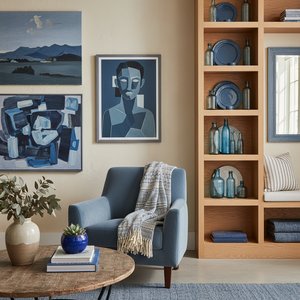
Oplev skønheden i 10 berømte malerier domineret af den elegante slate blue nuance. Fra Monet til Van Gogh – lær historierne bag ikoniske kunstværker og find inspiration til dit hjem. Køb museumskvalitets reproduktioner på BuyPopArt.com

Explore the dramatic world of Baroque art! Discover iconic artists like Caravaggio & Rubens, defining techniques, and its lasting impact on art history. Expert insights for collectors & enthusiasts at BuyPopArt.
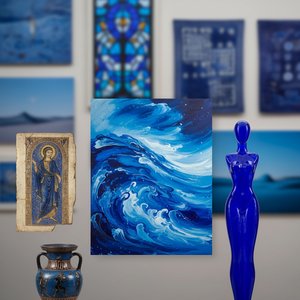
Explore the rich history of blue in art! Discover its symbolism, from ancient pigments to modern masterpieces by Kandinsky & Seurat. Uncover the psychological impact and cultural meanings behind this captivating hue.

Explore the dramatic world of Baroque art! Discover iconic masters like Caravaggio & Rembrandt, their techniques, and the movement's lasting impact. Expert insights for collectors & enthusiasts at BuyPopArt.


Hold dig opdateret med de seneste kunstnyheder, eksklusive tilbud og indretningsideer.
Fortæl os om dit projekt, og vores kunsteksperter vil give dig 3 personlige kunstforslag.
Vi kuraterer 3 valgmuligheder kun til dig – Gratis!


 Se i fuld skala
 Del
Del Del
Del
 Detaljer

 Download
 Lignende værker
 Røntgenundersøgelse
 Diasshow
 Se mere







 Glasmulighed er kun tilgængelig i størrelser under 110 cm


