

 LithographyNaive Primitivism
 1966Modern
 31.0 x 26.0 cm
Køb et højopløst, forbedret digitalt billede, der er langt bedre end online-forhåndsvisningen.
Hver fil er omhyggeligt forberedt af vores interne specialister ved hjælp af avancerede værktøjer og ekspertmæssig manuel retuschering. Vi sikrer, at hvert billede har enestående klarhed, præcis farvegengivelse og fine detaljer.
Den endelige fil leveres via e-mail inden for 72 timer og er optimeret til øjeblikkelig brug i professionelle, redaktionelle og trykte miljøer. Det er den samme kvalitet, som førende designstudier, forlag og gallerier har tillid til.
Download en højopløselig fil til personlig fremvisning, print og kreative projekter. ( Skift til print Skift til håndmalet maleri)
Når du vælger BuyPopArt.com, får du ikke blot et billede – du modtager et professionelt optimeret digitalt kunstværk, skabt med præcision og sikret med en tilfredshedsgaranti. Her er alt, hvad din ordre automatisk indeholder:

Din højkvalitets digitale billedfil vil blive sendt til din e-mail inden for 72 timer efter bestilling – klar til øjeblikkelig brug.

Dit kunstværk optimeres professionelt ved hjælp af avancerede AI-værktøjer og manuel redigering, hvilket sikrer maksimal detaljegrad, klarhed og farvenøjagtighed.

Har du ved en fejl slettet eller mistet din fil? Ingen bekymring – vi sender den igen til enhver tid, helt gratis.

Nyd dit kunstværk med det samme uden told, afgifter eller leveringsgebyrer – digitale downloads er altid skattefrie.

Vi sikrer, at dit digitale billede gengiver de originale farver så præcist som muligt ved hjælp af professionelle værktøjer og farvestyring.

Hvis du ikke er tilfreds med dit digitale billede, vil vi revidere det eller refundere 100% inden for 60 dage – uden spørgsmål.

Ik tilfreds? Få fuld refusion inden for 60 dage efter modtagelse af din digitale fil – uden spørgsmål.

Køb 3 billeder, spar 10% - Køb 5, spar 15% - Køb 10+, spar 20%. Ideelt til kreative projekter, gallerier og bureauer.
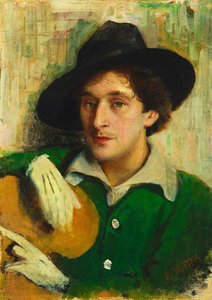
Marc Chagall’s 1966 lithograph, “Ten Commandements,” is more than just a depiction of biblical narrative; it’s a profound meditation on faith, memory, and the enduring power of childhood dreams. Executed in a style that leans heavily into naive or primitivist aesthetics – a hallmark of Chagall's later work – this piece invites viewers to step into a world where reality blends seamlessly with fantastical imagery. The image itself presents a solitary figure, a man draped in a vibrant red robe, holding two luminous white objects within his hands. His gaze is fixed upon them with an intensity that suggests both reverence and childlike wonder. This isn't a formal, academic rendering of the Ten Commandments; rather, it’s a deeply personal interpretation filtered through Chagall’s unique artistic lens.
Born Moishe Shagal in 1887 in Liozna, Belarus – a town that would forever remain etched within his artistic consciousness – Chagall's early life profoundly shaped his oeuvre. Liozna, with its distinctive blend of Russian Orthodox and Jewish cultural influences, provided the fertile ground for his imaginative world. This lithograph powerfully evokes this formative environment; the red robe, a frequent motif in his work, alludes to the traditional attire of Hasidic Jews, while the luminous objects could represent the sacred texts or perhaps simply the pure light of faith itself. The scene feels intensely intimate, as if we are witnessing a private moment of contemplation – a return to the foundational beliefs of his youth.
Created in 1966 using lithography, “Ten Commandements” demonstrates Chagall’s masterful command of this printmaking technique. Lithography relies on a chemical process that allows for subtle gradations of tone and texture, creating an effect remarkably similar to painting. The resulting image is characterized by its soft edges, dreamlike atmosphere, and vibrant color palette – a deliberate choice reflecting Chagall's desire to capture the emotional essence of his subjects rather than striving for photographic realism. The technique lends itself perfectly to conveying the ethereal quality of memory and the fantastical elements that populate his art.
The two white objects held by the figure are open to interpretation, adding another layer of complexity to this already rich artwork. They could represent the tablets containing the Ten Commandments, or perhaps they symbolize innocence, purity, and the unwavering belief that guided Chagall’s life. The man's solitary presence amplifies the sense of introspection and spiritual yearning inherent in the work. Chagall frequently employed symbolism to convey deeper meanings, inviting viewers to engage with the artwork on a personal level. This piece is not simply about religious law; it’s about the human search for meaning and truth.
1887 - 1985 , Hviderusland


Hold dig opdateret med de seneste kunstnyheder, eksklusive tilbud og indretningsideer.
Fortæl os om dit projekt, og vores kunsteksperter vil give dig 3 personlige kunstforslag.
Vi kuraterer 3 valgmuligheder kun til dig – Gratis!


 Se i fuld skala
 Del
Del Del
Del
 Detaljer

 Download
 Lignende værker
 Røntgenundersøgelse
 Diasshow
 Se mere