Oil On CanvasWallArtAbstract Expressionism
 1949Modern
 112.0 x 137.0 cm
Giclée- eller lærredstryk i museumskvalitet med hurtig produktion og fleksible muligheder for finish. ( Køb håndlavet maleri Køb billede)





























Vælg mellem vores forudindstillede størrelser, der matcher kunstværkets originale proportioner.

Du kan indtaste dine egne mål for at passe til en specifik ramme eller et bestemt område. Hvis den valgte størrelse ikke stemmer overens med det originale billedes proportioner, vil vi enten beskære kunstværket eller udvide billedet med en spejlet eller ensfarvet kant. En digital mockup vil blive sendt til din godkendelse, før produktionen påbegyndes.
Bemærk venligst, at forhåndsvisningen på skærmen ikke afspejler den faktiske beskæring eller udvidelse. Kun mockuppen vil nøjagtigt vise den endelige komposition.
Selvom specialmål er tilgængelige, anbefaler vi at vælge et mål fra den foruddefinerede liste for at bevare de originale proportioner.
Verdensomspændende levering () på 2 uger i stedet for de sædvanlige 4/5 uger. (16 august)


Number 6
Størrelse på reproduktion
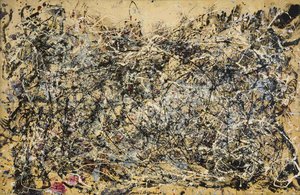
Number 6 stands as a pivotal work within Jackson Pollock's oeuvre and the broader movement of Abstract Expressionism. Emerging in post-World War II America, this style rejected traditional representational art, instead prioritizing spontaneous gesture and emotional expression. Abstract Expressionists sought to convey profound human experiences through non-figurative forms, reflecting a sense of anxiety, liberation, and existential questioning prevalent during that era. Pollock's contribution was particularly revolutionary, moving away from the easel and embracing a radical new technique.
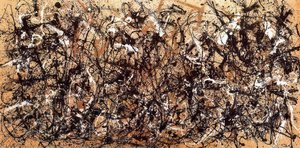
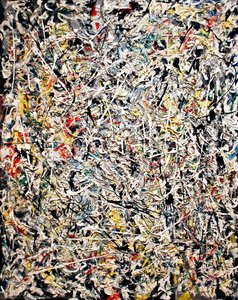
What truly sets Number 6 apart is Pollock’s groundbreaking “drip” or "pouring" technique. Rather than using brushes on an upright canvas, he laid the canvas flat on the floor and dripped, poured, and flung paint from above. This method allowed for a complete immersion in the creative process – Pollock literally moved around the canvas, engaging his entire body in the act of painting. This approach is often referred to as "action painting," emphasizing the physical energy and spontaneity inherent in the creation. The resulting composition isn't planned; it emerges organically from the interaction between paint, gravity, and the artist’s movements. Number 6 exemplifies this perfectly – a complex web of interwoven lines and colors that seem to pulsate with kinetic energy.
While seemingly chaotic at first glance, Number 6 possesses an underlying structure and rhythm. The dense network of lines creates a sense of depth and complexity, drawing the viewer into its intricate details. The colors—ranging from blacks and whites to subtle shades of brown and gray—evoke a mood of introspection and contemplation. Some art historians interpret Pollock’s work as reflecting psychological states – the tangled web representing subconscious thoughts or emotions. Others see it as an exploration of pure form and color, divorced from any representational meaning. Regardless of interpretation, Number 6 evokes a powerful emotional response—a feeling of both exhilaration and unease, mirroring the complexities of the human condition.
Number 6 is more than just a painting; it’s a symbol of artistic innovation and a testament to Pollock's enduring influence. It challenged conventional notions of art-making and paved the way for future generations of artists to explore abstraction and expressive gesture. Its dynamic composition and emotional depth continue to captivate audiences worldwide, making it a highly sought-after artwork and a compelling subject for reproduction.

1912 - 1956 , USA
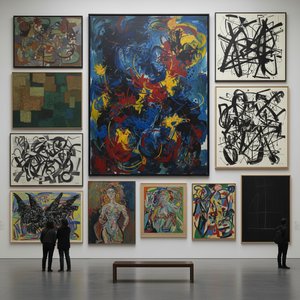
Oplev de 10 mest ikoniske værker inden for Abstrakt Ekspressionisme – Jackson Pollock, Mark Rothko og mere. Lær historien bag kunstnerne & teknikken. Find museumskvalitets reproduktioner på BuyPopArt.com.

Explore the revolutionary art of Jackson Pollock & Abstract Expressionism. Discover his iconic drip paintings, lasting impact, and considerations for collecting this pivotal American artist. Expert insights at BuyPopArt.
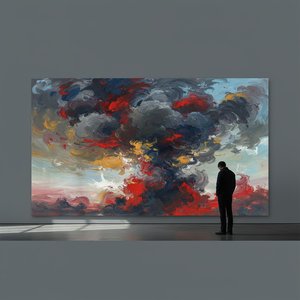
Explore the profound emotional world of Abstract Expressionism with BuyPopArt. Discover key artists like Pollock & Rothko, learn about collecting, and find museum-quality reproductions to inspire your space.

Explore the profound emotional depth of Abstract Expressionism. From Pollock's dynamic drips to de Kooning's gestural mastery, our expert guide offers art collectors a sophisticated analysis of this transformative movement and its enduring legacy in modern fine art.

Explore the profound emotional depth & formal innovation of Abstract Expressionism. Discover key artists, collecting insights, and investment potential with expert guidance. Learn more now.


Hold dig opdateret med de seneste kunstnyheder, eksklusive tilbud og indretningsideer.
Fortæl os om dit projekt, og vores kunsteksperter vil give dig 3 personlige kunstforslag.
Vi kuraterer 3 valgmuligheder kun til dig – Gratis!


 Se i fuld skala
 Del
Del Del
Del
 Detaljer

 Download
 Lignende værker
 Røntgenundersøgelse
 Diasshow
 Se mere







 Glasmulighed er kun tilgængelig i størrelser under 110 cm