Giclée- eller lærredstryk i museumskvalitet med hurtig produktion og fleksible muligheder for finish. ( Køb håndlavet maleri Køb billede)





























Vælg mellem vores forudindstillede størrelser, der matcher kunstværkets originale proportioner.

Du kan indtaste dine egne mål for at passe til en specifik ramme eller et bestemt område. Hvis den valgte størrelse ikke stemmer overens med det originale billedes proportioner, vil vi enten beskære kunstværket eller udvide billedet med en spejlet eller ensfarvet kant. En digital mockup vil blive sendt til din godkendelse, før produktionen påbegyndes.
Bemærk venligst, at forhåndsvisningen på skærmen ikke afspejler den faktiske beskæring eller udvidelse. Kun mockuppen vil nøjagtigt vise den endelige komposition.
Selvom specialmål er tilgængelige, anbefaler vi at vælge et mål fra den foruddefinerede liste for at bevare de originale proportioner.
Verdensomspændende levering () på 2 uger i stedet for de sædvanlige 4/5 uger. (15 august)


Forest
Størrelse på reproduktion
Piet Mondrian's early artistic explorations were rooted in the traditions of Dutch landscape painting, influenced by luminism and Impressionism. Yet, even amidst these formative influences, a subtle yearning for simplification persisted—a desire to distill nature’s essence into its purest form. *Woods near Oele*, painted in 1908, stands as a pivotal piece during this transitional phase, marking Mondrian's nascent departure from representational art and foreshadowing his groundbreaking embrace of abstraction.
Like many Dutch artists of the time—Jan Toorop and Jan Sluijters—Mondrian initially studied nature diligently, mastering technique while simultaneously searching for something beyond mere visual depiction. The Hague School’s meticulous observation of light and color served as a crucial foundation for his developing aesthetic sensibilities. However, Mondrian wasn't merely mirroring the world; he sought to capture its underlying harmony and rhythm – a quest that would ultimately propel him toward radically new artistic horizons.
Early experiments with Pointillism and Fauvism exposed Mondrian to diverse approaches to color and form, each offering valuable insights into expressive possibilities. Yet, none fully satisfied his burgeoning artistic vision. He recognized the limitations of Impressionist techniques in conveying deeper emotional truths—a realization that fueled his determination to forge a path distinct from established conventions.
This canvas embodies Mondrian's initial foray into abstraction, characterized by bold vertical and diagonal lines – a stylistic precursor to his iconic De Stijl style. The painting captures the serene beauty of the Oele forest, rendered with careful attention to texture and tonal gradation. Notably, it reflects influences from luminism and Impressionism, demonstrating Mondrian’s ongoing engagement with traditional artistic methods while simultaneously hinting at his impending embrace of geometric abstraction.
The composition is balanced and harmonious, reflecting Mondrian’s belief in universal order. The muted color palette contributes to the painting’s tranquil atmosphere—a deliberate choice that underscores its role as a stepping stone toward his revolutionary style. *Woods near Oele* isn’t merely a landscape; it's an emblem of Mondrian’s artistic journey – a testament to his unwavering pursuit of simplification and geometric precision.
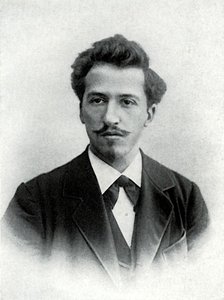
1872 - 1944 , Holland

Discover the power of Neo-Abstract art. Explore how bold geometric forms and high-impact visual energy are redefining modern design. Learn to curate sophisticated, high-energy spaces with the latest trends in contemporary abstraction and structural color.

Discover the high-impact world of Geometric Abstraction. From Cubist roots to modern urban trends, explore how bold shapes and colors redefine contemporary design. Elevate your space with expert art insights and custom-made abstract masterpieces.


Hold dig opdateret med de seneste kunstnyheder, eksklusive tilbud og indretningsideer.
Fortæl os om dit projekt, og vores kunsteksperter vil give dig 3 personlige kunstforslag.
Vi kuraterer 3 valgmuligheder kun til dig – Gratis!


 Se i fuld skala
 Del
Del Del
Del
 Detaljer

 Download
 Lignende værker
 Røntgenundersøgelse
 Diasshow
 Se mere







 Glasmulighed er kun tilgængelig i størrelser under 110 cm