Giclée- eller lærredstryk i museumskvalitet med hurtig produktion og fleksible muligheder for finish. ( Skift til håndmalet maleri Skift til billede)





























Vælg mellem vores forudindstillede størrelser, der matcher kunstværkets originale proportioner.

Du kan indtaste dine egne mål for at passe til en specifik ramme eller et bestemt område. Hvis den valgte størrelse ikke stemmer overens med det originale billedes proportioner, vil vi enten beskære kunstværket eller udvide billedet med en spejlet eller ensfarvet kant. En digital mockup vil blive sendt til din godkendelse, før produktionen påbegyndes.
Bemærk venligst, at forhåndsvisningen på skærmen ikke afspejler den faktiske beskæring eller udvidelse. Kun mockuppen vil nøjagtigt vise den endelige komposition.
Selvom specialmål er tilgængelige, anbefaler vi at vælge et mål fra den foruddefinerede liste for at bevare de originale proportioner.
Verdensomspændende levering () på 2 uger i stedet for de sædvanlige 4/5 uger. (10 august)


Waltz eclipse
Størrelse på reproduktion
René Magritte’s “Waltz Eclipse,” painted in 1958, isn't merely a depiction of two apples suspended in an ethereal space; it’s a deliberate provocation—a masterful exercise in Surrealist philosophy designed to unsettle the viewer and invite contemplation about the nature of reality itself. Created during Magritte’s prolific Vache Period, this artwork embodies the core tenets of Surrealism: juxtaposing incongruous elements to expose hidden contradictions within our everyday experience.
The central figures—two green apples adorned with masks—immediately capture attention. Magritte’s choice isn't accidental; apples have long been symbols of temptation, knowledge, and innocence, while masks represent concealment and disguise. Their placement side-by-side suggests a duality – the visible versus the hidden, the conscious versus the unconscious – mirroring the Surrealist preoccupation with accessing subconscious desires and anxieties. The masks’ blank faces amplify this sense of mystery, forcing us to confront what lies beneath the surface of appearances.
Dominating the upper right corner is a clock face—also suspended in air—a motif recurrent throughout Magritte’s oeuvre. Like the apples, it defies logic and challenges our understanding of time as linear progression. This element reinforces the Surrealist critique of rational thought, suggesting that time itself is subjective and malleable, much like perception. The clock serves as a visual reminder that what we perceive isn't necessarily what *is*, prompting viewers to question accepted truths.
Executed in gouache on paper, “Waltz Eclipse” showcases Magritte’s meticulous attention to detail within an overall atmospheric haze. Gouache—a pigment binder that creates opaque watercolor effects—allowed Magritte to achieve a luminous quality while maintaining precise tonal control. The muted palette contributes to the painting's dreamlike atmosphere, enhancing its emotional impact and immersing the viewer in a realm of subconscious imagery.
"Waltz Eclipse" stands as a testament to Magritte’s enduring legacy as one of the most influential Surrealist artists. It exemplifies his ability to transform familiar objects into symbols laden with philosophical significance, inviting viewers to engage in an intellectual dialogue about perception and representation. Its quiet grandeur—combined with its unsettling ambiguity—continues to inspire admiration and discussion decades after its creation, cementing its place among the masterpieces of 20th-century art.
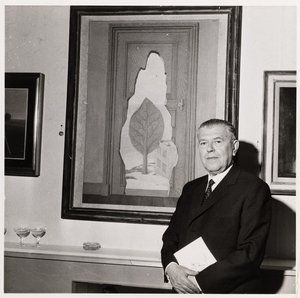
1898 - 1967 , Belgien

Oplev surrealismens 10 mest ikoniske værker! Dyk ned i Dalís drømme, Magrittes mysterier og Mirós abstrakte univers. Find museumskvalitets reproduktioner & inspiration til din indretning på BuyPopArt.com – køb kunst online.
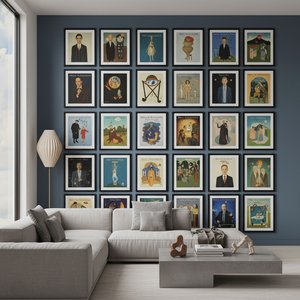
Oplev René Magrittes 25 mest ikoniske surrealistiske malerier. Fordyb dig i kunstnerens mystik, teknik og tidløse værker. Find museumskvalitets reproduktioner & inspiration til din boligindretning på BuyPopArt.com.

Dyk ned i surrealismens fascinerende verden med 10 ikoniske malerier fra Dalí, Magritte & Miró. Oplev historierne bag mesterværkerne og find inspiration til din boligindretning hos BuyPopArt.dk – køb kunst online af højeste kvalitet.
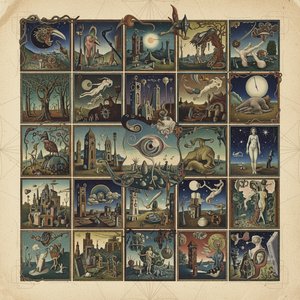
Oplev Max Ernsts 25 mest ikoniske værker! Dyk ned i surrealismens drømme, dadaismens oprør og psykologisk kunst. Find inspiration til din boligindretning & køb museumskvalitets reproduktioner på BuyPopArt.com.

Dyk ned i surrealismens fascinerende verden med 10 ikoniske malerier fra Dalí, Magritte og Miró. Lær historierne bag disse mesterværker og find inspiration til din boligindretning hos BuyPopArt – køb museumskvalitets kunsttryk online.


Hold dig opdateret med de seneste kunstnyheder, eksklusive tilbud og indretningsideer.
Fortæl os om dit projekt, og vores kunsteksperter vil give dig 3 personlige kunstforslag.
Vi kuraterer 3 valgmuligheder kun til dig – Gratis!


 Se i fuld skala
 Del
Del Del
Del
 Detaljer

 Download
 Lignende værker
 Røntgenundersøgelse
 Diasshow
 Se mere







 Glasmulighed er kun tilgængelig i størrelser under 110 cm