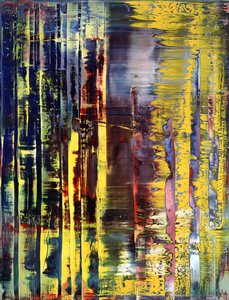
Køb et højopløst, forbedret digitalt billede, der er langt bedre end online-forhåndsvisningen.
Hver fil er omhyggeligt forberedt af vores interne specialister ved hjælp af avancerede værktøjer og ekspertmæssig manuel retuschering. Vi sikrer, at hvert billede har enestående klarhed, præcis farvegengivelse og fine detaljer.
Den endelige fil leveres via e-mail inden for 72 timer og er optimeret til øjeblikkelig brug i professionelle, redaktionelle og trykte miljøer. Det er den samme kvalitet, som førende designstudier, forlag og gallerier har tillid til.
Download en højopløselig fil til personlig fremvisning, print og kreative projekter. ( Køb print Køb håndlavet maleri)
Når du vælger BuyPopArt.com, får du ikke blot et billede – du modtager et professionelt optimeret digitalt kunstværk, skabt med præcision og sikret med en tilfredshedsgaranti. Her er alt, hvad din ordre automatisk indeholder:

Din højkvalitets digitale billedfil vil blive sendt til din e-mail inden for 72 timer efter bestilling – klar til øjeblikkelig brug.

Dit kunstværk optimeres professionelt ved hjælp af avancerede AI-værktøjer og manuel redigering, hvilket sikrer maksimal detaljegrad, klarhed og farvenøjagtighed.

Har du ved en fejl slettet eller mistet din fil? Ingen bekymring – vi sender den igen til enhver tid, helt gratis.

Nyd dit kunstværk med det samme uden told, afgifter eller leveringsgebyrer – digitale downloads er altid skattefrie.

Vi sikrer, at dit digitale billede gengiver de originale farver så præcist som muligt ved hjælp af professionelle værktøjer og farvestyring.

Hvis du ikke er tilfreds med dit digitale billede, vil vi revidere det eller refundere 100% inden for 60 dage – uden spørgsmål.

Ik tilfreds? Få fuld refusion inden for 60 dage efter modtagelse af din digitale fil – uden spørgsmål.

Køb 3 billeder, spar 10% - Køb 5, spar 15% - Køb 10+, spar 20%. Ideelt til kreative projekter, gallerier og bureauer.
Vija Celmins’s “Ocean” isn’t merely a painting; it’s an immersion. It’s a deliberate stripping away of all extraneous context, leaving only the raw, insistent presence of water itself. The work, created in 1975, presents a relentlessly horizontal expanse of gray and white – a seemingly simple depiction of waves that, upon closer inspection, reveals itself to be a profound meditation on observation, memory, and the very nature of perception. There’s no horizon line to anchor the eye, no suggestion of sky or distant shore; instead, we are confronted with an infinite field of undulating lines, each meticulously rendered to capture the subtle shifts in texture and tone that define the surface of the sea.
Celmins' approach is deeply rooted in a process of painstaking replication. She began by studying photographs of oceans, not as representations of reality, but as records of light and movement. This foundational act of observation informs every line, every shade, creating an illusion of depth and volume that defies the two-dimensionality of the medium. The work’s hyperrealistic quality isn't about photographic accuracy; it’s about distilling the essence of the ocean – its ceaseless motion, its subtle variations in color, and its inherent quietude – into a visual language that transcends literal depiction.
While often associated with painting, Celmins' technique leans heavily towards printmaking. The incredibly fine lines, achieved through the application of graphite on paper, evoke the delicate tracery of etching or lithography. This choice of medium is crucial to understanding the work’s impact. Graphite allows for an unparalleled level of detail and tonal control, enabling Celmins to capture the subtle nuances of light reflection and wave movement with astonishing precision. The process itself—the countless hours spent meticulously rendering each individual crest – speaks volumes about her dedication to observation and her commitment to translating a sensory experience into a tangible form.
It’s important to note that Celmins' work is not simply a technical exercise; it’s an intensely personal one. She has described the act of drawing as a way of “remembering” – of holding onto fleeting moments and impressions. The repetitive nature of her process, combined with the subject matter—the ocean, a symbol of vastness and timelessness—creates a meditative effect, inviting the viewer to lose themselves in the work’s quiet intensity.
Celmins' early artistic development was profoundly shaped by her encounter with the Italian monochrome still life painter Giorgio Morandi. Like Morandi, she was drawn to the subtle variations in tone and texture—the way light plays across surfaces, the delicate interplay of shadow and highlight. This influence is evident in “Ocean,” where Celmins masterfully manipulates graphite to create a sense of depth and volume through carefully controlled gradations of gray. The work shares Morandi’s quiet contemplation, its focus on the beauty of simple forms and the power of observation.
At first glance, “Ocean” might seem like a purely descriptive image—a straightforward representation of water. However, beneath this surface simplicity lies a wealth of symbolic meaning. The ocean has long been associated with vastness, mystery, and the unknown – representing both the potential for adventure and the inevitability of change. Celmins’s meticulous rendering of its surface suggests an attempt to capture this elusive quality—to hold onto the fleeting moment before it dissolves into nothingness. The work's stillness, despite the implied movement of the waves, speaks to a deeper sense of contemplation, inviting us to consider our place within the larger context of existence.


1938 - , Latvia


Hold dig opdateret med de seneste kunstnyheder, eksklusive tilbud og indretningsideer.
Fortæl os om dit projekt, og vores kunsteksperter vil give dig 3 personlige kunstforslag.
Vi kuraterer 3 valgmuligheder kun til dig – Gratis!


 Se i fuld skala
 Del
Del Del
Del
 Detaljer

 Download
 Lignende værker
 Røntgenundersøgelse
 Diasshow


 Se mere