Druck bestellen Druck bestellenBild kaufen Bild kaufen VersendenVersenden
Details anzeigenDetails anzeigen Zu Favoriten hinzufügen Zu Favoriten hinzufügen HerunterladenHerunterladen Ähnliche ObjekteÄhnliche Objekte RöntgenaufnahmeRöntgenaufnahme Diashow anzeigenDiashow anzeigen

Dots

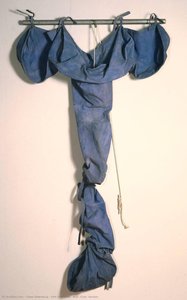
  • Abmessungen20.0 x 42.0 cm

Bernar Venet (b. 1941) is a French conceptual artist renowned for minimalist sculptures, 'Arcs,' & 'Indeterminate Lines.' Pioneering art that explores form, space, and the history of sculpture internationally. Exhibited globally; Chevalier de La Legi

Handgefertigte Öl-Reproduktion

Handgemaltes Ölgemälde auf Leinwand in Ihrer Wunschgröße und mit Rahmen, auf Bestellung von unseren Künstlern angefertigt.

Standard
custom
CM
INCH

Wählen Sie aus unseren vordefinierten Größen, die den ursprünglichen Proportionen des Kunstwerks entsprechen.

Breite
Höhe

Sie können Ihre eigenen Maße eingeben, um einen bestimmten Rahmen oder Platz auszufüllen. Wenn die gewählte Größe nicht den Proportionen des Originalbildes entspricht, werden wir das Kunstwerk entweder beschneiden oder das Gemälde durch zusätzliche, handgemalte Elemente erweitern. Ein digitales Mockup wird Ihnen zur Genehmigung zugesandt, bevor die Produktion beginnt.
Bitte beachten Sie, dass die Bildschirmvorschau nicht die tatsächliche Beschneidung oder Erweiterung widerspiegelt. Nur das Mockup zeigt die endgültige Komposition exakt an.
Obwohl Sondermaße verfügbar sind, empfehlen wir, eine Größe aus der vordefinierten Liste zu wählen, um die ursprünglichen Proportionen beizubehalten.

Beispiele für Anpassungsmöglichkeiten: Gesicht durch Kundenfoto ersetzen; Haustier hinzufügen (z. B. Katze durch Hund ersetzen); eine versteckte Nachricht im Hintergrund einfügen; Hintergrundlandschaft oder -elemente ändern.
Nach der Bestellung wird das BuyPopArt.com-Team dem Kunden Anweisungen per E-Mail zusenden und eine Mockup-Vorschau bereitstellen.

Weltweiter Versand () in nur 3 bis 4 Wochen statt der üblichen 5 Wochen. (20 Juli). Keine Kompromisse bei der Qualität.

why_choose_icon
Kostenloser weltweiter Expressversand
why_choose_icon
Hochwertige Leinenleinwand
why_choose_icon
Umfassender Versicherungsschutz beim Versand
why_choose_icon
Zollsteuer-Rückerstattungsgarantie
why_choose_icon
Garantie für echte Farbtreue
why_choose_icon
60-Tage-Rückgaberecht (nur bei Mängeln)
why_choose_icon
100% Geld-zurück-Garantie
why_choose_icon
Mengenrabatt verfügbar

Gesamtpreis

-

reproduction

Dots

Art der Reproduktion

Größe der Reproduktion

-

Endpreis aller Optionen

-


Biografie des Künstlers

Robert Delaunay: A Pioneer of Color and Rhythm

Robert Delaunay, born Robert-Victor-Felix Delaunay on April 12th, 1885, in the bustling heart of Paris, was a pivotal figure in the evolution of modern art. His life, marked by both artistic innovation and personal transformation alongside his wife Sonia Delaunay, ultimately shaped the vibrant world of Orphism and significantly influenced subsequent generations of artists. Initially apprenticed to a theatrical designer, Delaunay’s early career focused on decorative arts, but it was a growing dissatisfaction with conventional forms that propelled him toward a radical exploration of color and abstraction – a journey he undertook with an unwavering belief in the inherent power of visual sensation. His artistic trajectory is inextricably linked to the vibrant energy of Paris during the early 20th century, a period characterized by intellectual ferment and groundbreaking experimentation across various disciplines.

Early Influences and the Rise of Neo-Impressionism

Delaunay’s formative years were deeply impacted by the artistic currents swirling around him. He began his artistic pursuits influenced by Neo-Impressionism, a movement characterized by its meticulous application of small dots of pure color to recreate the effects of light and atmosphere. This technique, championed by figures like Paul Signac, provided a foundation for Delaunay’s later explorations of color theory. However, he quickly recognized the limitations of this approach, finding it too reliant on imitation and lacking in expressive potential. His time spent studying the works of Vincent van Gogh, particularly his bold use of color and emotional intensity, proved to be another crucial influence. The desire to capture not just visual reality but also the subjective experience of seeing fueled his artistic experimentation.

The Birth of Orphism: A Celebration of Color

Around 1912, Delaunay embarked on a radical departure from traditional representation, driven by a profound conviction that color itself possessed an independent existence and could be used to create powerful visual effects. This period marked the genesis of Orphism – a term coined by Apollinaire – which sought to liberate color from its subservient role in depicting objects. Delaunay’s paintings during this time were characterized by their dynamic compositions, bold geometric shapes, and an almost ecstatic celebration of pure color. He moved away from representational imagery, focusing instead on the interplay of hues, rhythms, and spatial relationships. His canvases became fields of vibrant energy, pulsating with a sense of movement and joy. Influenced by theories of light and color developed by scientists like Michel Eugène Chevreul, Delaunay believed that colors could be combined to create new sensations and evoke specific emotional responses.

Collaboration with Sonia Delaunay and the Development of Abstract Forms

The partnership with his wife, Sonia (née Tatiana Rozanova), proved to be a cornerstone of Delaunay’s artistic development. Together, they established a shared studio and explored new avenues of creative expression. Sonia's contributions were crucial in pushing the boundaries of color theory and geometric abstraction. Initially, she focused on textile design, but her innovative use of color and pattern profoundly influenced Robert’s paintings. As the years progressed, their collaboration evolved into a deeply intertwined artistic dialogue, resulting in works that seamlessly blended abstract forms with vibrant colors. They began to experiment with relief painting, creating textured surfaces that added another dimension to their compositions.

Later Works and Legacy

In the 1930s, Delaunay’s style underwent a subtle shift, moving towards more structured and geometric abstractions. He continued to work with large-scale panels, often incorporating circular discs and rhythmic patterns. His later works, particularly those created during his time in Spain and Portugal, demonstrate a refined mastery of color and composition. Despite facing challenges during World War II, including the loss of his studio and many of his paintings, Delaunay’s influence on 20th-century art remains undeniable. He is considered a key figure in the development of Cubism, Orphism, and Abstract Art, paving the way for countless artists to explore the expressive potential of color and form. His legacy endures through his groundbreaking theories about color perception and his vibrant, emotionally charged paintings that continue to captivate viewers today. Robert Delaunay died on October 25th, 1941, leaving behind a body of work that remains a testament to his revolutionary vision.

Kurzinfos

  • Artistic Movement Or Style:
    • Divisionism
    • Cubism
    • Orphism
    • Abstract art
  • Artists Or Movements Influenced By This Artist:
    • Stanton-Wright
    • Morgan Russell
    • Patrick Bruce
    • Der Blaue Reiter
    • Macke
    • Marc
    • Klee
    • Benton
    • Feininger
    • Apollinaire
  • Artists Who Influenced This Artist:
    • Neoimpressionism
    • Cézanne
  • Date Of Birth: April 12, 1885
  • Date Of Death: October 25, 1941
  • Full Name: Robert Delaunay
  • Nationality: French
  • Notable Artworks:
    • Endless Rhythm
    • Cubism
    • Orphic Cubism
    • Simultanism
  • Place Of Birth: Paris, France