PreviewPreview Druck bestellen Druck bestellenGemälde kaufen Gemälde kaufen VersendenVersenden
Details anzeigenDetails anzeigen Zu Favoriten hinzufügen Zu Favoriten hinzufügen HerunterladenHerunterladen Ähnliche ObjekteÄhnliche Objekte RöntgenaufnahmeRöntgenaufnahme Diashow anzeigenDiashow anzeigen

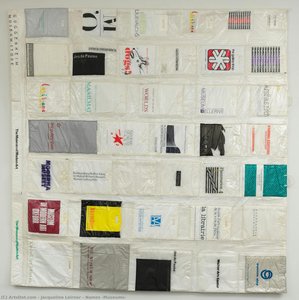
Untitled

Blinky Palermo (1943-1977) was a German abstract painter known for his minimalist monochromatic canvases, 'fabric paintings,' and innovative use of materials like aluminum & steel. Inspired by Malevich, Newman, and Kelly, his work explores form, colo

Erwerben Sie ein hochauflösendes, optimiertes digitales Bild, das der Online-Vorschau weit überlegen ist.

Jede Datei wird von unseren hauseigenen Spezialisten mit modernsten Werkzeugen und fachmännischer manueller Retusche sorgfältig vorbereitet. Wir stellen sicher, dass jedes Bild eine außergewöhnliche Klarheit, präzise Farbgenauigkeit und feinste Details aufweist.

Die endgültige Datei wird innerhalb von 72 Stunden per E-Mail zugestellt und ist für den sofortigen Einsatz in professionellen, redaktionellen und Druckumgebungen optimiert. Es handelt sich um dieselbe Qualität, der führende Designstudios, Verlage und Galerien vertrauen.

Digitales Kunstwerk

Laden Sie eine hochauflösende Datei für die persönliche Präsentation, den Druck und kreative Projekte herunter.

Endpreis

$9.99

In jeder Bestellung digitaler Bilder enthalten

Professionelle digitale Bereitstellung, garantiert

Wenn Sie sich für BuyPopArt.com entscheiden, erhalten Sie nicht nur ein Bild – Sie erhalten ein professionell aufbereitetes digitales Kunstwerk, das mit höchster Präzision erstellt und durch eine Zufriedenheitsgarantie abgesichert wird. Hier ist alles, was automatisch mit Ihrer Bestellung geliefert wird:

shipping_icon
Schnelle E-Mail-Zustellung

Ihre hochauflösende digitale Bilddatei wird Ihnen innerhalb von 72 Stunden nach der Bestellung per E-Mail zugestellt – bereit zur sofortigen Verwendung.

canvas_icon
KI-optimierte digitale Datei

Ihre Kunstwerke werden professionell mithilfe fortschrittlicher KI-Tools und manueller Bearbeitung optimiert, um maximale Detailtreue, Klarheit und Farbgenauigkeit zu gewährleisten.

insurance_icon
Kostenloser lebenslanger erneuter Versand

Datei versehentlich gelöscht oder verloren? Keine Sorge – wir senden sie Ihnen jederzeit kostenlos erneut zu.

tax_icon
Keine Einfuhrgebühren – jemals

Genießen Sie Ihr Kunstwerk sofort ohne Zollgebühren, Einfuhrabgaben oder Versandkosten – digitale Downloads sind immer steuerfrei.

color_icon
Garantierte Farbtreue

Wir garantieren, dass Ihr digitales Bild die Originalfarben mithilfe professioneller Werkzeuge und Farbmanagement so präzise wie möglich wiedergibt.

return_icon
60-Tage-Zufriedenheitsgarantie

Sollten Sie mit Ihrem digitalen Bild nicht zufrieden sein, werden wir es überarbeiten oder Ihnen innerhalb von 60 Tagen 100% erstatten – ohne Wenn und Aber.

guarantee_icon
100% Geld-zurück-Garantie

Nicht zufrieden? Erhalten Sie innerhalb von 60 Tagen nach Erhalt Ihrer digitalen Datei eine vollständige Rückerstattung – ohne Angabe von Gründen.

discount_icon
Rabatte bei Großbestellungen

3 Bilder kaufen, 10% sparen – 5 Bilder kaufen, 15% sparen – Ab 10 Bildern 20% sparen. Ideal für kreative Projekte, Galerien und Agenturen.


Biografie des Künstlers

blinky palermo was a german abstract painter.
palermo was born peter schwarze in leipzig, germany, in 1943, and adopted as an infant, with his twin brother, michael, by foster parents named heisterkamp. he adopted his outlandish name in 1964, during his studies with bruno goller and joseph beuys at the kunstakademie düsseldorf between 1962 and 1967. the name refers to frank "blinky" palermo, an american mafioso and boxing promoter who managed sonny liston.
in 1969, palermo moved to mönchengladbach and set up a studio he would share with imi knoebel and ulrich rückriem. after a stay in new york in the early 1970s, he moved into gerhard richter's former düsseldorf studio.[citation needed]
blinky palermo died in 1977, aged 33, during a trip to the maldives, of causes that often are referred to as "mysterious" but widely acknowledged as related to palermo's drug use. his brother michael heisterkamp is the sole heir and owner of the copyright of palermo.
palermo was best known for his spare monochromatic canvases and "fabric paintings" made from simple lengths of colored material cut, stitched and stretched over a frame. he painted on aluminum, steel, wood, paper and formica, often making lines out of tape instead of paint.
under beuys, he became increasingly interested in the organized spatial relationship between form and colour, a polarity which is manifest throughout the rest of his oeuvre. in the mid 1960s, palermo moved away from conventional rectangular canvases and increasingly opted for surfaces such as the circle, triangle, cruciform, totem pole and even the interior walls of buildings. for example, untitled (totem) (1964) "...is simply a vertical strip of wood, 7 feet by about 2 inches. it is painted orange and punctuated, like a primitive ladder, with five short, horizontal pieces of canvas-wrapped wood, each painted white with a portion of a blue triangle". between 1964 and 1966, palermo produced a small series of paintings on canvas in which he experimented with constructivist principles of order.
between late 1966 and 1972 he produced a series of circa 65 stoffbilder (fabric paintings), consisting of colored materials of different widths sewn together along horizontal or vertical seams and attached to stretchers. he took the colour and material quality ready-made from department-store fabrics and had them stitched together by others.
in 1970, he and gerhard richter jointly submitted designs for the sports facilities for the 1972 olympic games in munich. for the front of the arena, they proposed an array of glass windows in 27 colors; each color would appear 50 times, with the distribution determined randomly.
beginning in 1968, palermo realized more than 20 murals and wall drawings at various sites in europe, including edinburgh and brussels, and recorded them in preparatory sketches and photographic documentation. the original work, however, having been affiliated with their place of installation, no longer exist. his times of the day i-iv consists of square, aluminum panels painted in colors arranged from bright to dark, a metaphor for the change sunlight through the day. he often outlined the shapes of some of the walls in a given room or filled them in with a different color, leaving only a border of the original white. a series of “metallbilder” (metal pictures) followed in 1972, a series of acrylic paintings on steel or aluminium. they follow a consistent formula: groupings of, usually, four panels, fairly widely separated, with each panel bearing a single main acrylic color area bracketed by bands of one other color at the top and the bottom.
after visiting new york with gerhard richter in 1970, he moved his practice to new york city in december 1973. once back in düsseldorf he produced to the people of new york city (1976), a 15-part work comprising 39 aluminum panels painted in variations of cadmium red, cadmium yellow, and black — the colors of the west and east german flags (and now the german one) - ever changing in pattern. it was shown at the heiner friedrich gallery, new york, in 1977, and at the dia art foundation in 1987.
palermo's first solo show was held in 1966 at galerie friedrich+dahlem in munich.[citation needed] he further participated in more than 70 exhibitions, including at documenta in 1972 and 1977,[citation needed] and at the 13th bienal de são paulo in 1975. in 1976, his work himmelsrichtungen was shown at the venice biennale.[citation needed]
in 1987, dia inaugurated its exhibition space in chelsea with major shows of works by palermo, beuys, and knoebel. palermo has also had posthumous retrospectives at the kunstmuseum winterthur (1984); kunstmuseum bonn (1993); museu d’art contemporani de barcelona, in co-production with the serpentine gallery, london (2002–2003); and the kunsthalle düsseldorf (2007). in 2010, the dia art foundation and the center for curatorial studies and art in contemporary culture at bard college presented a joint retrospective, the first in the united states, of works by palermo. the show was financed mostly with a $250,000 grant from gucci and also travelled to the los angeles county museum of art and the hirshhorn museum and sculpture garden in washington. in 2013, the david zwirner gallery organized an exhibition of palermo's works on paper from 1976-1977

more...
blinky palermo

blinky palermo

1943 - 1977