Oil On CanvasWallArtPost-Impressionism
 1947
1947 81.0 x 107.0 cm
 Kunstförderungssammlung
Handgemaltes Ölgemälde auf Leinwand in Ihrer Wunschgröße und mit Rahmen, auf Bestellung von unseren Künstlern angefertigt. ( Druck bestellen Bild kaufen)





























Wählen Sie aus unseren vordefinierten Formaten, die den ursprünglichen Proportionen des Kunstwerks entsprechen.

Sie können Ihre eigenen Maße eingeben, um einen bestimmten Rahmen oder Platz auszufüllen. Wenn die gewählte Größe nicht den Proportionen des Originalbildes entspricht, werden wir das Kunstwerk entweder beschneiden oder das Gemälde durch zusätzliche, handgemalte Elemente erweitern. Ein digitales Mockup wird Ihnen zur Genehmigung zugesandt, bevor die Produktion beginnt.
Bitte beachten Sie, dass die Bildschirmvorschau nicht die tatsächliche Beschneidung oder Erweiterung widerspiegelt. Nur das Mockup zeigt die endgültige Komposition exakt an.
Obwohl Sondermaße verfügbar sind, empfehlen wir, eine Größe aus der vordefinierten Liste zu wählen, um die ursprünglichen Proportionen beizubehalten.
Weltweiter Versand () in nur 3 bis 4 Wochen statt der üblichen 5 Wochen. (18 August). Keine Kompromisse bei der Qualität.


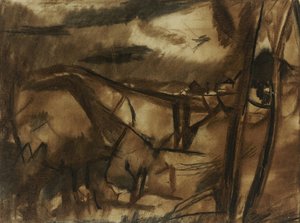
Trendrine, Cornwall
Format der Reproduktion
To stand before this depiction of Trendrine, Cornwall, is to step directly into the evocative palette of early 20th-century British modernism. David Bomberg, a pivotal figure among the 'Whitechapel Boys,' captured not merely a view, but an emotional resonance of the English countryside at a specific moment in time. The canvas presents a sweeping vista dominated by fields of yellow and burnt orange grass, hues that speak eloquently of transition—perhaps the lingering warmth of autumn giving way to the muted tones of winter. This is a landscape imbued with palpable atmosphere, where the natural elements seem caught between vibrant memory and quiet decay.
Bomberg’s handling of oil on canvas here showcases his mastery in translating intense observation into structured form. While the subject matter—the rolling fields and distant trees—suggests a pastoral tranquility, Bomberg's technique lends it an underlying structural tension. Notice how the composition guides the eye: from the foreground expanse of textured grass, which anchors the piece with its rich color variation, to the depth suggested by the background foliage. The inclusion of the solitary figure near the center is crucial; this person acts as a human measure against the vastness of the land, drawing the viewer into contemplation alongside them. It is a masterful balance between the monumental scale of nature and the intimate presence of humanity.
Painted in 1947, this work exists at a fascinating crossroads for British art. Bomberg’s career was deeply intertwined with avant-garde movements like Cubism and Futurism, yet here, he grounds these modernist sensibilities within a distinctly English setting. Unlike some of his more radical urban explorations, this piece retains a deep connection to the landscape tradition, filtered through a modern lens. It speaks to an era grappling with change—the aftermath of global conflict—and finds its solace, or perhaps its contemplation, in the enduring structure of the natural world.
For the collector or designer, this painting offers more than mere decoration; it offers a mood. The interplay between the warm yellows, deep oranges, and cooler background tones creates an immediate sense of autumnal melancholy mixed with steadfast beauty. It is a piece that commands quiet contemplation in a grand hall or a sun-drenched drawing room. When considering a reproduction, one appreciates how Bomberg managed to imbue such a recognizable scene with an almost monumental emotional weight. It invites the viewer to pause, to observe the light falling across the grass, and to feel the quiet solitude of the Cornish coast.
Geboren als Sohn polnisch-jüdischer Einwanderer, Abraham und Rebecca Bomberg, in Birmingham. Die Familie zog 1895 nach Whitechapel, London.
Zunächst studierte er an der City and Guilds Technical Art School, bevor er sich als Lithograph in Birmingham ausbildete.
Er studierte unter Walter Sickert an der Westminster School of Art (1908-1910), wo er von Sickerts Fokus auf Form und Stadtleben beeinflusst wurde. Erlangte durch die Ausstellung "Manet und die Post-Impressionisten" im Jahr 1910 eine bedeutende Vertrautheit mit Paul Cézanne. Besuchte die Slade School of Art (1911) und gewann den Tonks Prize für seine Zeichnung seines Kommilitonen Isaac Rosenberg.
Die Erfahrungen als Soldat im Ersten Weltkrieg beeinflussten sein künstlerisches Schaffen tiefgreifend und führten zu einem Abschied vom Abstraktionismus.
In den 1920er Jahren übernahm Bomberg einen figurativeren Stil, der sich auf Porträts und Landschaften konzentrierte, die direkt aus der Natur entstanden. Entwickelte eine zunehmend expressionistische Technik, gekennzeichnet durch strukturierte Impastos und emotionale Intensität.
Umfangreiche Reisen durch den Nahen Osten (insbesondere Palästina) und Europa beeinflussten sein späteres Werk maßgeblich. Seine Darstellungen Jerusalems sind besonders bemerkenswert.

1890 - 1957 , Vereinigtes Königreich

Entdecken Sie die 10 Meisterwerke der Romantischen Landschaftsmalerei! Von Caspar David Friedrich bis Turner – erleben Sie die Kunst, Emotion & Natur. Hochwertige Reproduktionen auf BuyPopArt.com
Entdecken Sie die 10 schönsten Landschaftsbilder der Kunstgeschichte! Von Monet bis Van Gogh – erfahren Sie die Geschichten hinter Meisterwerken & finden Sie Inspiration für Ihr Zuhause. Hochwertige Kunstdrucke auf BuyPopArt.com.

Embark on a visual journey through the golden hues of autumn fine art. Discover how masters like Van Gogh capture seasonal magic through vibrant oil landscapes and explore expert tips for collecting timeless autumnal masterpieces.

Explore the groundbreaking work of David Bomberg, a pivotal figure in British abstraction. Discover his artistic evolution, influences, and lasting legacy through insightful analysis & expert commentary.
Explore the rich history of landscape art with BuyPopArt. Discover renowned artists, movements like Impressionism & Romanticism, and expert guidance for collecting timeless pieces. Find your perfect serene escape today!


Bleiben Sie über die neuesten Kunstnachrichten, exklusive Angebote und Dekorationsideen auf dem Laufenden.
Erzählen Sie uns von Ihrem Projekt, und unsere Kunstexperten erstellen für Sie drei personalisierte Kunstvorschläge.
Wir kuratieren 3 Optionen exklusiv für Sie – kostenlos!


 Vorschau anzeigen
 Versenden
 Teilen
 Details anzeigen

 Herunterladen
 Ähnliche Objekte
 Röntgenaufnahme
 Diashow
 Weiterlesen







 Die Glasoption ist nur für Größen unter 110 cm verfügbar.