Gemälde kaufen Gemälde kaufenBild kaufen Bild kaufen VersendenVersenden
Details anzeigenDetails anzeigen Zu Favoriten hinzufügen Zu Favoriten hinzufügen HerunterladenHerunterladen Ähnliche ObjekteÄhnliche Objekte RöntgenaufnahmeRöntgenaufnahme Diashow anzeigenDiashow anzeigen

Acrobats

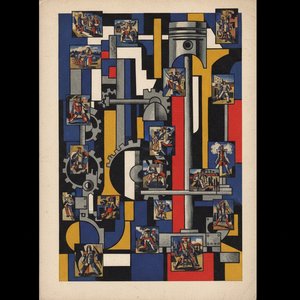
Experience the bold geometric style of Fernand Léger’s ‘Acrobats,’ capturing the energy of the machine age through stark black and white contrasts. This iconic Cubist painting invites you to explore timeless artistry and bring a piece of modern history into your home.

Erkunden Sie die Kunst von Fernand Léger (1881-1955), einem Pionier des Kubismus und der 'Tubism'. Entdecken Sie seine mutigen, figurativen Gemälde, die das moderne Leben, Maschinen und die menschliche Form feiern. Ein Vorläufer des Pop Art!

Giclée / Kunstdruck

Giclée- oder Leinwanddruck in Museumsqualität mit schneller Produktion und flexiblen Veredelungsoptionen.

P118B $10
P118H $10
P118W $10
P438Z $10
P508JH $12
P508YH $12
P805H $10
P805Z $10
P919BZ $10
P919G $10
P919XJ $10
P959ZH $10
P968JZ $12
W106C $8
W218G $10
W218JH $8
W218Y $10
W307PJ $10
W316G $10
W316PJ $8
W316Y $10
W398PJ $8
W4111J $10
W500HY $15
W500JH $15
W692G $12
W849H $8
W940BG $15
W953PJ $8

Standard
custom
CM
INCH

Wählen Sie aus unseren vordefinierten Größen, die den ursprünglichen Proportionen des Kunstwerks entsprechen.

Breite
Höhe

Sie können Ihre eigenen Maße eingeben, um ein bestimmtes Format oder einen speziellen Platz einzupassen. Wenn das von Ihnen gewählte Format nicht den Proportionen des Originalbildes entspricht, werden wir das Kunstwerk entweder beschneiden oder das Bild mit einem gespiegelten oder einfarbigen Rand erweitern. Ein digitaler Entwurf wird Ihnen zur Genehmigung zugesandt, bevor die Produktion beginnt.
Bitte beachten Sie, dass die Vorschau auf dem Bildschirm nicht den tatsächlichen Zuschnitt oder die Erweiterung widerspiegelt. Nur der Entwurf zeigt die endgültige Komposition präzise an.
Obwohl Sondermaße verfügbar sind, empfehlen wir die Auswahl eines Maßes aus der vordefinierten Liste, um die ursprünglichen Proportionen zu bewahren.

Weltweiter Versand () innerhalb von 2 Wochen statt der üblichen 4/5 Wochen. (18 Juli)

why_choose_icon
Kostenloser weltweiter Expressversand
why_choose_icon
Hochwertige Leinenleinwand
why_choose_icon
Umfassender Versicherungsschutz beim Versand
why_choose_icon
Zollsteuer-Rückerstattungsgarantie
why_choose_icon
Garantie für echte Farbtreue
why_choose_icon
60-Tage-Rückgaberecht (nur bei Mängeln)
why_choose_icon
100% Geld-zurück-Garantie
why_choose_icon
Mengenrabatt verfügbar

Gesamtpreis

-

reproduction

Acrobats

Giclée / Kunstdruck

Größe der Reproduktion

-

Endpreis aller Optionen

-

Eckdaten auf einen Blick

  • Artist: Fernand Léger
  • Title: Acrobats
  • Artistic style: Cubist
  • Movement: Cubism
  • Subject or theme: Acrobatics
  • Medium: Oil on canvas
  • Dimensions: 49 x 45 cm

Beschreibung des Sammlerstücks

A Symphony of Form and Rhythm: Exploring Fernand Léger’s Acrobats

The painting “Acrobats” by Fernand Léger, measuring 49 x 45 cm, transcends mere depiction; it embodies a profound engagement with the burgeoning industrial landscape of the early twentieth century. Léger wasn't merely reacting to the rapid advancements of technology; he was actively attempting to translate its energy and geometric precision into a visual language that would resonate with viewers long after the era’s initial fervor had subsided. This ambitious undertaking resulted in a masterpiece that continues to captivate audiences today, offering a glimpse into the artist’s singular vision and his contribution to the birth of Cubism.

The Essence of Cubist Innovation

Léger's stylistic approach firmly establishes him within the influential movement of Cubism pioneered by Pablo Picasso and Georges Braque. Unlike Impressionists who prioritized capturing fleeting moments of light and color, Cubists dismantled traditional perspective, fracturing objects into multiple planes that simultaneously present different viewpoints. In “Acrobats,” this technique is brilliantly executed—the figures aren’t rendered as unified forms but rather dissected into angular shards, revealing underlying geometric structures. This deliberate fragmentation isn't simply a stylistic gimmick; it serves to convey the dynamism of movement and the multifaceted nature of perception itself. The stark black and white palette amplifies this effect, stripping away extraneous color to focus on the fundamental shapes and textures that define the scene.

A Reflection of Industrial Progress

The painting’s historical context is inextricably linked to the transformative period following World War I. Léger witnessed firsthand the burgeoning industrial revolution reshaping European society—the rise of factories, the proliferation of machines, and the increasing urbanization of cities. He sought to capture this spirit of change not through sentimental nostalgia but through a rigorously analytical gaze. The acrobats themselves represent humanity’s adaptability and resilience in confronting these monumental shifts. Their poses are stylized yet convey a sense of controlled movement, mirroring the rhythmic precision of industrial machinery. Léger deliberately avoids portraying them as idealized figures; instead, he presents them as individuals grappling with the challenges and possibilities inherent in this new era.

Symbolism Beyond Representation

While Léger eschewed overt symbolism—avoiding explicit references to religious or mythological narratives—the painting’s visual language speaks volumes about its underlying themes. The angular forms dominate the composition, symbolizing not only mechanical precision but also a fundamental restructuring of human experience. The repetition of shapes creates a sense of rhythm and balance, mirroring the patterns found in industrial environments. Furthermore, the monochrome palette contributes to an atmosphere of austerity and contemplation, prompting viewers to consider the profound implications of technological advancement on the human condition. Léger’s intention wasn't to simply depict acrobats; he aimed to communicate a deeper understanding of how humans navigate the complexities of modernity.

Emotional Resonance: A Timeless Appeal

Despite its formal rigor, “Acrobats” possesses an undeniable emotional resonance. The painting evokes a feeling of both energy and stillness—a paradoxical juxtaposition that reflects Léger’s masterful manipulation of visual language. The starkness of the monochrome palette invites introspection, encouraging viewers to confront questions about identity, progress, and the human spirit's capacity for adaptation. Ultimately, Léger’s “Acrobats” remains a powerful testament to the transformative power of art—a timeless masterpiece that continues to inspire awe and provoke contemplation decades after its creation.

Biografie des Künstlers

frühes Leben und Ausbildung

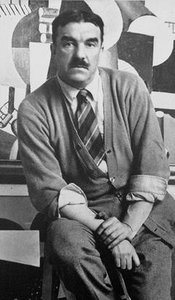
Fernand Légér, ein französischer Maler, Bildhauer und Filmemacher, wurde am 4. Februar 1881 in Argentan, Orne, Niedergermanien geboren. Sein Vater züchtete Rinder, und Légér erhielt zunächst eine Ausbildung als Architekt von 1897 bis 1899. Er zog dann im Jahr 1900 nach Paris und unterstützte sich dort als Architektenzeichner.

Künstlerische Entwicklung

Légers frühe Werke wurden vom Impressionismus beeinflusst, wie in Le Jardin de ma Mère (Mein Muttergarten) (1905) zu sehen ist. Nach dem Besuch der Schule für dekorative Künste und der Académie Julian begann er ab seinem 25. Lebensjahr ernsthaft als Maler zu arbeiten. Sein Stil entwickelte sich zu einer persönlichen Form des Kubismus, der von Kritikern als "Tubism" bezeichnet wurde, da er sich auf zylindrische Formen konzentrierte.

Kubismus und die Puteaux-Gruppe

Im Jahr 1910 stellte Légér im Salon d’Automne zusammen mit Jean Metzinger und Henri Le Fauconnier aus. Er schloss sich der Puteaux-Gruppe an, auch bekannt als die Section d’Or (die Goldene Proportion), zusammen mit anderen Künstlern wie Francis Picabia und Marcel Duchamp.

Krieg und seine Auswirkungen auf Légers Werk

Légers Erfahrungen im Ersten Weltkrieg hatten einen erheblichen Einfluss auf sein Werk. Während seiner Zeit an der Front produzierte er Skizzen von Artilleriegeschützen, Flugzeugen und Soldaten. Sein Gemälde Soldat mit Pfeife (1916) spiegelt diese Zeit wider.

Spätere Werke und Vermächtnis

Légers Nachkriegszeitliche Arbeiten, die von glatten, maschinellen Formen geprägt waren, verknüpften ihn mit der Tradition der französischen figurativen Malerei. Seine "animierten Landschaften" von 1921 zeigten Figuren und Tiere in harmonischen, stromlinienförmigen Formen. Schlüsselwerke: Museen, die Légers Werk ausstellen:
Fernand Léger

Fernand Léger

1881 - 1955 , Frankreich

Kurzinfos

  • Beeinflusste Kunstrichtungen: ['Pop Art']
  • Beeinflusste Künstler: ['Paul Cézanne']
  • Bemerkenswerte Werke:
    • Die Sitzende Frau
    • Maschinenelement
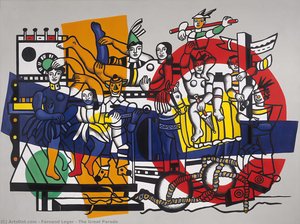
    • Der Große Umzug
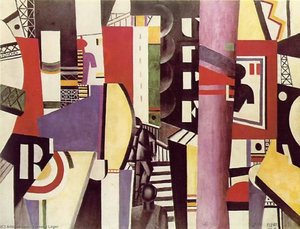
    • Die Stadt
  • Geburtsdatum: 04. Februar 1881
  • Geburtsort: Argentan, Frankreich
  • Künstlerische Richtung: Kubismus, Tubismus
  • Nationalität: Französisch
  • Sterbedatum: 1955
  • Vollständiger Name: Fernand Léger
  • Von Kunstbewegungen Beeinflusst: ['Cézannismus']
  • Von Künstlern Beeinflusst: ['Impressionismus']
Entdecken Sie Kunstwerke, die nach Themen, Stilen und Merkmalen sortiert sind.