


 Preview
 Druck bestellen Gemälde kaufen
 Versenden
 Details anzeigen
 Zu Favoriten hinzufügen
 Herunterladen
 Ähnliche Objekte
 Röntgenaufnahme
 Diashow anzeigen
 Öl auf LeinwandWandkunstCubism
 1914Frühmittelalter
 112.0 x 84.0 cm
Erwerben Sie ein hochauflösendes, optimiertes digitales Bild, das der Online-Vorschau weit überlegen ist.
Jede Datei wird von unseren hauseigenen Spezialisten mit modernsten Werkzeugen und fachmännischer manueller Retusche sorgfältig vorbereitet. Wir stellen sicher, dass jedes Bild eine außergewöhnliche Klarheit, präzise Farbgenauigkeit und feinste Details aufweist.
Die endgültige Datei wird innerhalb von 72 Stunden per E-Mail zugestellt und ist für den sofortigen Einsatz in professionellen, redaktionellen und Druckumgebungen optimiert. Es handelt sich um dieselbe Qualität, der führende Designstudios, Verlage und Galerien vertrauen.
Laden Sie eine hochauflösende Datei für die persönliche Präsentation, den Druck und kreative Projekte herunter.
Wenn Sie sich für BuyPopArt.com entscheiden, erhalten Sie nicht nur ein Bild – Sie erhalten ein professionell aufbereitetes digitales Kunstwerk, das mit höchster Präzision erstellt und durch eine Zufriedenheitsgarantie abgesichert wird. Hier ist alles, was automatisch mit Ihrer Bestellung geliefert wird:

Ihre hochauflösende digitale Bilddatei wird Ihnen innerhalb von 72 Stunden nach der Bestellung per E-Mail zugestellt – bereit zur sofortigen Verwendung.

Ihre Kunstwerke werden professionell mithilfe fortschrittlicher KI-Tools und manueller Bearbeitung optimiert, um maximale Detailtreue, Klarheit und Farbgenauigkeit zu gewährleisten.

Datei versehentlich gelöscht oder verloren? Keine Sorge – wir senden sie Ihnen jederzeit kostenlos erneut zu.

Genießen Sie Ihr Kunstwerk sofort ohne Zollgebühren, Einfuhrabgaben oder Versandkosten – digitale Downloads sind immer steuerfrei.

Wir garantieren, dass Ihr digitales Bild die Originalfarben mithilfe professioneller Werkzeuge und Farbmanagement so präzise wie möglich wiedergibt.

Sollten Sie mit Ihrem digitalen Bild nicht zufrieden sein, werden wir es überarbeiten oder Ihnen innerhalb von 60 Tagen 100% erstatten – ohne Wenn und Aber.

Nicht zufrieden? Erhalten Sie innerhalb von 60 Tagen nach Erhalt Ihrer digitalen Datei eine vollständige Rückerstattung – ohne Angabe von Gründen.

3 Bilder kaufen, 10% sparen – 5 Bilder kaufen, 15% sparen – Ab 10 Bildern 20% sparen. Ideal für kreative Projekte, Galerien und Agenturen.
Franz Marc's "Broken Forms," painted in 1914, isn’t merely a painting; it’s an immersion into the heart of early 20th-century artistic upheaval. This work, measuring 112 x 84 centimeters and executed with bold strokes on canvas, represents a pivotal moment where traditional representation began to dissolve, giving way to a new language of form and feeling. Marc, a key figure bridging Expressionism and Cubism, sought not just to depict the external world but to capture its underlying spiritual essence – particularly as revealed through the vibrant life force of animals. The painting’s genesis lies in his deep-seated belief that art could be a conduit for profound emotional and spiritual experience, a conviction powerfully reflected in this intensely colored composition.
“Broken Forms” exemplifies the radical experimentation of its time. Marc’s approach to form is decidedly Cubist – he dismantles recognizable objects into their fundamental geometric components, presenting them in a fragmented, multi-perspectival arrangement. Circles dominate the canvas, radiating outwards with an almost palpable energy. These aren't simply decorative elements; they represent a deliberate attempt to capture the dynamism and interconnectedness of nature. The prominent circle at the top left, alongside the smaller one near the center-left, acts as focal points, drawing the viewer into the painting’s complex interplay of shapes. The use of vibrant colors – reds, blues, yellows, greens, and oranges – isn't arbitrary; it’s a carefully orchestrated palette designed to evoke specific emotions and sensations. The tension between these hues contributes significantly to the work’s overall feeling of movement and vitality.
Marc’s artistic vision was shaped by a confluence of influences. He deeply admired Vincent van Gogh's expressive use of color and brushwork, while also absorbing elements from the proto-Cubist explorations of Pablo Picasso and Georges Braque. However, it is perhaps his engagement with African tribal masks that truly informs “Broken Forms.” The simplified forms, bold colors, and symbolic content of these masks resonated profoundly with Marc’s desire to communicate beyond purely representational imagery. There's a sense of primal energy, almost ritualistic in its intensity, echoing the spiritual power attributed to such objects. Furthermore, his early theological explorations subtly permeate the work, suggesting an underlying quest for meaning and connection to something greater than oneself.
"Broken Forms" was created during a period of immense social and artistic change – the dawn of the 20th century. The rise of Cubism, Futurism, and Expressionism challenged established conventions and paved the way for entirely new modes of artistic expression. Marc’s painting stands as a testament to this revolutionary spirit, pushing the boundaries of traditional painting techniques and inviting viewers to engage with art on an emotional and intellectual level. It's not simply a depiction of shapes; it’s an embodiment of the anxieties, hopes, and spiritual yearnings of a rapidly changing world. The work’s enduring power lies in its ability to evoke a sense of both disorientation and profound beauty – a reflection of the complexities of modern experience.
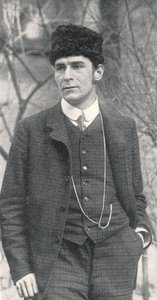
1880 - 1916 , Deutschland


Bleiben Sie über die neuesten Kunstnachrichten, exklusive Angebote und Dekorationsideen auf dem Laufenden.
Erzählen Sie uns von Ihrem Projekt und unsere Kunstexperten erstellen für Sie 3 personalisierte Kunstvorschläge.
Wir kuratieren 3 Optionen exklusiv für Sie – kostenlos!


 Teilen

 Weiterlesen