
x

Giclée- oder Leinwanddruck in Museumsqualität mit schneller Produktion und flexiblen Veredelungsoptionen. ( Handgemalte Reproduktion bestellen Bild kaufen)





























Wählen Sie aus unseren vordefinierten Formaten, die den ursprünglichen Proportionen des Kunstwerks entsprechen.

Sie können Ihre eigenen Maße eingeben, um ein bestimmtes Format oder einen speziellen Platz einzupassen. Wenn das von Ihnen gewählte Format nicht den Proportionen des Originalbildes entspricht, werden wir das Kunstwerk entweder beschneiden oder das Bild mit einem gespiegelten oder einfarbigen Rand erweitern. Ein digitaler Entwurf wird Ihnen zur Genehmigung zugesandt, bevor die Produktion beginnt.
Bitte beachten Sie, dass die Vorschau auf dem Bildschirm nicht den tatsächlichen Zuschnitt oder die Erweiterung widerspiegelt. Nur der Entwurf zeigt die endgültige Komposition präzise an.
Obwohl Sondermaße verfügbar sind, empfehlen wir die Auswahl eines Maßes aus der vordefinierten Liste, um die ursprünglichen Proportionen zu bewahren.
Weltweiter Versand () innerhalb von 2 Wochen statt der üblichen 4/5 Wochen. (25 August)


Landscape with Wheatgerm
Format der Reproduktion
In the vast, labyrinthine corridors of Surrealism, few works capture the unsettling beauty of the subconscious quite like Max Ernst’s Landscape with Wheatgerm. Created in 1936, this oil on canvas masterpiece serves as a profound window into the human psyche, where the boundaries between the rational world and the dream state dissolve into a singular, haunting vision. To gaze upon this landscape is to abandon the safety of logic and surrender to an imagery that is simultaneously mesmerizing and deeply disquieting. Ernst does not merely depict a scene; he engineers a psychological experience, inviting the viewer to navigate a terrain where the familiar becomes strange and the inanimate breathes with a life of its almost spectral intensity.
The painting’s origins are rooted in the rebellious spirit of the Dada movement, a period of profound disillusionment following the devastation of World War I. Having embraced the Dadaist rejection of reason and tradition, Ernst transitioned into Surrealism by seeking to liberate art from the constraints of representation. In Landscape with Wheatgerm, we see this evolution perfected. The composition is a deliberate disruption of the pastoral ideal, replacing the comfort of a recognizable horizon with a desolate, muted landscape that feels as though it has been excavated directly from a fever dream.
Every element within Ernst’s composition is laden with a heavy, symbolic significance that demands contemplation. The artist employs a disconcerting blend of organic and inorganic forms—a technique that creates a sense of profound ontological instability. We encounter dogs positioned with a primal vulnerability, alongside seemingly random objects such as chairs, bottles, and vases scattered across the terrain. These disparate components coalesce into an evocative scene that transcends literal depiction. The presence of the bird, perched amidst the ruggedness, introduces a note of fragile aspiration, yet it remains framed against an oppressive, mountainous backdrop that suggests the weight of existence.
At the very heart of this visual narrative lies the wheatgerm itself—a potent symbol of embryonic potential, rebirth, and the promise of future harvests. Yet, Ernst masterfully complicates this optimism by juxtaposing it with elements of decay and uncertainty. This tension between fertility and fragility is what gives the work its enduring emotional resonance. For the collector or the observer, the painting offers a complex dialogue between growth and dissolution, making it a piece that does not merely sit upon a wall but actively engages the intellect and stirs the soul.
For the interior designer or art enthusiast, the technical brilliance of Landscape with Wheatgerm offers unparalleled opportunities for visual storytelling. Ernst was a pioneer of revolutionary techniques, including frottage (rubbing) and grattage (scraping), which he used to bypass the conscious mind and tap into the irrational. In this work, his masterful use of mixed media—combining traditional oil paints with elements reminiscent of collage—creates a textured surface that feels tactile and sculptural. The way light and shadow dance across the layered botanical fragments and rocky outcrops provides a rich, multidimensional quality.
This intricate layering of memory and matter allows the painting to possess a commanding presence in any sophisticated space. Whether anchored in a minimalist gallery setting or serving as a profound focal point in a curated residential collection, the artwork’s muted tones and complex textures provide a sense of depth that pulls the viewer into its enigmatic world. Owning a high-quality reproduction of such a cornerstone of Surrealism is more than an acquisition of decor; it is an invitation to inhabit a landscape of infinite imagination.
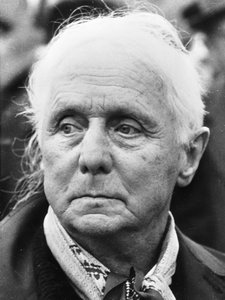
1891 - 1976 , Deutschland
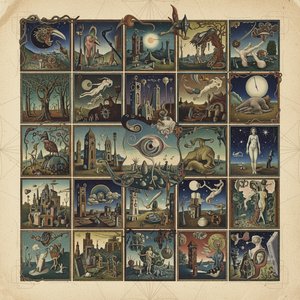
Entdecken Sie die 25 bedeutendsten Kunstwerke von Max Ernst! Tauchen Sie ein in die Welt des Surrealismus, Dada und abstrakter Malerei. Hochwertige Kunstreproduktionen & Inspiration für Ihr Zuhause bei BuyPopArt.com.

Entdecken Sie die 10 Meisterwerke der Romantischen Landschaftsmalerei! Von Caspar David Friedrich bis Turner – erleben Sie die Kunst, Emotion & Natur. Hochwertige Reproduktionen auf BuyPopArt.com
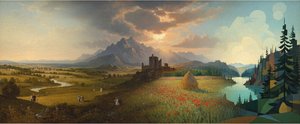
Explore the rich history of landscape art with BuyPopArt. Discover renowned artists, movements like Impressionism & Romanticism, and expert guidance for collecting timeless pieces. Find your perfect serene escape today!
Entdecken Sie die 25 Meisterwerke von John Constable! Erleben Sie englische Landschaftsmalerei vom Hay Wain bis zur Stour Valley. Hochwertige Reproduktionen & Kunst für Ihr Zuhause auf BuyPopArt.com.

Explore the rich history of landscape art with BuyPopArt. Discover renowned artists, movements like Impressionism & tonalism, and expert guidance for collecting timeless pieces. Find your perfect serene escape today!


Bleiben Sie über die neuesten Kunstnachrichten, exklusive Angebote und Dekorationsideen auf dem Laufenden.
Erzählen Sie uns von Ihrem Projekt, und unsere Kunstexperten erstellen für Sie drei personalisierte Kunstvorschläge.
Wir kuratieren 3 Optionen exklusiv für Sie – kostenlos!


 Vorschau anzeigen
 Versenden
 Teilen
 Details anzeigen

 Herunterladen
 Ähnliche Objekte
 Röntgenaufnahme
 Diashow

 Weiterlesen







 Die Glasoption ist nur für Größen unter 110 cm verfügbar.


