PreviewPreview Druck bestellen Druck bestellenGemälde kaufen Gemälde kaufen VersendenVersenden
Details anzeigenDetails anzeigen Zu Favoriten hinzufügen Zu Favoriten hinzufügen HerunterladenHerunterladen Ähnliche ObjekteÄhnliche Objekte RöntgenaufnahmeRöntgenaufnahme Diashow anzeigenDiashow anzeigen

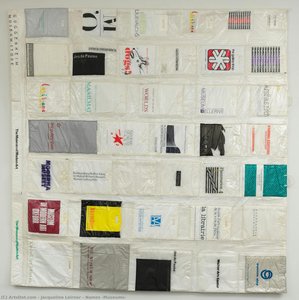
Untitled

  • Entstehungsdatum1988
  • Abmessungen150.0 x 150.0 cm

Brazilian modernist painter Tomie Ohtake is celebrated for her abstract expressionist sculptures and vibrant canvases like 'Spatial Structure,' shaping contemporary art in Brazil; discover the captivating world of her bold forms and dynamic compositions.

Erwerben Sie ein hochauflösendes, optimiertes digitales Bild, das der Online-Vorschau weit überlegen ist.

Jede Datei wird von unseren hauseigenen Spezialisten mit modernsten Werkzeugen und fachmännischer manueller Retusche sorgfältig vorbereitet. Wir stellen sicher, dass jedes Bild eine außergewöhnliche Klarheit, präzise Farbgenauigkeit und feinste Details aufweist.

Die endgültige Datei wird innerhalb von 72 Stunden per E-Mail zugestellt und ist für den sofortigen Einsatz in professionellen, redaktionellen und Druckumgebungen optimiert. Es handelt sich um dieselbe Qualität, der führende Designstudios, Verlage und Galerien vertrauen.

Digitales Kunstwerk

Laden Sie eine hochauflösende Datei für die persönliche Präsentation, den Druck und kreative Projekte herunter.

Endpreis

$9.99

In jeder Bestellung digitaler Bilder enthalten

Professionelle digitale Bereitstellung, garantiert

Wenn Sie sich für BuyPopArt.com entscheiden, erhalten Sie nicht nur ein Bild – Sie erhalten ein professionell aufbereitetes digitales Kunstwerk, das mit höchster Präzision erstellt und durch eine Zufriedenheitsgarantie abgesichert wird. Hier ist alles, was automatisch mit Ihrer Bestellung geliefert wird:

shipping_icon
Schnelle E-Mail-Zustellung

Ihre hochauflösende digitale Bilddatei wird Ihnen innerhalb von 72 Stunden nach der Bestellung per E-Mail zugestellt – bereit zur sofortigen Verwendung.

canvas_icon
KI-optimierte digitale Datei

Ihre Kunstwerke werden professionell mithilfe fortschrittlicher KI-Tools und manueller Bearbeitung optimiert, um maximale Detailtreue, Klarheit und Farbgenauigkeit zu gewährleisten.

insurance_icon
Kostenloser lebenslanger erneuter Versand

Datei versehentlich gelöscht oder verloren? Keine Sorge – wir senden sie Ihnen jederzeit kostenlos erneut zu.

tax_icon
Keine Einfuhrgebühren – jemals

Genießen Sie Ihr Kunstwerk sofort ohne Zollgebühren, Einfuhrabgaben oder Versandkosten – digitale Downloads sind immer steuerfrei.

color_icon
Garantierte Farbtreue

Wir garantieren, dass Ihr digitales Bild die Originalfarben mithilfe professioneller Werkzeuge und Farbmanagement so präzise wie möglich wiedergibt.

return_icon
60-Tage-Zufriedenheitsgarantie

Sollten Sie mit Ihrem digitalen Bild nicht zufrieden sein, werden wir es überarbeiten oder Ihnen innerhalb von 60 Tagen 100% erstatten – ohne Wenn und Aber.

guarantee_icon
100% Geld-zurück-Garantie

Nicht zufrieden? Erhalten Sie innerhalb von 60 Tagen nach Erhalt Ihrer digitalen Datei eine vollständige Rückerstattung – ohne Angabe von Gründen.

discount_icon
Rabatte bei Großbestellungen

3 Bilder kaufen, 10% sparen – 5 Bilder kaufen, 15% sparen – Ab 10 Bildern 20% sparen. Ideal für kreative Projekte, Galerien und Agenturen.

Details zum Sammlerstück

An imposing triangular shape is the central protagonist of Untitled. However, rather than a rigorous geometric shape, the asymmetry and irregularity of its composition suggest a sculpted, even organic origin of the form, an effect incremented by the textured and gestural treatment of its surface, with a mixed palette of grey tonalities that generates volume. Born in Kyoto in 1913, Ohtake travelled to São Paulo in 1936 to visit her brother and was unable to return to Japan when World War II broke out. In her artistic project, the artist combines geometric abstraction with a certain spiritual orientation. Working in Brazil but informed by the syncretic spiritual experience of Shinto-Buddhism then prevailing in Japan, her work is Western but with Japanese influence. According to the artist, "This influence is seen in the pursuit of synthesis: a few elements must say a lot."

Biografie des Künstlers

A Pioneer of Abstract Expressionism in Brazil: The Life and Art of Tomie Ohtake

Tomie Ohtake, a name synonymous with the vibrant energy and bold experimentation of Brazilian abstract art, stands as a pivotal figure in the country’s modernist landscape. Born in Kyoto, Japan, in 1913, her journey to becoming one of Brazil's most celebrated artists was anything but conventional. Ohtake’s early life offered little indication of the artistic path she would forge. Her family emigrated to São Paulo, Brazil, in 1928, seeking new opportunities and escaping a Japan grappling with economic hardship. Initially focused on assisting her family’s coffee plantation business, it wasn't until the late 1930s, at the age of twenty-five, that Ohtake began to seriously explore her artistic inclinations. This relatively late start proved remarkably fruitful, fueled by an innate curiosity and a relentless pursuit of self-expression. She enrolled in the Escola Nacional de Belas Artes (National School of Fine Arts) in Rio de Janeiro, but found its traditional academic approach stifling. It was through independent study, exposure to European modernism, and engagement with São Paulo’s burgeoning artistic community that Ohtake truly discovered her voice.

Early Influences and the Development of a Unique Style

Ohtake's formative years in Brazil coincided with a period of intense cultural exchange and experimentation. The 1930s witnessed the arrival of European artists fleeing political turmoil, bringing with them diverse influences – from Cubism and Surrealism to Expressionism. While she absorbed these currents, Ohtake resisted direct imitation, instead forging a distinctly personal style rooted in abstraction. Her early works, often executed in oil on canvas, reveal a fascination with geometric forms and dynamic compositions. However, what truly set her apart was her innovative use of materials. She began incorporating unconventional elements into her paintings – sand, sawdust, fabric, even coffee grounds – creating textured surfaces that challenged traditional notions of painting. This tactile approach reflected not only her connection to the Brazilian landscape but also a desire to break free from the constraints of representation. “I never wanted to copy reality,” she once stated, “I wanted to create my own.” The influence of Japanese aesthetics – particularly its emphasis on simplicity, asymmetry, and natural materials – is subtly present in her work, lending a unique sensibility to her abstract forms. Her early exhibitions were met with mixed reactions; some critics dismissed her work as primitive or lacking technical skill, while others recognized the originality and power of her vision.

The Height of Creativity: Sculptures and Public Art

The 1950s marked a turning point in Ohtake’s career, with her increasing focus on sculpture. She began experimenting with steel, aluminum, and concrete, creating monumental abstract forms that redefined the urban landscape of São Paulo. These sculptures were characterized by their bold lines, dynamic angles, and playful interaction with space. Unlike many modernist sculptors who favored polished surfaces, Ohtake embraced the raw materiality of her chosen materials, often leaving them unpainted or minimally treated. This emphasis on texture and form resonated deeply with the Brutalist architectural movement that was gaining prominence in Brazil at the time. Ohtake’s sculptures weren't confined to galleries or museums; she actively sought opportunities to create public art installations, believing that art should be accessible to everyone. Her iconic sculpture “Cosmic Ovoid” (1962), located in Ibirapuera Park in São Paulo, became a symbol of the city and a testament to her commitment to democratizing art. Throughout the 1960s and 70s, she continued to push boundaries, exploring new materials and techniques, and creating increasingly ambitious public works that transformed urban spaces into dynamic artistic environments.

Legacy and Historical Significance

Tomie Ohtake’s influence on Brazilian art is immeasurable. She paved the way for subsequent generations of abstract artists, challenging conventional norms and inspiring a new wave of experimentation. Her work helped to establish Brazil as a major center for modernist art, gaining international recognition and acclaim.
  • She was one of the first female artists in Brazil to achieve widespread critical and commercial success.
  • Her pioneering use of materials broadened the definition of sculpture and painting.
  • Her commitment to public art made art accessible to a wider audience.
Beyond her artistic achievements, Ohtake’s life story is one of resilience, determination, and unwavering dedication to her craft. She overcame numerous obstacles – including gender bias and cultural barriers – to become a leading figure in the Brazilian art world. In 1986, she founded the Instituto Tomie Ohtake in São Paulo, dedicated to promoting contemporary art and providing educational opportunities for aspiring artists. The institute continues to be a vital center for artistic innovation and serves as a lasting tribute to her legacy. Today, Tomie Ohtake’s work is exhibited in major museums around the world, cementing her place as one of the most important abstract expressionist artists of the 20th century. Her art remains a powerful testament to the transformative power of creativity and the enduring spirit of innovation.

Kurzinfos

  • Artistic Movement Or Style: Abstract Expressionism
  • Artists Or Movements Influenced By This Artist: ['Brazilian Abstract Art']
  • Artists Who Influenced This Artist:
    • Joan Miró
    • Max Ernst
  • Date Of Birth: 1920
  • Date Of Death: 2015
  • Full Name: Tomie Ohtake
  • Nationality: Brazilian-Japanese
  • Notable Artworks:
    • Cosmic Space
    • Untitled (Red)
    • Structure with Red
    • Space and Form
  • Place Of Birth: Kyoto, Japan