
 PaintingSymbolism
 189919th Century
 37.0 x 12.0 cm
 Tate Britain
Χειροποίητη oil painting σε καμβά στο δικό σας μέγεθος και πλαίσιο, κατά παραγγελία από τους καλλιτέχνες μας. ( Αγορά εκτύπωσης Αγορά ψηφιακής εικόνας)





























Επιλέξτε από τις προκαθορισμένες διαστάσεις μας που διατηρούν τις αρχικές αναλογίες του έργου τέχνης.

Μπορείτε να ορίσετε δικές σας διαστάσεις ώστε το έργο να ταιριάζει σε ένα συγκεκριμένο πλαίσιο ή χώρο. Εάν το επιλεγμένο μέγεθος δεν συμπίπτει με τις αναλογίες της αρχικής εικόνας, θα περικοψούμε το έργο ή θα επεκτείνουμε τη ζωγραφιά με πρόσθετα χειρόγραφα στοιχεία. Ένα ψηφιακό προσχέδιο θα σας αποσταλεί για έγκριση πριν την έναρξη της παραγωγής.
Παρακαλούμε σημειώστε ότι η προεπισκόπηση στην οθόνη δεν αντικατοπτρίζει την πραγματική περικοπή ή επέκταση. Μόνο το προσχέδιο θα δείξει με ακρίβεια την τελική σύνθεση.
Παρόλο που είναι διαθέσιμα προσαρμοσμένα μεγέθη, συνιστούμε να επιλέξετε μια διάσταση από τη λίστα των προκαθορισμένων μεγεθών για τη διατήρηση των αρχικών αναλογιών.
Παγκόσμια Αποστολή () σε 3-4 εβδομάδες αντί για τις συνήθεις 5 εβδομάδες. (17 Αύγουστος). Χωρίς συμβιβασμούς στην ποιότητα.


The Temptation
Διαστάσεις Αναπαραγωγής
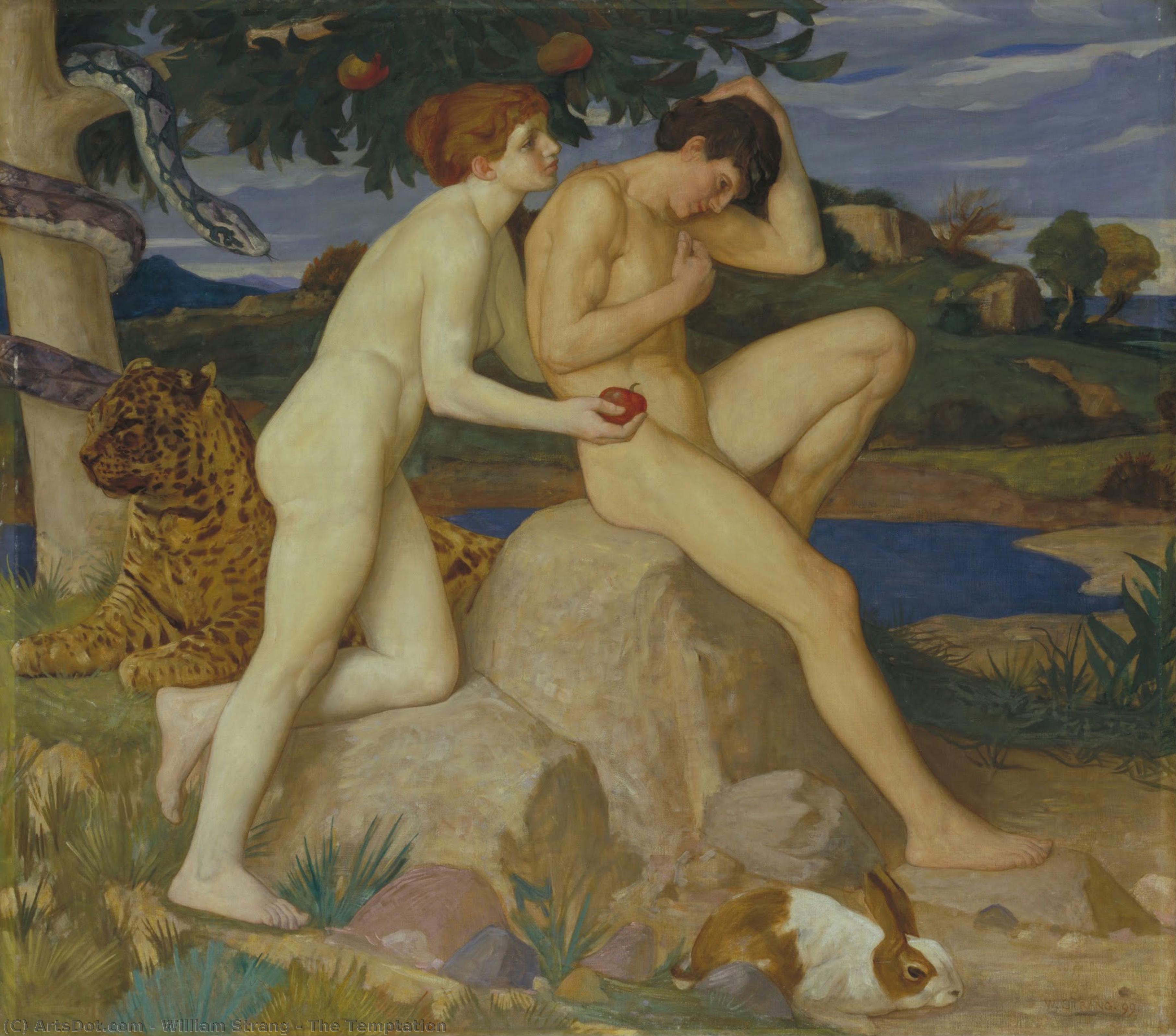
In the quiet, evocative depths of William Strang’s The Temptation, we are transported back to the dawn of human consciousness. Created in 1899, this exquisite piece serves as the profound opening movement in a larger symphonic series of ten paintings commissioned by the brewer Laurence Hodson for his library at Compton Hall. The work captures the pivotal instant of the biblical narrative, where innocence meets the threshold of knowledge. Within the lush, symbolic landscape of the Garden of Eden, we find Adam and Eve seated upon the earth, their nakedness representing a state of primordial purity before the fall. The composition is masterfully balanced, drawing the eye through a delicate arrangement of natural elements that suggest both the tranquility of paradise and the creeping shadow of impending change.
The artistry of Strang is on full display through his command of form and subtle narrative tension. As Eve holds the forbidden fruit, her gaze and posture invite a deep contemplation of choice and consequence. The presence of the serpent, coiled sinuously around a tree trunk, introduces a chilling element of suspense, acting as the silent catalyst for the drama unfolding. To ground this cosmic event in the tangible beauty of the natural world, Strang populates the scene with tender details: two rabbits nestled within the greenery and a solitary potted plant that adds a touch of domesticity to the wild Eden. This juxtaposition of the monumental biblical event with the small, breathing creatures of the earth creates a sense of intimacy that is both breathtaking and deeply moving.
Technically, The Temptation showcases the visionary skill that earned William Strang his place among the elite printmakers and painters of the late Victorian era. His background in etching and drypoint informs the bold yet delicate design seen here, where every line contributes to a sense of structural integrity and atmospheric depth. The painting functions not merely as an illustration of scripture, but as a sophisticated study of light, shadow, and texture. For the discerning collector or interior designer, this piece offers a rich tapestry of meaning; it is a work that rewards repeated viewing, revealing new layers of symbolic resonance with every glance.
Integrating such a masterpiece into a curated space provides an immediate sense of historical gravity and intellectual elegance. Whether placed in a private library, a sophisticated study, or a grand living area, a high-quality reproduction of this work acts as a conversational centerpiece. It invites guests to linger on the nuances of its composition—the way the light catches the curve of a shoulder or the subtle movement of the serpent. The Temptation is more than a depiction of a myth; it is an emotional journey through the complexities of human nature, making it an enduring choice for those who seek art that speaks to the soul and elevates the aesthetic spirit of their surroundings.
In the annals of British art, few names evoke the delicate tension between meticulous craftsmanship and profound spiritual inquiry quite like William Strang. Born in the industrious town of Dumbarton, Scotland, in 1859, Strang emerged as a singular figure whose work bridged the gap between the tangible realities of rural life and the ethereal realms of literary allegory. His journey from the counting-house of a shipbuilding firm to the prestigious studios of London is a testament to a relentless artistic drive. After moving to London in 1875, his talent was refined under the tutelage of masters like Edward Poynter and the legendary Alphonse Legros at the Slade School of Fine Art. This rigorous training instilled in him a reverence for the line, a quality that would become the heartbeat of his most celebrated etchings.
Strang’s artistic evolution was marked by an extraordinary command over diverse printmaking techniques. He did not merely use tools; he mastered them, moving with fluid grace between etching, drypoint, mezzot least, sand-ground mezzotint, and burin engraving. This technical versatility allowed him to capture the world in all its textures—from the rugged, earthy grit of a farmer ploughing his field to the soft, luminous skin of a portrait subject. His membership in the Royal Society of Painter-Etchers was not simply an accolade but a recognition of his ability to translate complex human emotions into the stark, beautiful language of black and white. Through his needle and burin, the mundane became monumental, and the fleeting moment became eternal.
What truly elevates Strang from a master technician to a visionary artist is his profound connection to the literary soul of his era. He possessed a rare ability to translate the written word into visual poetry, drawing deep inspiration from the heavy themes of faith, morality, and transformation found in the works of giants like John Bunyan and Samuel Taylor Coleridge. His celebrated series illustrating The Pilgrim's Progress stands as a pinnacle of his career, where he utilized an austere compassion to render the allegorical struggles of the soul. In these works, every shadow serves a narrative purpose, and every etched line guides the viewer through a landscape of spiritual consequence.
This penchant for storytelling extended into his collaborations with contemporary literary figures, most notably Rudyard Kipling. Through these partnerships, Strang explored the intersection of character and landscape, imbuing his portraits and scenes with a remarkable sensitivity to the human condition. His work often functioned as a bridge between realism and symbolism; while his subjects might be rooted in the recognizable textures of the English countryside or the intimate settings of a home, they were frequently imbued with a sense of the divine or the psychological. Whether depicting the biblical tension of The Temptation or the quiet intimacy of The Fisherman's Home, Strang invited his audience to look beneath the surface of the visible world.
The historical significance of William Strang lies in his ability to maintain a sense of profound dignity within the evolving landscape of late Victorian and Edwardian art. While others moved toward the fragmented light of Impressionism, Strang remained anchored in the strength of form and the clarity of narrative. His legacy is found in the enduring power of his portraits—capturing figures such as Hardy and Kipling with an unflinching eye for character—and in his ability to infuse social realism with a sense of the sublime. He remains a master of the etched line, a painter of shadows, and a chronicler of the human spirit's eternal journey through the light and dark of existence.

1859 - 1921

Explore the rich history of gardens in painting! Discover masterpieces from Renaissance to Impressionism & beyond. Learn about symbolism, artists like Monet & Klimt, and find your perfect artwork at BuyPopArt.

Explore the serene landscapes of John Ottis Adams, a key American Impressionist of the Hoosier Group. Discover his Luminist style & forgotten legacy with BuyPopArt.
Explore the life & work of Reginald Grenville Eves, a leading British portraitist who transitioned to captivating landscape painting. Discover his legacy and prominent works at BuyPopArt.

Embark on a visual journey through Claude Monet's Giverny. Discover the enchanting light, vibrant colors, and breathtaking landscapes of his legendary gardens through an expert exploration of Impressionist mastery and timeless beauty.

Embark on a visual journey through the serene beauty of gardens and parks in fine art. Discover how master artists capture nature's tranquility through impressionistic blooms and classical landscapes to bring timeless elegance into your home collection.


Μείνετε ενημερωμένοι για τις τελευταίες ειδήσεις σχετικά με την τέχνη, αποκλειστικές προσφορές και ιδέες διακόσμησης.
Πείτε μας περισσότερα για το έργο σας και οι ειδικοί μας στην τέχνη θα σας προσφέρουν 3 εξατομικευμένες προτάσεις έργων τέχνης.
Αφήστε μας να επιμεληθούμε 3 επιλογές αποκλειστικά για εσάς – Δωρεάν!


 Δείτε σε πραγματικό χώρο
 Αποστολή
 Κοινοποίηση
 Λεπτομέρειες

 Λήψη
Λήψη
 Παρόμοια αντικείμενα συλλογής
 Ακτινογραφία
 Παρουσίαση
 Διαβάστε περισσότερα







 Η επιλογή με γυαλί είναι διαθέσιμη μόνο για μεγέθη κάτω από 110 εκ.


