Buy print Buy printBuy Image Buy Image SendSend
DetailsDetails Add to favorites Add to favorites DownloadDownload SimilarsSimilars X-RayX-Ray DiaporamaDiaporama

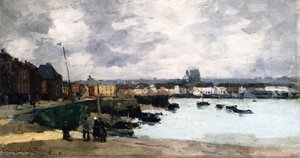
The Quays of Dieppe, after the Rain

Discover "The Quays of Dieppe" by Albert-Charles Lebourg! A serene Impressionist landscape capturing post-rain tranquility. Explore this 1882 masterpiece & its evocative beauty.

Discover Albert-Charles Lebourg (1849-1928), a French Impressionist master of the Rouen School. Explore his serene landscapes & Seine river scenes, featured in major museums like Musée d'Orsay.

Hand Made Oil Reproduction

Hand-painted oil on canvas in your size and frame, made to order by our artists.

P118B $10
P118H $10
P118W $10
P438Z $10
P508JH $12
P508YH $12
P805H $10
P805Z $10
P919BZ $10
P919G $10
P919XJ $10
P959ZH $10
P968JZ $12
W106C $8
W218G $10
W218JH $8
W218Y $10
W307PJ $10
W316G $10
W316PJ $8
W316Y $10
W398PJ $8
W4111J $10
W500HY $15
W500JH $15
W692G $12
W849H $8
W940BG $15
W953PJ $8

Standard
custom
CM
INCH

Pick from our preset sizes that match the artwork's original proportions.

width
height

You may enter your own dimensions to fit a specific frame or space. If your selected size does not match the original image's proportions, we will either crop the artwork or extend the painting with additional hand-painted elements. A digital mockup will be sent for your approval before production begins.
Please note that the on-screen preview does not reflect the actual cropping or extension. Only the mockup will accurately show the final composition.
While custom sizes are available, we recommend selecting a dimension from the predefined list to preserve the original proportions.

Examples of what can be changed: Replace face with customer photo; Add pet (e.g., replace cat with dog); Include hidden message in background; Change background landscape or elements.
After order, BuyPopArt.com team will email client for instructions and provide a mockup preview

Worldwide Delivery () in 3/4 weeks instead of standard 5 weeks. (16 July). No compromise on quality.

why_choose_icon
Free Worldwide Express Shipping
why_choose_icon
High-Quality Linen Canvas
why_choose_icon
Full Shipping Insurance
why_choose_icon
Customs Tax Refund Guarantee
why_choose_icon
True Color Matching Guarantee
why_choose_icon
60-Day Return Policy (Defects Only)
why_choose_icon
100% Money-Back Guarantee
why_choose_icon
Bulk Discount Offer

Total Price

-

reproduction

The Quays of Dieppe, after the Rain

Reproduction Medium

Reproduction Size

-

Total Price

-

Quick Facts

  • title: The Quays of Dieppe, after the Rain
  • influences: Realism
  • style: Impressionism
  • year: 1882
  • subject: Harbor scene, seascape
  • artist: Albert Charles Lebourg (Albert-Marie Lebourg)

Art Quiz

There is only one correct answer for each question.

Question 1:
In what year was Albert Lebourg's 'The Quays of Dieppe, after the Rain' created?
Question 2:
Which artistic movement is most closely associated with 'The Quays of Dieppe, after the Rain'?
Question 3:
What is a dominant characteristic of the atmosphere depicted in this painting?
Question 4:
The artist utilizes what technique to create a sense of depth in 'The Quays of Dieppe, after the Rain'?

Artwork Description

A Moment Captured: Dieppe After the Rain

Albert Lebourg’s “The Quays of Dieppe, after the Rain” (1882) is a captivating example of Impressionist landscape painting, transporting viewers to the tranquil harbor town of Dieppe on the French coast. This work isn't merely a depiction of a place; it’s an evocation of a mood – a quiet contemplation born from the lingering atmosphere after a rainfall.

Impressionistic Harmony & Technique

Lebourg, a key member of the Rouen School alongside Monet and Pissarro, masterfully employs Impressionist principles in this piece. Rather than striving for photographic realism, he focuses on capturing the fleeting effects of light and atmosphere. Loose, expressive brushstrokes define the scene, particularly noticeable in the sky and water, creating a sense of movement and dynamism. The paint is applied with visible texture, inviting the eye to explore the surface and appreciate the artist’s hand. This technique allows for a subtle interplay of color and tone, rather than harsh lines or defined forms.

Dieppe & the Rise of Coastal Scenes

The late 19th century witnessed a growing fascination with coastal scenes in art, fueled by increased accessibility to seaside resorts like Dieppe. This painting reflects that trend, portraying not just the physical landscape but also the burgeoning leisure culture and industrial activity present in port towns. The inclusion of boats, buildings, and what appears to be an industrial structure hints at the working life intertwined with the natural beauty of the harbor.

Color & Emotional Resonance

A muted palette dominates the composition – grays, blues, browns, and greens blend seamlessly to create a sense of serenity tinged with melancholy. The overcast sky and soft lighting contribute to this emotional effect. While lacking strong contrasts, the subtle gradations in tone suggest depth and atmosphere. This restrained use of color isn’t about vibrancy; it's about conveying a specific feeling – the quietude and reflective mood that follows a rain shower.

Subtle Symbolism & Lasting Appeal

Though not overtly symbolic, the painting subtly explores themes of transience and human presence within nature. The indistinct figures in the foreground emphasize the vastness of the scene and the power of the natural world. The receding perspective draws the viewer into the distance, inviting a sense of contemplation and escape. “The Quays of Dieppe, after the Rain” offers a timeless appeal, resonating with those who appreciate atmospheric landscapes and the beauty of everyday life.

A Versatile Addition to Any Collection

This artwork’s calming color palette and evocative atmosphere make it an ideal addition to various interior design schemes. It complements both traditional and contemporary spaces, adding a touch of sophisticated tranquility. Whether displayed in a living room, study, or bedroom, this reproduction promises to inspire reflection and bring the serene beauty of Dieppe into your home.


Artist Biography

A Luminist of the Seine: The Life and Art of Albert-Charles Lebourg

Born in 1849 in the quiet village of Montfort-l'Évêque, France, Albert-Charles Lebourg embarked on an artistic journey that would firmly establish him as a key figure within the Impressionist and Post-Impressionist movements. Though often overshadowed by more celebrated contemporaries like Monet or Renoir, Lebourg’s dedication to capturing the ephemeral beauty of the French countryside—particularly the landscapes surrounding Rouen and the Seine River—resulted in a prolific body of work exceeding 2,000 paintings. His story is one of quiet perseverance, a commitment to *plein air* painting, and an unwavering fascination with the interplay of light and atmosphere. Initially drawn to architecture, Lebourg’s path shifted towards fine art after enrolling at the École des Beaux-Arts in Rouen, where he honed his skills under Gustave Morin. This early training provided him with a solid foundation in draftsmanship and composition, qualities that would remain evident throughout his career even as his style evolved toward the looser brushwork characteristic of Impressionism. A pivotal moment arrived when Lebourg caught the attention of collector Laurent Laperlier, leading to an appointment as Professor of Graphic Art at the School of Fine Art in Algiers. This period, from 1872 to 1876, exposed him to a dramatically different light and landscape, influencing his palette and approach to depicting natural forms.

Embracing Impressionism and Finding His Voice

Upon returning to France, Lebourg quickly integrated himself into the burgeoning Impressionist circle. He exhibited alongside luminaries such as Monet, Sisley, Pissarro, and Degas in the Fourth Impressionist Exhibition of 1879, presenting a collection of works born from his Algerian experiences and early explorations of the Seine valley. This marked a turning point, solidifying his commitment to capturing fleeting moments and atmospheric effects. Unlike some of his peers who radically broke with traditional techniques, Lebourg’s approach was more measured. He embraced the Impressionist emphasis on light and color but retained a degree of structure and detail in his compositions. His paintings are not simply impressions; they are carefully observed studies of nature, imbued with a sense of tranquility and poetic sensibility. The Seine River became a recurring motif throughout his career, serving as both subject and inspiration. He painted its banks in all seasons and at all times of day, meticulously documenting the changing light and reflections on the water’s surface. Works like *Matinée à Dieppe* exemplify this dedication, showcasing his ability to render the soft, golden hues of dawn with remarkable sensitivity.

Recognition and a Lasting Legacy

Lebourg's talent did not go unnoticed by the established art world. He was admitted to the prestigious Salon in 1883, a significant achievement that brought him wider recognition. His participation in the influential Les XX exhibition in Brussels in 1887 further cemented his reputation among avant-garde circles. Throughout the late 19th and early 20th centuries, Lebourg enjoyed consistent success, exhibiting regularly at the Salon and receiving accolades for his work. He was named a Chevalier of the Legion of Honour in 1903 and later promoted to Officer in 1924—honors that acknowledged his contributions to French art. Despite this recognition, Lebourg remained a relatively modest figure, preferring the solitude of the countryside to the bustling social scene of Paris. His dedication to painting *en plein air* often meant enduring harsh weather conditions and logistical challenges, but he believed it was essential for capturing the true essence of nature.

A Master of Atmosphere: The Enduring Appeal of Lebourg’s Work

Albert-Charles Lebourg passed away in Rouen in 1928, leaving behind a rich artistic legacy that continues to captivate audiences today. His paintings are held in numerous museums across France and beyond, including the Musée d'Orsay, the Petit Palais, and the Musée des Beaux-Arts de Rouen. What sets Lebourg apart is his ability to evoke a sense of atmosphere and mood through subtle variations in color and light. He wasn’t interested in grand narratives or dramatic compositions; instead, he focused on capturing the quiet beauty of everyday life—a sunlit meadow, a tranquil riverbank, a fleeting moment of reflection. His landscapes are not merely representations of places; they are expressions of feeling. They invite viewers to pause and contemplate the wonders of the natural world, offering a respite from the complexities of modern life. While he shared stylistic affinities with his Impressionist contemporaries, Lebourg forged his own unique path, creating a body of work that is both deeply personal and universally appealing. His paintings stand as a testament to the power of observation, the beauty of simplicity, and the enduring allure of the French countryside.

Further Exploration

  • Explore his works featured in museums like Musée d’Orsay, Petit-Palais, and Musée des Beaux-Arts de Rouen.
  • Discover more about the Société des Artistes Français and its influence on French art during Lebourg's time.
  • Consider how his work reflects the broader artistic trends of Impressionism and Post-Impressionism.
Albert-Charles Lebourg

Albert-Charles Lebourg

1849 - 1928 , France

Quick Facts

  • Artistic Movement Or Style: Impressionism/Post-Impressionism
  • Date Of Birth: February 1, 1849
  • Date Of Death: January 6, 1928
  • Full Name: Albert-Charles Lebourg
  • Nationality: French
  • Notable Artworks:
    • Matinée à Dieppe
    • Bords de Seine à Chatou
  • Place Of Birth: Montfort-l'Évêque, France
Explore artworks organized by themes, styles, and characteristics.