Buy print Buy printBuy Image Buy Image SendSend
DetailsDetails Add to favorites Add to favorites DownloadDownload SimilarsSimilars X-RayX-Ray DiaporamaDiaporama

Allen ginsberg

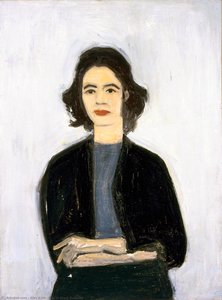
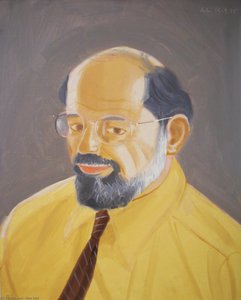
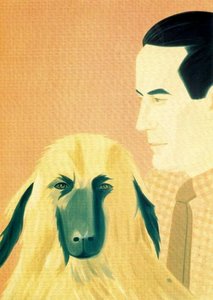
Explore Alex Katz’s portrait of Allen Ginsberg – a realistic yet impressionistic oil painting capturing age & wisdom through warm colors & visible brushstrokes.

Discover Alex Katz (b.1927), a Pop Art pioneer! Explore his vibrant portraits, landscapes & innovative 'cutout' techniques. A master of modern painting.

Hand Made Oil Reproduction

Hand-painted oil on canvas in your size and frame, made to order by our artists.

P118B $10
P118H $10
P118W $10
P438Z $10
P508JH $12
P508YH $12
P805H $10
P805Z $10
P919BZ $10
P919G $10
P919XJ $10
P959ZH $10
P968JZ $12
W106C $8
W218G $10
W218JH $8
W218Y $10
W307PJ $10
W316G $10
W316PJ $8
W316Y $10
W398PJ $8
W4111J $10
W500HY $15
W500JH $15
W692G $12
W849H $8
W940BG $15
W953PJ $8

Standard
custom
CM
INCH

Pick from our preset sizes that match the artwork's original proportions.

width
height

You may enter your own dimensions to fit a specific frame or space. If your selected size does not match the original image's proportions, we will either crop the artwork or extend the painting with additional hand-painted elements. A digital mockup will be sent for your approval before production begins.
Please note that the on-screen preview does not reflect the actual cropping or extension. Only the mockup will accurately show the final composition.
While custom sizes are available, we recommend selecting a dimension from the predefined list to preserve the original proportions.

Examples of what can be changed: Replace face with customer photo; Add pet (e.g., replace cat with dog); Include hidden message in background; Change background landscape or elements.
After order, BuyPopArt.com team will email client for instructions and provide a mockup preview

Worldwide Delivery () in 3/4 weeks instead of standard 5 weeks. (16 July). No compromise on quality.

why_choose_icon
Free Worldwide Express Shipping
why_choose_icon
High-Quality Linen Canvas
why_choose_icon
Full Shipping Insurance
why_choose_icon
Customs Tax Refund Guarantee
why_choose_icon
True Color Matching Guarantee
why_choose_icon
60-Day Return Policy (Defects Only)
why_choose_icon
100% Money-Back Guarantee
why_choose_icon
Bulk Discount Offer

Total Price

-

reproduction

Allen ginsberg

Reproduction Medium

Reproduction Size

-

Total Price

-

Quick Facts

  • subject: Portrait of Allen Ginsberg
  • artist: Alex Katz
  • year: Unknown
  • medium: Oil or Acrylic on Canvas (likely)
  • title: Allen Ginsberg

Art Quiz

There is only one correct answer for each question.

Question 1:
Who is the artist responsible for creating this portrait of Allen Ginsberg?
Question 2:
The painting style can best be described as…
Question 3:
What is a dominant characteristic of the brushwork used in this portrait?
Question 4:
The color palette primarily utilizes which tones, contributing to a sense of age and wisdom?

Artwork Description

A Portrait of a Literary Icon: Alex Katz’s “Allen Ginsberg”

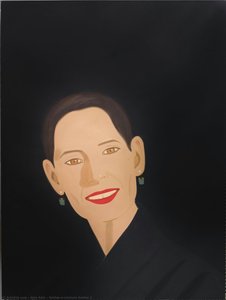
This striking portrait by Alex Katz captures the essence of Allen Ginsberg, the celebrated American poet and counterculture icon. More than just a likeness, this painting is a thoughtful meditation on age, wisdom, and the enduring power of artistic expression. The work exemplifies Katz's signature style – a blend of simplified forms, bold color choices, and a cool, detached emotionality that nonetheless resonates deeply with the viewer.

Style & Technique: A Modern Approach to Portraiture

Katz’s approach to portraiture is instantly recognizable. He eschews meticulous detail in favor of broad planes of color and simplified shapes. This isn't a hyperrealistic depiction; rather, it’s an *impression* of Ginsberg, distilled to his most essential qualities. The visible brushstrokes – characteristic of oil or acrylic on canvas – contribute to the painting’s tactile quality and imbue it with a sense of immediacy. The technique leans toward realism but is infused with impressionistic tendencies, creating a dynamic tension between representation and abstraction. Katz's mastery lies in his ability to convey volume and form through color alone, rather than relying on traditional chiaroscuro techniques.

Composition & Color Palette: Evoking Contemplation

The composition is centered, focusing intently on Ginsberg’s head and shoulders. This tight framing draws the viewer into a direct engagement with his face, emphasizing his expression and the lines etched by time. The color palette is dominated by warm yellows and browns, hues that evoke a sense of age, experience, and perhaps even melancholy. These earthy tones are subtly contrasted against a gradient background – transitioning from darker grays at the top to lighter shades below – which provides minimal depth without distracting from the subject. The overall effect is one of quiet contemplation.

Historical Context & Artistic Lineage

Alex Katz (born 1927) emerged as a significant figure in American art during the mid-20th century, bridging the gap between Pop Art and Minimalism. While he avoids direct categorization, his work shares affinities with both movements – particularly in its emphasis on flatness, bold color, and rejection of Abstract Expressionism’s emotional intensity. Katz has consistently focused on portraying the people around him—friends, family, and fellow artists—capturing a slice of contemporary life. His influences are diverse, including Japanese woodblock prints (particularly those of Kitagawa Utamaro). Painting Ginsberg places Katz within a lineage of artists who have documented and celebrated the cultural icons of their time.

Symbolism & Emotional Impact: A Legacy in Paint

The portrait isn’t laden with overt symbolism, but its power lies in its subtle evocation of Ginsberg's personality and legacy. The wrinkles on his face aren’t flaws; they are maps of a life lived fully, marked by intellectual curiosity, artistic passion, and social activism. The painting invites us to consider the weight of experience, the beauty of aging, and the enduring relevance of Ginsberg's poetic voice. The slightly melancholic expression hints at both vulnerability and resilience – qualities that defined Ginsberg’s work and life.

For Collectors & Interior Designers

This portrait would be a compelling addition to any collection focused on American figurative art, Pop Art, or portraits of influential cultural figures. Its relatively restrained color palette and simplified forms make it surprisingly versatile for interior design. It would complement both modern and contemporary spaces, adding a touch of intellectual sophistication and artistic gravitas.
  • Ideal for living rooms, studies, or libraries.
  • Pairs well with minimalist furniture and neutral color schemes.
  • A conversation starter that celebrates literary history and artistic innovation.

Artist Biography

Early Life and Education

  • Born: July 24, 1927, Sheepshead Bay, Brooklyn, New York, USA
  • Family moved to St. Albans, Queens at a young age.
  • Developed an interest in art early on.
  • Studied at the Cooper Union (1946-1949), learning Modern art theories and techniques under Morris Kantor.
  • Attended the Skowhegan School of Painting and Sculpture in Maine, honing painting skills and emphasizing painting from life. This experience proved pivotal to his artistic development.

Artistic Style and Influences

  • Style: Characterized by simplicity, bold colors, and cool emotional detachment. Often divided into portraiture and landscape genres.
  • Influences: Kitagawa Utamaro (Japanese artist known for woodcuts). Comparisons have been drawn to Andy Warhol and Keith Haring.
  • Techniques: Experimentation with "cutouts" – painting on cut panels of wood or aluminum. Direct painting onto shaped aluminum sheets became a signature technique.
  • Monochrome Backgrounds: A defining characteristic, separating him from gestural figure painters and anticipating Pop Art.
  • Photographic & Cinematic Strategies: Incorporation of cropping, decoupage, and repetition to create rhythm within paintings.

Notable Works and Development

  • Early Works: Small collages of figures in landscapes (late 1950s).
  • Portraiture Focus: Paintings of friends and his wife, Ada, became central themes.
  • Significant Pieces: "Alex Katz: Thursday Night," "Alex Katz: Ada in Black Sweater."
  • Large-Scale Paintings (1960s): Dramatic cropping of faces influenced by film and advertising.
  • Landscape Series (late 1980s & 1990s): “Environmental” landscapes with loosened edges and painterly brushstrokes.
  • Night Pictures: Exploration of new light sources, departing from sunlit landscapes.
  • Floral Paintings: Profusion of blossoms covering canvases (early 2000s).
  • Recent Works: Drastic cropping of individual portraits and sequencing images across linen. iPhone photography used as a starting point for compositions.

Achievements and Historical Significance

  • Pop Art Association: Often associated with the Pop Art movement, reflecting influences from popular culture.
  • Innovation in Technique: Pioneering use of "cutouts" and experimentation with printmaking techniques.
  • Collaborations: Designed sets and costumes for choreographer Paul Taylor.
  • Recognition & Awards: Numerous awards and recognition throughout his career. Work held in prominent collections (Centre Georges Pompidou, Tate Gallery, Guggenheim Museum Bilbao).
  • Longevity and Influence: A seven-decade career establishing him as a key figure in contemporary art, influencing generations of artists with his distinctive style and approach to portraiture and landscape painting.
Alex Katz

Alex Katz

1927 - , United States of America

Quick Facts

  • Artistic Movement Or Style: Pop Art, Figurative art
  • Artists Who Influenced This Artist: ['Kitagawa Utamaro']
  • Date Of Birth: July 24, 1927
  • Full Name: Alex Katz
  • Nationality: American
  • Notable Artworks:
    • Thursday night
    • Ada in black sweater
    • Penobscot
    • 3 PM, November
    • Upside Down Ada
  • Place Of Birth (City And Country): Brooklyn, United States
Explore artworks organized by themes, styles, and characteristics.