

Museum-quality giclée or canvas print with fast production and flexible finish options. ( Buy Hand Made Painting Buy Image)





























Pick from our preset sizes that match the artwork's original proportions.

You may enter your own dimensions to fit a specific frame or space. If your selected size does not match the original image's proportions, we will either crop the artwork or extend the image with a mirrored or solid-fill edge. A digital mockup will be sent for your approval before production begins.
Please note that the on-screen preview does not reflect the actual cropping or extension. Only the mockup will accurately show the final composition.
While custom sizes are available, we recommend selecting a dimension from the predefined list to preserve the original proportions.
Worldwide Delivery () in 2 weeks instead of standard 4/5 weeks. (24 August)


Winter Night
Reproduction Size
Alphonse Mucha’s “Winter Night” is more than just a depiction of a woman lost in contemplation; it's a masterful distillation of the Art Nouveau movement, a visual poem rendered in delicate lines and evocative color. The painting immediately draws the viewer into a world of serene beauty, dominated by the graceful curve of the figure and the subtle play of light against the snowy backdrop. Mucha’s signature style—characterized by flowing, organic forms and an almost dreamlike quality—is powerfully evident here, creating an image that feels both timeless and intensely modern.
The central subject, a woman with her mouth slightly open as if caught in a moment of quiet reflection or perhaps a gentle yawn, embodies the Art Nouveau fascination with idealized femininity. Her flowing dress, rendered with meticulous detail, seems to ripple and move even on the canvas, contributing to the overall sense of movement that is so crucial to Mucha’s aesthetic. The two birds – one on the left, another ascending towards the upper right corner – aren't merely decorative elements; they introduce a layer of symbolic richness, often associated with freedom, hope, and transformation within Mucha’s work. Their placement subtly directs the viewer’s eye across the composition, enhancing its dynamic balance.
Created during a period of immense artistic innovation – the late 19th century – “Winter Night” is inextricably linked to the rise of Art Nouveau. Emerging as a reaction against the rigid formality of academic art, Art Nouveau sought to draw inspiration from nature, particularly flowing lines and organic forms. Mucha was at the forefront of this movement in Paris, alongside artists like Gustav Klimt and Émile Gallé. His work for Sarah Bernhardt – most notably the posters for “La Dame aux Camélias” – established his distinctive style, which quickly gained international recognition.
The influence of Japanese woodblock prints is readily apparent in Mucha’s compositions, a common trend among European artists at the time. The flattened perspective, decorative patterns, and emphasis on line quality all reflect this profound artistic exchange. Furthermore, Mucha's work was deeply rooted in Czech national identity, incorporating traditional motifs and symbolism into his designs – as seen powerfully in his monumental “Slav Epic” series.
“Winter Night,” like much of Mucha’s work, was executed using the lithographic technique. This process involved creating a stone matrix from which multiple prints could be produced – a crucial factor in Mucha's ability to create large-scale decorative panels for commercial clients. The artist meticulously applied color with delicate washes and subtle gradations, achieving a luminous effect that captures the ethereal quality of a winter night. The use of gold leaf, though not explicitly visible in reproductions, would have been a hallmark of Mucha’s opulent style, adding further depth and richness to the composition.
Beyond its formal beauty, “Winter Night” possesses a profound emotional resonance. The solitary figure evokes feelings of introspection, tranquility, and perhaps even melancholy – fitting themes for a winter scene. The birds, symbols of aspiration and renewal, suggest the possibility of hope amidst the stillness. Mucha’s ability to imbue his work with such layered meaning is what continues to captivate viewers today. This painting isn't simply a beautiful image; it’s an invitation to contemplate the quiet beauty of nature and the depths of human emotion.

1860 - 1939 , Czech Republic

Explore the life & art of Alphonse Mucha, master of Art Nouveau! Discover his iconic posters, stunning illustrations, and the monumental Slav Epic. A comprehensive guide for collectors & enthusiasts.

Journey into Art Nouveau's golden age! Explore 10 masterpieces by Klimt, Mucha & more. Discover captivating stories behind iconic paintings, floral motifs & flowing lines. Find museum-quality art reproductions for your home at .

Discover the enchanting world of Art Nouveau. Explore the organic beauty, flowing lines, and Belle Époque elegance that defined an era of unparalleled craftsmanship and natural inspiration.

Explore the captivating world of Art Nouveau! Discover its origins, key artists like Horta & Mucha, regional styles, innovative techniques, and lasting influence on architecture & design. A comprehensive guide for art enthusiasts.
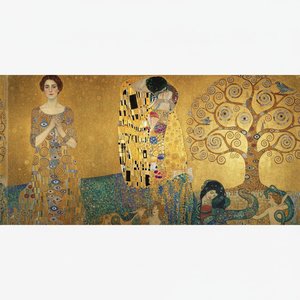
Delve into the world of Gustav Klimt with our top 25 masterpieces! Explore his iconic paintings – 'The Kiss,' 'Portrait of Adele,' and more. Discover museum-quality reproductions & curated decor ideas. Explore the full collection online at BuyPopArt.com.


Stay updated with the latest art news, exclusive offers, and decoration ideas.
Tell us about your project and our art experts will provide you with 3 personalized art suggestions.
Let Us Curate 3 Options Just for You - Free!


 Preview
 Send
Send Share
Share
 Details

 Download
 Similars
 X-Ray
X-Ray Diaporama

 Read More







 Glass option is only available in size under 110 CM


