Buy print Buy printBuy Image Buy Image SendSend
DetailsDetails Add to favorites Add to favorites DownloadDownload SimilarsSimilars X-RayX-Ray DiaporamaDiaporama

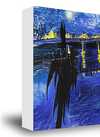
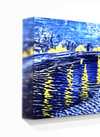
Ronda, Spain

David Bomberg (1890-1957): From Cubist beginnings to expressive landscapes, explore the journey of this influential British painter & 'Whitechapel Boy'.

Hand Made Oil Reproduction

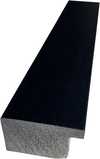
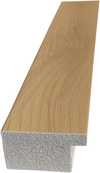
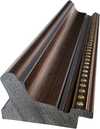
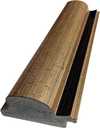
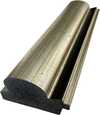
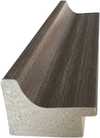
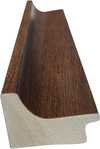
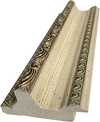
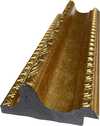
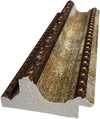
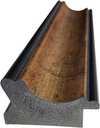
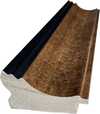
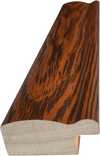
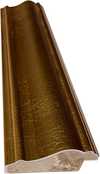
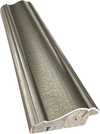
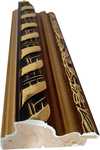
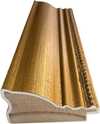
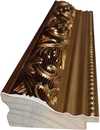
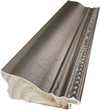
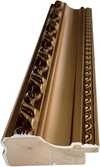
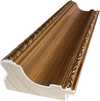
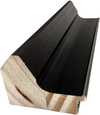
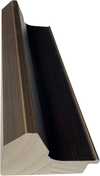
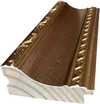
Hand-painted oil on canvas in your size and frame, made to order by our artists.
P118B $10
P118H $10
P118W $10
P438Z $10
P508JH $12
P508YH $12
P805H $10
P805Z $10
P919BZ $10
P919G $10
P919XJ $10
P959ZH $10
P968JZ $12
W106C $8
W218G $10
W218JH $8
W218Y $10
W307PJ $10
W316G $10
W316PJ $8
W316Y $10
W398PJ $8
W4111J $10
W500HY $15
W500JH $15
W692G $12
W849H $8
W940BG $15
W953PJ $8

Standard
custom
CM
INCH

Pick from our preset sizes that match the artwork's original proportions.

width
height

You may enter your own dimensions to fit a specific frame or space. If your selected size does not match the original image's proportions, we will either crop the artwork or extend the painting with additional hand-painted elements. A digital mockup will be sent for your approval before production begins.
Please note that the on-screen preview does not reflect the actual cropping or extension. Only the mockup will accurately show the final composition.
While custom sizes are available, we recommend selecting a dimension from the predefined list to preserve the original proportions.

Examples of what can be changed: Replace face with customer photo; Add pet (e.g., replace cat with dog); Include hidden message in background; Change background landscape or elements.
After order, BuyPopArt.com team will email client for instructions and provide a mockup preview

Worldwide Delivery () in 3/4 weeks instead of standard 5 weeks. (16 July). No compromise on quality.

why_choose_icon
Free Worldwide Express Shipping
why_choose_icon
High-Quality Linen Canvas
why_choose_icon
Full Shipping Insurance
why_choose_icon
Customs Tax Refund Guarantee
why_choose_icon
True Color Matching Guarantee
why_choose_icon
60-Day Return Policy (Defects Only)
why_choose_icon
100% Money-Back Guarantee
why_choose_icon
Bulk Discount Offer

Total Price

-

reproduction

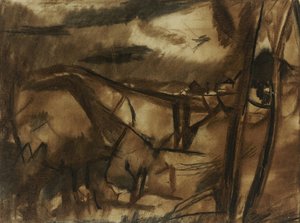
Ronda, Spain

Reproduction Medium

Reproduction Size

-

Total Price

-

Quick Facts

  • Notable elements or techniques: Gestural brushstrokes, layering, impasto
  • Artist: David Bomberg
  • Title: Ronda, Spain
  • Location: Ben Uri Gallery & Museum
  • Subject or theme: Landscape of Ronda
  • Dimensions: 45 x 61 cm
  • Year: 1957

Art Quiz

There is only one correct answer for each question.

Question 1:
What is the primary artistic style of David Bomberg’s painting ‘Ronda, Spain’?
Question 2:
The description mentions Bomberg was influenced by which artist?
Question 3:
What material did Bomberg primarily use to create the landscape scene?
Question 4:
According to the text, what is a notable characteristic of Bomberg’s brushwork?
Question 5:
The painting depicts Ronda, Spain during which significant historical event?

Artwork Description

David Bomberg’s Ronda, Spain: A Landscape of Emotion

David Bomberg's "Ronda, Spain," painted in 1957, stands as a testament to the expressive power of abstraction and the artist’s profound connection with the natural world. Created during his mature period, this landscape embodies the spirit of Expressionism, prioritizing emotional resonance over precise representation—a characteristic that cemented Bomberg's place among Britain’s leading artists of the mid-century. The painting isn’t merely a depiction of Ronda’s dramatic Andalusian mountains; it’s an embodiment of feeling itself.

Historical Context and Influences

Bomberg’s artistic journey began in Birmingham, where he honed his skills alongside fellow ‘Whitechapel Boys,’ including Mark Gertler and Stanley Spencer. Early exposure to Walter Sickert instilled a fascination with form and urban life, shaping his initial stylistic explorations. Crucially, Bomberg encountered Paul Cézanne's influence during the groundbreaking Roger Fry exhibition of 1910—a pivotal moment that propelled him toward a more fragmented and psychologically driven approach. This encounter profoundly impacted his subsequent work, particularly his exploration of landscape as a vehicle for conveying inner experience. The painting’s creation coincided with the burgeoning interest in Surrealism and Cubism, reflecting broader artistic trends of the time.

Composition and Technique: Bold Strokes and Layered Depth

The composition of "Ronda" is deliberately unbalanced, eschewing symmetry to heighten its dynamism. A winding road snakes through the foreground, drawing the viewer’s eye upwards towards distant hills and buildings—a technique that emphasizes spatial depth without adhering to strict linear perspective rules. Bomberg employed a bold, gestural style characterized by thick, uneven brushstrokes that dominate the canvas. These marks aren't intended to capture every detail but rather to convey an overwhelming sense of energy and movement. The artist utilized layering – applying paint in successive layers—to build up texture and create visual richness. Impasto, particularly noticeable in certain areas, contributes to a palpable physicality, mirroring the ruggedness of Ronda’s terrain. Charcoal was incorporated into the painting's execution, adding tonal nuance and reinforcing the expressive character of the artwork.

Color Palette and Emotional Resonance

The color palette is subdued yet evocative, dominated by earthy browns, ochres, and tans—colors that mirror the hues of Ronda’s landscape. These tones are applied in patches rather than blended smoothly, creating textural contrast and enhancing the painting's atmospheric mood. The artist skillfully utilized light to illuminate specific elements within the scene, suggesting sunlight filtering through clouds or reflecting off stone structures. This subtle manipulation of color contributes to an overall feeling of solitude and contemplation—a reflection of Bomberg’s own artistic sensibilities.

Symbolism and Artistic Vision

“Ronda” transcends a simple topographical representation; it speaks to themes of resilience and the sublime beauty found in confronting challenging environments. The jagged peaks of the mountains symbolize strength and permanence, while the expansive sky conveys a sense of limitless possibility. Bomberg’s stylistic choices—fragmentation, bold brushstrokes, and muted colors—were deliberate expressions of his artistic vision—a desire to capture not just what he saw but how he felt about it. Ultimately, Bomberg's Ronda is an unforgettable image that encapsulates the artist's profound engagement with both landscape and emotion.

Artist Biography

Early Life and Artistic Training

  • Born: Birmingham, United Kingdom (December 5, 1890)
  • Died: London, United Kingdom (August 19, 1957)
  • One of the 'Whitechapel Boys' – a group of East End artists who emerged in the early 20th century.

Born to Polish-Jewish immigrant parents, Abraham and Rebecca Bomberg, initially studied at the City and Guilds Technical Art School before training as a lithographer in Birmingham.

Studied under Walter Sickert at Westminster School of Art (1908-1910), influenced by Sickert's focus on form and urban life. Significant exposure to Paul Cézanne through the 1910 Roger Fry exhibition "Manet and the Post-Impressionists." Attended the Slade School of Art (1911), winning the Tonks Prize for his drawing of fellow student Isaac Rosenberg.

The Avant-Garde Years: Cubism, Futurism, and Controversy

  • At the Slade, Bomberg was part of a remarkable generation including Mark Gertler, Stanley Spencer, C.R.W. Nevinson, and Dora Carrington.
  • Influenced by the 1912 London exhibitions of Italian Futurists and Fry's second Post-Impressionist exhibition (Picasso, Matisse, Fauvists, Wyndham Lewis).
  • Developed a distinctive style combining Cubism and Futurism – characterized by geometric compositions, limited color palettes, angular figures, and grid-like structures.
  • His radical approach led to expulsion from the Slade School of Art in 1913, deemed too audacious for the institution's conventional methods.
  • Briefly associated with Bloomsbury Group’s Omega Workshops and exhibited with the Camden Town Group. Showed affinity with Wyndham Lewis’s Vorticist movement but remained independent, refusing full involvement.

From War to Landscape: A Shift in Style

Experiences as a private soldier during World War I profoundly impacted his artistic vision, leading to a move away from abstraction.

The 1920s saw Bomberg adopt a more figurative style, focusing on portraits and landscapes drawn directly from nature. Developed an increasingly expressionist technique, marked by textured impasto and emotional intensity.

Extensive travels through the Middle East (particularly Palestine) and Europe significantly influenced his later work. His depictions of Jerusalem are particularly notable.

Later Years and Legacy

  • From 1945 to 1953, taught at Borough Polytechnic (now London South Bank University), influencing a generation of artists including Frank Auerbach, Leon Kossoff, Philip Holmes, Cliff Holden, Edna Mann, Dorothy Mead, Gustav Metzger, Dennis Creffield, Cecil Bailey and Miles Richmond.
  • Married landscape painter Lilian Holt.
  • Despite periods of relative obscurity during his lifetime, Bomberg's work has gained increasing recognition in recent decades as a significant contribution to British modern art.
  • David Bomberg House at London South Bank University is named in his honor.
  • His legacy lies in his unique synthesis of European avant-garde movements and his later development of a powerful, expressive landscape style that captured the essence of place and human experience.
David Bomberg

David Bomberg

1890 - 1957 , United Kingdom

Quick Facts

  • Artistic Movement Or Style:
    • Cubism
    • Futurism
    • Expressionism
  • Artists Or Movements Influenced By This Artist:
    • Frank Auerbach
    • Leon Kossoff
  • Artists Who Influenced This Artist:
    • Paul Cézanne
    • Walter Sickert
    • Wyndham Lewis
  • Date Of Birth: December 5, 1890
  • Date Of Death: August 19, 1957
  • Full Name: David Garshen Bomberg
  • Nationality: British
  • Notable Artworks:
    • Self Portrait (1937)
    • Kitty, the Artist’s Sister (1929)
    • Study for a Painting
    • Jerusalem
  • Place Of Birth: Birmingham, United Kingdom
Explore artworks organized by themes, styles, and characteristics.