
Buy print Buy printBuy Painting Buy Painting SendSend
DetailsDetails Add to favorites Add to favorites DownloadDownload SimilarsSimilars X-RayX-Ray DiaporamaDiaporama

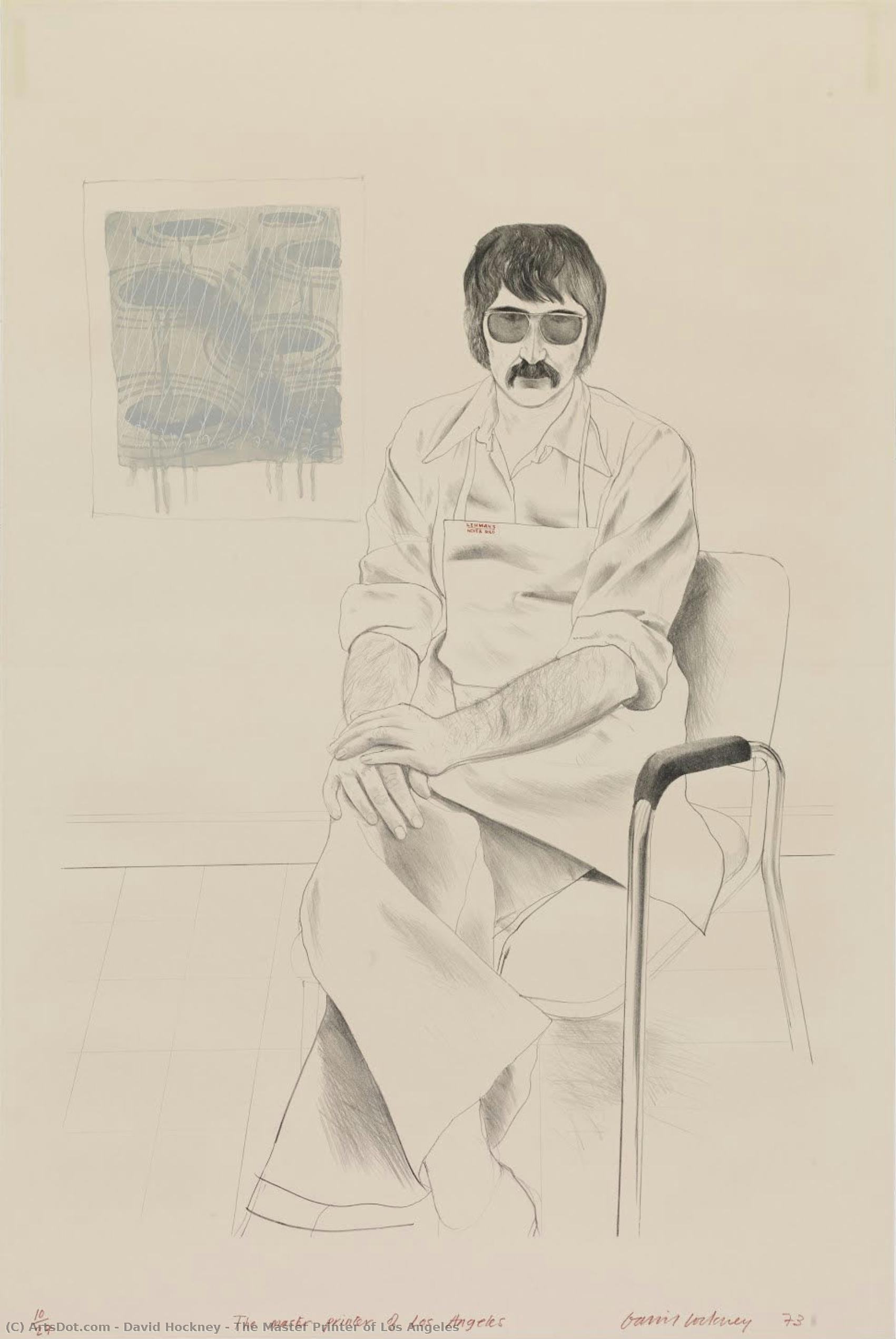
The Master Printer of Los Angeles

David Hockney's 'The Master Printer of Los Angeles' (1973) is a vibrant lithograph capturing the essence of Californian light and space. A unique piece by a legendary artist.

David Hockney, born July 9, 1937, in Bradford, England, is more than just a painter; he’s a visual polymath whose career has spanned painting, drawing, printmaking, stage design, and photography. His story begins in the industrial heartland of Yorkshire... (truncated for brevity)

Purchase a high-resolution, enhanced digital image, far superior to the online preview.

Each file is meticulously prepared by our in-house specialists using advanced tools and expert manual retouching. We ensure every image has exceptional clarity, precise color accuracy, and fine detail.

The final file is delivered via email within 72 hours, optimized for immediate use in professional, editorial, and print environments. This is the same quality trusted by top-tier design studios, publishers, and galleries.

Digital Image

Download a high-resolution file for personal display, printing, and creative projects.

Total Price

$9.99

Included in Every Digital Image Order

Expert Digital Delivery, Guaranteed

When you choose BuyPopArt.com, you're not just getting an image - you're receiving a professionally enhanced digital artwork, crafted with precision and backed by a satisfaction guarantee. Here's everything that comes with your order, automatically:

shipping_icon
Fast Email Delivery

Your high-resolution digital image file will be emailed to you within 72 hours of ordering - ready for immediate use.

canvas_icon
AI-Enhanced Digital File

Your artwork is professionally optimized using advanced AI tools and manual editing, ensuring maximum detail, clarity, and color accuracy.

insurance_icon
Free Lifetime Re-Delivery

Accidentally deleted or lost your file? No worries - we'll resend it to you anytime, free of charge.

tax_icon
No Import Fees - Ever

Enjoy your artwork instantly with zero customs, duties, or delivery fees - digital downloads are always tax-free.

color_icon
Color Accuracy Guarantee

We ensure your digital image reflects the original colors as closely as possible using professional tools and color management.

return_icon
60-Day Satisfaction Guarantee

If you're not satisfied with your digital image, we'll revise it or refund 100% within 60 days - no questions asked.

guarantee_icon
100% Money-Back Guarantee

Not satisfied? Get a full refund within 60 days of receiving your digital file - no questions asked.

discount_icon
Bulk Order Discounts

Buy 3 images, save 10% - Buy 5, save 15% - Buy 10+, save 20%. Great for creative projects, galleries, and agencies.

Quick Facts

  • Influences: Browne & Cartwright
  • Medium: Lithograph & Screenprint
  • Location: Walker Art Center
  • Movement: Pop Art
  • Notable elements: Color, Printmaking
  • Artist: David Hockney
  • Dimensions: 47-1/2 x 31-5/8 in.

Art Quiz

There is only one correct answer for each question.

Question 1:
What artistic movement is David Hockney most closely associated with?
Question 2:
The image depicts a man wearing sunglasses. What is the primary impression conveyed by his serious expression?
Question 3:
In what year was 'The Master Printer of Los Angeles' created?
Question 4:
David Hockney’s early work often displayed elements of which artistic style?
Question 5:
The image includes a clock. What does the presence of the clock likely symbolize in relation to the artwork?

Collectible Description

The Master Printer of Los Angeles: A Window into Desert Light

David Hockney’s “The Master Printer of Los Angeles,” created in 1973, isn't merely a depiction of a man seated in contemplation; it’s a carefully constructed tableau brimming with symbolic weight and reflecting the burgeoning art scene of Southern California. The image, rendered in stark black and white lithograph and screenprint on Arches Cover mould-made paper, immediately draws the eye to Hockney’s central figure – a man radiating an almost unnerving stillness, shielded by the broad brim of his sunglasses. This isn't a portrait of celebrity or power; rather, it feels like a study in solitude, a quiet observation of a pivotal moment in artistic history.

The setting itself is crucial to understanding the work’s resonance. The man sits within a modestly furnished room – a chair, a clock, and a subtle suggestion of a wall – creating an intimate space that feels both familiar and slightly unsettling. The inclusion of the clock, with its hands frozen at a specific time, hints at a captured moment, a pause in the relentless flow of time itself. The muted palette, dominated by grays and blacks, amplifies this sense of stillness, evoking the quality of light found in the desert landscape – a characteristic that would become increasingly important to Hockney’s later work.

The Figure: A Reflection of Artistic Process

The central figure is undeniably enigmatic. His posture, his gaze directed slightly off-camera, and the cigarette held casually in his hand immediately invite interpretation. He embodies the archetype of the solitary artist – a figure wrestling with ideas, confronting challenges, and ultimately shaping beauty from raw materials. Some art historians suggest he represents Clyde Browne, a master printer who worked in Los Angeles during the Arroyo culture movement of the early 20th century, a period marked by experimental printmaking techniques and a vibrant artistic community. Hockney’s deliberate choice to portray Browne – a skilled craftsman operating largely outside the mainstream – speaks volumes about his admiration for this often-overlooked figure.

The cigarette itself is a potent symbol. It represents not just habit, but also the creative process—the burning away of the unnecessary, the distillation of ideas into something tangible and new. It’s a visual metaphor for the artist's struggle to find clarity amidst complexity, a common experience for any creator.

Technique and Context: A Pioneering Print

“The Master Printer of Los Angeles” is a testament to Hockney’s mastery of lithography and screenprinting. The stark contrasts between light and shadow are achieved through careful layering and manipulation of ink, creating a remarkable sense of depth and texture. The use of Arches Cover paper – renowned for its archival quality and subtle sheen – further enhances the work's visual impact. This particular print was created as part of a series exploring the role of master printers in the art world, commissioned by Walker Art Center.

Created during a period of significant artistic experimentation in Los Angeles, this piece reflects the city’s burgeoning reputation as a hub for avant-garde art and design. Hockney's work aligns with the broader trends of Pop Art and Minimalism, while simultaneously retaining a distinctly personal and introspective quality. The print’s stark aesthetic and focus on simple forms anticipate many of the themes that would dominate his later career.

Symbolism and Emotional Resonance

Beyond its technical brilliance, “The Master Printer of Los Angeles” resonates with profound emotional depth. It captures a moment of quiet contemplation—a pause in the relentless pursuit of artistic expression. The man’s gaze, directed just beyond the viewer's perspective, suggests a sense of detachment and introspection, inviting us to consider our own relationship to art and creativity. The image evokes feelings of solitude, reflection, and perhaps even a touch of melancholy – a poignant reminder of the sacrifices and challenges inherent in the artist’s life.

Reproductions of this iconic work offer a captivating glimpse into Hockney's artistic vision and the vibrant cultural landscape of 1970s Los Angeles. It remains a powerful testament to the enduring legacy of master printers and their crucial role in shaping the world of art.

Artist Biography

A Life Painted in Light: The World of David Hockney

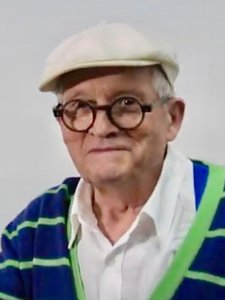
David Hockney, born July 9, 1937, in the industrial heartland of Yorkshire, England, is more than simply a painter; he’s a visual polymath whose career has spanned painting, drawing, printmaking, stage design, and photography. His story begins amidst the grit and determination of Bradford, a landscape that instilled within him a keen observational eye, even as his father, Kenneth Hockney, fostered a spirit of independent thought through conscientious objection during World War II. This early environment shaped a young artist who would consistently challenge conventions and forge his own path. Formal education at Wellington Primary School and Bradford Grammar School laid the foundation for a career that would redefine British art in the 20th and 21st centuries, culminating in studies at Bradford College of Art and later, the prestigious Royal College of Art in London. It was during these formative years that Hockney began to articulate a unique artistic voice, one that blended Pop sensibilities with a distinctly British perspective.

The Rise of a Pop Icon and Beyond

The 1960s witnessed Hockney’s ascent as a pivotal figure within the burgeoning Pop Art movement. However, unlike some contemporaries who wholeheartedly embraced American commercial culture, Hockney brought a uniquely British sensibility to the genre. His work exploded with vibrant color and bold lines, depicting scenes that were both familiar and subtly subversive. A Bigger Splash (1966), perhaps his most iconic early piece, encapsulates this perfectly – a seemingly simple depiction of a swimming pool becomes a meditation on Californian leisure, artifice, and the very act of seeing. This wasn’t merely representation; it was an exploration of how we perceive reality. His double portraits, like American Collectors (Fred and Marcia Weisman), demonstrate his remarkable ability to capture not just likeness but also the essence of personality and relationship. Hockney didn't shy away from personal themes either, notably exploring gay love with openness and vulnerability in works such as We Two Boys Together Clinging (1961), challenging societal norms at a time when homosexuality was largely taboo. This willingness to confront difficult subjects head-on cemented his position as a groundbreaking artist.

Experimentation, Innovation, and the Rescue of Painting

Hockney’s artistic curiosity has never been confined to a single medium. Throughout his career, he's relentlessly experimented with new technologies and approaches. From his early embrace of lithography and etching to his later explorations of photography – particularly his use of Polaroid composites in the 1980s – Hockney consistently pushed the boundaries of what art could be. He famously declared painting wasn’t dead but needed “rescuing” from its own conventions, leading him to develop innovative techniques like perspective distortions and fragmented viewpoints. This desire to revitalize painting led to ambitious projects such as Pearblossom Hwy., 11–18th April 1986, a complex photomontage that challenged traditional notions of space and representation. His stage designs for opera, including sets for Mozart's The Magic Flute and Stravinsky's The Rake’s Progress, further demonstrate his versatility and ability to translate his visual language into a different artistic realm. More recently, he has embraced the digital medium, creating stunning landscapes on iPads that showcase his continued fascination with light, color, and perspective – proving that innovation knows no bounds.

Recognition, Legacy, and Enduring Influence

David Hockney’s contributions to the art world have been widely recognized throughout his illustrious career. He was appointed Order of the Companion of Honour (CH) in 2018, a testament to his profound impact on British culture. Prior to that, he was elected a Fellow of the Royal Society (FRS) in 2003 and received the Laureate of the Praemium Imperiale for Painting in 2000. His works are held in major museum collections worldwide, and can be readily accessed through online platforms, ensuring his art continues to inspire new generations. Hockney’s influence extends beyond the visual arts; he has become a cultural icon, celebrated for his wit, intelligence, and unwavering commitment to artistic exploration. His work is not merely about what he depicts but *how* he depicts it – a constant questioning of perception and representation that continues to resonate with audiences today. He remains an active force in the art world, continually challenging expectations and inspiring artists across disciplines.

Further Explorations

  • Place Furstenberg, Paris: A captivating example of Hockney’s interior scenes, showcasing his mastery of color and composition.
  • Oona Zlamany: A poignant portrait that blends realism with Pop Art influences, revealing the sitter's contemplative nature.
  • Lawn Sprinkled: A vibrant depiction of suburban life, characterized by geometric forms and a playful use of color.
  • Discover more about fellow British Pop artist Pauline Boty.
  • Explore the works of Frank Lisle, a painter who influenced Hockney’s early development.
David Hockney

David Hockney

1937 - , United Kingdom

Quick Facts

  • Artistic Movement Or Style: Pop Art
  • Artists Or Movements Influenced By This Artist: ['Pauline Boty']
  • Artists Who Influenced This Artist: ['Francis Bacon']
  • Date Of Birth: July 9, 1937
  • Full Name: David Hockney
  • Nationality: British
  • Notable Artworks:
    • A Bigger Splash
    • Portrait of an Artist
    • We Two Boys Together
  • Place Of Birth: Bradford, UK

