x
 Oil On CanvasWallArtRealism
 186319th Century
 130.0 x 190.0 cm
 Musée d'Orsay
Hand-painted oil on canvas in your size and frame, made to order by our artists.





























Pick from our preset sizes that match the artwork's original proportions.

You may enter your own dimensions to fit a specific frame or space. If your selected size does not match the original image's proportions, we will either crop the artwork or extend the painting with additional hand-painted elements. A digital mockup will be sent for your approval before production begins.
Please note that the on-screen preview does not reflect the actual cropping or extension. Only the mockup will accurately show the final composition.
While custom sizes are available, we recommend selecting a dimension from the predefined list to preserve the original proportions.
Worldwide Delivery () in 3/4 weeks instead of standard 5 weeks. (16 July). No compromise on quality.


Olympia
Reproduction Size
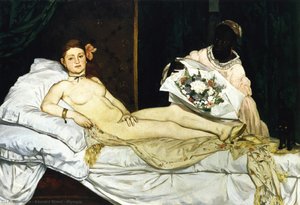
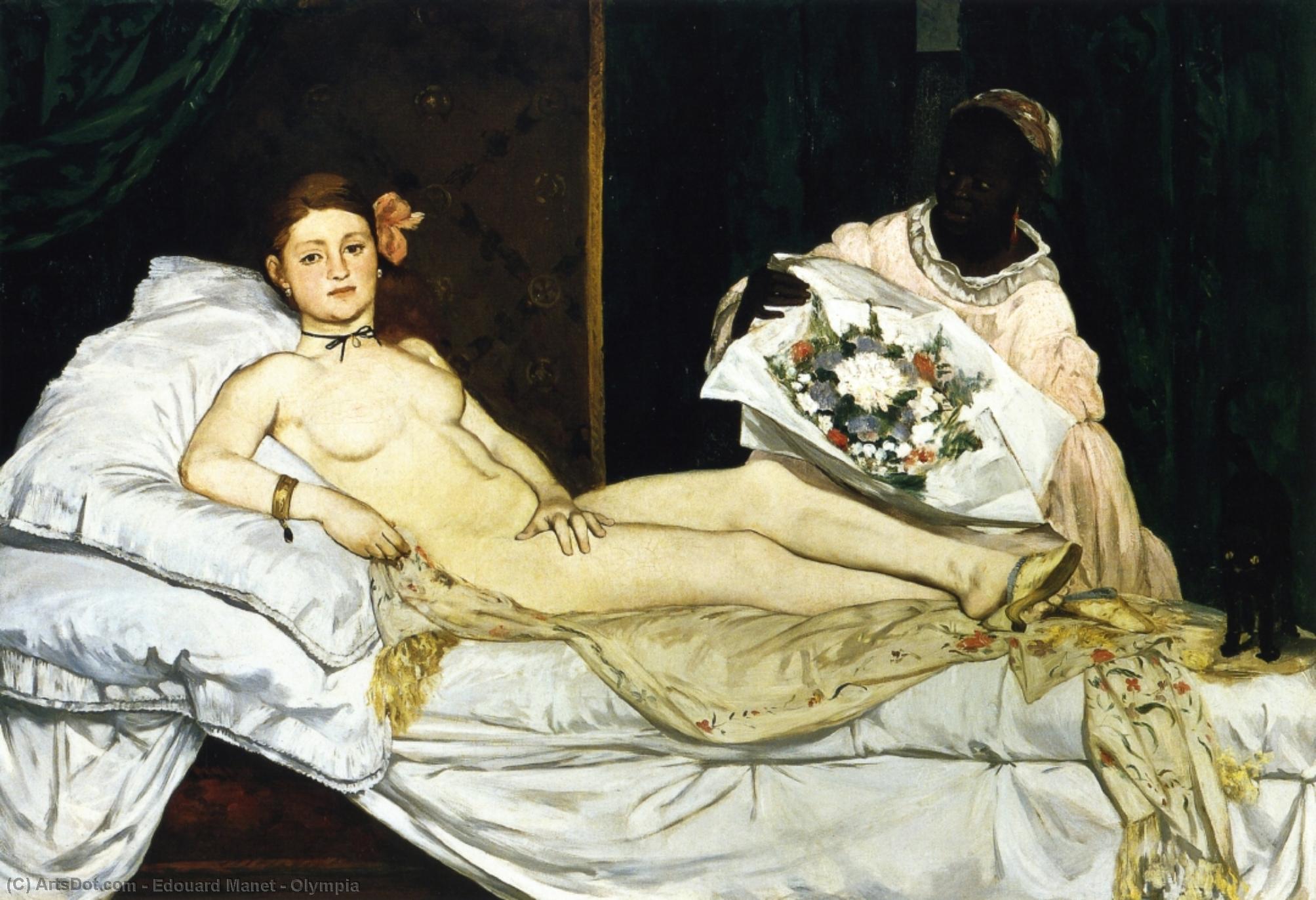
Created in 1863, this iconic work irrevocably altered the course of art history. More than just a nude, it's a bold statement that challenged academic conventions and ushered in an era of modern realism. This painting isn’t simply *seen*; it confronts the viewer with an unapologetic directness rarely encountered before its time.
The artwork depicts a reclining nude woman, confidently identified as Olympia – a contemporary figure, likely a courtesan, rather than a mythological goddess. This deliberate choice was scandalous. Prior to 1863, the female nude in art was almost exclusively reserved for allegorical or historical subjects, cloaked in idealized beauty and narrative distance. Manet stripped away these conventions, presenting nudity as a fact of modern life, sparking outrage and intense debate at the Paris Salon.
While rooted in Realism, this painting foreshadows the burgeoning Impressionist movement. Manet rejected the meticulous finish and chiaroscuro (strong contrasts between light and dark) favored by academic painters. Instead, he employed loose, visible brushstrokes, flattened forms, and a limited color palette to emphasize form and contrast rather than illusionistic depth. The starkness of the composition – the rumpled sheets, the bold outlines – contributes to its unsettling honesty.
Every element within the canvas carries symbolic weight. The black cat at the foot of the bed traditionally represents independence or even sexuality. The bouquet of flowers, delivered by a Black servant, alludes to recent patronage and the transactional nature of Olympia’s existence. Perhaps most powerfully, Olympia's direct gaze challenges the viewer, refusing passive observation and demanding recognition as an individual. The inclusion of the Black servant also highlights complex issues of race and class within 19th-century French society.
This painting evokes a sense of cool detachment, defiance, and unsettling realism. It’s not intended to be conventionally beautiful; it's meant to provoke thought and challenge perceptions. Its impact resonated far beyond its initial reception, influencing generations of artists and paving the way for greater artistic freedom. Owning a reproduction of this artwork is not merely acquiring a decorative piece; it’s embracing a pivotal moment in art history – a testament to courage, innovation, and the power of challenging the status quo.
This striking artwork makes a powerful statement in any interior. Its bold composition and sophisticated palette are ideal for modern living spaces, galleries, or studies. It’s particularly well-suited for those who appreciate art with historical significance and intellectual depth.
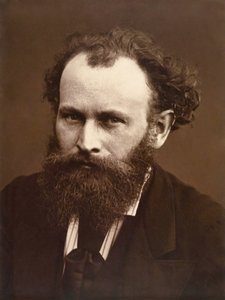
1832 - 1883 , France
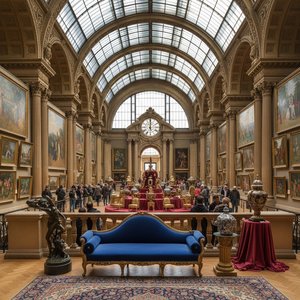
Journey through the Musée d'Orsay’s 25 most iconic artworks! Explore Impressionist & Post-Impressionist masterpieces by Monet, Van Gogh, Degas & more. Find museum-quality art reproductions and curated decor ideas to bring timeless beauty home. Discover all masterpieces on BuyPopArt.com

Explore the life & art of Camille Pissarro, a pivotal figure in Impressionism and Post-Impressionism. Discover his techniques, influences, and lasting legacy on modern painting. Learn more at BuyPopArt.
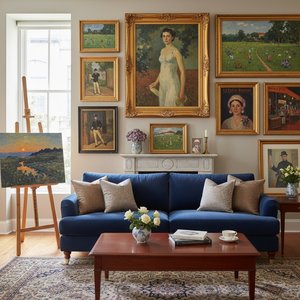
Explore 25 iconic Édouard Manet paintings, from 'Le Déjeuner sur l'herbe' to 'Olympia'. Discover the stories behind these Impressionist masterpieces & find museum-quality art reproductions for your home. Explore the full collection online at BuyPopArt.com!

Explore the serene landscapes of Albert Charles Lebourg, a master of the Rouen School Impressionists. Discover his atmospheric paintings of the Seine and enduring legacy in 19th-century French art.

Explore the life & art of Igor Grabar, a pivotal figure in Russian Modernism. Discover his Impressionist landscapes, crucial role in art history, and legacy at the Tretyakov Gallery. A deep dive into a master painter & scholar.


Stay updated with the latest art news, exclusive offers, and decoration ideas.
Tell us about your project and our art experts will provide you with 3 personalized art suggestions.
Let Us Curate 3 Options Just for You - Free!


 Buy print
 Send
Send Share
Share
 Details

 Download
 Similars
 X-Ray
X-Ray Diaporama
 Read More







 Glass option is only available in size under 110 CM