

Hand-painted oil on canvas in your size and frame, made to order by our artists. ( Buy Print Buy Image)





























Pick from our preset sizes that match the artwork's original proportions.

You may enter your own dimensions to fit a specific frame or space. If your selected size does not match the original image's proportions, we will either crop the artwork or extend the painting with additional hand-painted elements. A digital mockup will be sent for your approval before production begins.
Please note that the on-screen preview does not reflect the actual cropping or extension. Only the mockup will accurately show the final composition.
While custom sizes are available, we recommend selecting a dimension from the predefined list to preserve the original proportions.
Worldwide Delivery () in 3/4 weeks instead of standard 5 weeks. (14 August). No compromise on quality.


Roses
Reproduction Size
To gaze upon Edwin Deakin’s "Roses" is to step into a moment of cultivated tranquility, a vision rendered with the delicate precision of a master botanist and the romantic sweep of an admirer. This painting, dating from 1912, transcends a mere still life; it is a carefully orchestrated tableau vivant. The central focus, of course, is the breathtaking arrangement of roses in various shades of pink, their velvety petals seeming to capture the soft blush of dawn itself. They rest within an elegant vase, distinguished by its subtle crown design, which lends an air of regal formality to the otherwise intimate gathering of blooms.
Deakin’s genius is evident in how he manages the surrounding elements to support the main floral narrative. Behind the central vase, a gracefully draped curtain adds depth and a theatrical backdrop, suggesting an interior space rich with history and quiet contemplation. Flanking this core arrangement are secondary details: another smaller vase nearby, and two potted plants positioned thoughtfully on either side of the composition. These peripheral objects—the foliage, the table surface, the hanging fabric—are not mere filler; they are integral components that build a sense of harmonious balance. The technique employed speaks to Deakin’s training in meticulous observation, allowing him to render textures—from the soft folds of the curtain to the waxy sheen of the rose petals—with remarkable verisimilitude.
Roses have always been potent symbols in art, speaking eloquently of love, beauty, and transience. In this depiction, the abundance of pink suggests themes of gentle affection, burgeoning romance, and feminine grace. The very act of gathering these perfect blooms into one setting invites the viewer to pause, to breathe deeply, and to appreciate the fleeting perfection of natural beauty. It evokes a sense of nostalgic yearning—a beautiful memory preserved forever on canvas.
While Deakin’s career saw him documenting California's grand vistas, this intimate piece reminds us that romance can be found in the most domestic settings. His background, steeped in capturing dramatic landscapes, lends an underlying structure to even his still lifes; there is a sense of enduring permanence within the ephemeral subject matter. For those who appreciate art that marries technical mastery with deep emotional resonance, "Roses" offers a perfect portal back to an era where beauty was celebrated with painstaking devotion.
Edwin Deakin (1838–1923) stands as a vital chronicler of the American West, an artist whose brush captured the soul of a transforming California. Born in Sheffield, England, Deakin’s journey began far from the sun-drenched valleys of the Pacific coast, yet his artistic sensibilities were perfectly primed to embrace the dramatic landscapes of his adopted home. Trained under the esteemed George Frederic Watts in London, Deakin developed a profound mastery of anatomy and light, skills that would later allow him to render the rugged textures of the California terrain with breathtaking realism. His early education instilled in him a disciplined approach to observation, a quality that remained the cornerstone of his prolific career as he transitioned from the misty landscapes of Britain to the vibrant, golden vistas of the United and American West.
Upon relocating to San Francisco in 1879, Deakin found himself at the heart of a burgeoning cultural landscape. He did not merely observe this new world; he sought to preserve its vanishing essence through the lens of Romanticism. His work became a bridge between the historical past and the rapidly advancing present. As an educator at Stanford University, he influenced a new generation of painters, imparting his belief in the sanctity of careful observation and artistic rigor. This period of his life was marked by a deep devotion to the architectural heritage of California, particularly the Spanish Missions. Through meticulous oil paintings, Deakin breathed life into structures like Mission San Gabriel Arcángel and Mission Dolores, capturing their spiritual grandeur and weathered beauty with a sensitivity that transcended mere documentation.
Deakin’s technical prowess was characterized by an exquisite command of the Romantic style, utilizing oil on canvas to create depth and atmosphere. He was a master of glazing, employing a delicate layering process that allowed light to permeate his works, giving them an inner glow that mirrored the natural radiance of the California sun. This technique was particularly effective in his landscapes, where he could manipulate shadows and highlights to evoke the shifting moods of mountainous terrains and serene, sprawling valleys. Whether depicting the sweeping vistas of the coast or the intimate corners of a domestic setting, Deakin’s hand was always guided by an unwavering commitment to detail.
His versatility extended beyond the grand scale of landscapes into the intimate realm of still lifes and genre scenes. In works such as Kitchen Corner (1883), Deakin demonstrated his ability to transform everyday domesticity into something profound and evocative. Through meticulous rendering of textures—the sheen of copper, the softness of cloth, the warmth of a hearth—he invited viewers into a nostalgic, idealized version of nineteenth-century life. This ability to find the extraordinary within the ordinary, combined with his monumental architectural studies like Mission San Juan Capistrano, showcases an artist capable of navigating both the epic and the intimate with equal grace.
The historical significance of Edwin Deakin lies in his role as a visual custodian of California’s romanticized history. At a time when the frontier was rapidly being tamed by industry and expansion, Deakin’s paintings served as a poignant reminder of the state's unique cultural and architectural roots. His depictions of the Spanish Missions were more than just art; they were acts of preservation, capturing the dignity of a colonial era that was slowly fading into memory. By documenting these landmarks with such reverence, he ensured that the spiritual and aesthetic weight of the Mission period would remain accessible to future generations.
Today, Deakin’s oeuvre remains a cornerstone for those studying the development of American landscape art and the cultural evolution of the West Coast. His work continues to resonate because it captures more than just scenery; it captures an era's identity. Through his eyes, we see a California defined by:
Edwin Deakin’s legacy is one of profound connection—connecting the traditions of European training with the raw energy of the American frontier, and connecting the fleeting moments of a changing landscape to the permanence of fine art.

1838 - 1923 , United Kingdom
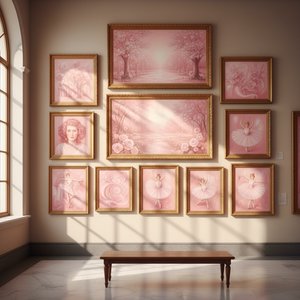
Explore 10 iconic paintings bathed in captivating light pink tones! From Monet's Impressionism to Renoir’s romance, discover the stories behind these blush-hued masterpieces. Find museum-quality art reproductions & decor inspiration at .

Explore the rich history & techniques of oil painting – from Renaissance masters to Impressionism. Discover pigments, layering methods, and why this timeless medium endures. Expert insights for artists & art enthusiasts.
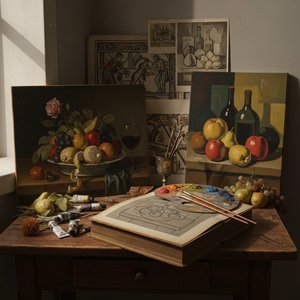
Explore the rich history of still life painting with BuyPopArt. Discover Dutch Masters, decode vanitas symbolism & learn about collecting timeless art. Expert insights and museum-quality reproductions.

Explore the rich history & enduring techniques of oil painting on canvas. Discover the science behind its longevity, conservation practices, and contemporary relevance. Expert insights for art enthusiasts.

Explore 10 defining masterpieces of Romantic Realism! Discover Courbet, Millet & Daumier's powerful paintings—capturing emotion and social realities. Find museum-quality reproductions for your home at BuyPopArt.com.


Stay updated with the latest art news, exclusive offers, and decoration ideas.
Tell us about your project and our art experts will provide you with 3 personalized art suggestions.
Let Us Curate 3 Options Just for You - Free!


 Preview
 Send
Send Share
Share
 Details

 Download
 Similars
 X-Ray
X-Ray Diaporama


 Read More







 Glass option is only available in size under 110 CM


