

 Acrylic On CanvasWallArtCubist Style
 78.0 x 58.0 cm
Purchase a high-resolution, enhanced digital image, far superior to the online preview.
Each file is meticulously prepared by our in-house specialists using advanced tools and expert manual retouching. We ensure every image has exceptional clarity, precise color accuracy, and fine detail.
The final file is delivered via email within 72 hours, optimized for immediate use in professional, editorial, and print environments. This is the same quality trusted by top-tier design studios, publishers, and galleries.
Download a high-resolution file for personal display, printing, and creative projects. ( Buy Print Buy Hand Made Painting)
When you choose BuyPopArt.com, you're not just getting an image - you're receiving a professionally enhanced digital artwork, crafted with precision and backed by a satisfaction guarantee. Here's everything that comes with your order, automatically:

Your high-resolution digital image file will be emailed to you within 72 hours of ordering - ready for immediate use.

Your artwork is professionally optimized using advanced AI tools and manual editing, ensuring maximum detail, clarity, and color accuracy.

Accidentally deleted or lost your file? No worries - we'll resend it to you anytime, free of charge.

Enjoy your artwork instantly with zero customs, duties, or delivery fees - digital downloads are always tax-free.

We ensure your digital image reflects the original colors as closely as possible using professional tools and color management.

If you're not satisfied with your digital image, we'll revise it or refund 100% within 60 days - no questions asked.

Not satisfied? Get a full refund within 60 days of receiving your digital file - no questions asked.

Buy 3 images, save 10% - Buy 5, save 15% - Buy 10+, save 20%. Great for creative projects, galleries, and agencies.
Fernand Léger’s “The Worker Sitting,” executed in 1926, stands as a cornerstone of Primitivism—a movement that sought to recapture the essence of raw emotion and instinct through simplified forms and bold colors. More than just a portrait, it's an emblem of Léger’s profound engagement with the burgeoning industrial landscape of his time, filtered through the lens of Cubist principles.
The artwork depicts a solitary workman seated on a chair, bathed in diffused light that emphasizes the flatness of the composition. Léger eschews traditional perspective, opting instead for overlapping geometric shapes—primarily squares and rectangles—to convey spatial relationships. These forms dominate both the chair itself and the backdrop, which features a prominent window framing an expanse of greenery. The deliberate asymmetry contributes to a dynamic visual rhythm, inviting contemplation rather than passive viewing.
Executed in ink on paper, Léger’s technique is characterized by thick, assertive outlines—the defining feature of Primitivism—that sculpt the figure and background with uncompromising precision. These lines aren't intended to mimic realistic contours; they serve as structural elements, constructing simplified forms that prioritize clarity and impact. The monochrome palette—a stark contrast between black and white—amplifies this effect, stripping away any illusion of depth or texture.
Beyond its formal qualities, “The Worker Sitting” resonates with a quiet dignity. Léger’s portrayal captures a moment of stillness amidst the bustle of industrial life – a posture suggesting reflection and observation. The workman's gaze directs towards the window, symbolizing perhaps an aspiration for connection with nature and a yearning for respite from the pressures of labor. Léger’s intention wasn’t to depict a specific individual but rather to embody the spirit of the working class—a subject he revisited repeatedly throughout his career.
As a precursor to Pop Art, Léger's work exemplifies a radical departure from academic conventions. He prioritized expressive simplification over meticulous detail, aligning with the broader artistic impulse to confront modernity head-on. “The Worker Sitting” remains an enduring testament to Léger’s ability to distill complex ideas into powerfully evocative visual language—a timeless image of human presence within the transformative forces shaping the twentieth century.
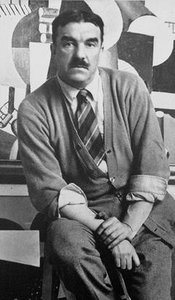
1881 - 1955 , France


Stay updated with the latest art news, exclusive offers, and decoration ideas.
Tell us about your project and our art experts will provide you with 3 personalized art suggestions.
Let Us Curate 3 Options Just for You - Free!


 Preview
 Send
Send Share
Share
 Details

 Download
 Similars
 X-Ray
X-Ray Diaporama
 Read More