

Purchase a high-resolution, enhanced digital image, far superior to the online preview.
Each file is meticulously prepared by our in-house specialists using advanced tools and expert manual retouching. We ensure every image has exceptional clarity, precise color accuracy, and fine detail.
The final file is delivered via email within 72 hours, optimized for immediate use in professional, editorial, and print environments. This is the same quality trusted by top-tier design studios, publishers, and galleries.
Download a high-resolution file for personal display, printing, and creative projects. ( Switch to Print Switch to hand made Painting)
When you choose BuyPopArt.com, you're not just getting an image - you're receiving a professionally enhanced digital artwork, crafted with precision and backed by a satisfaction guarantee. Here's everything that comes with your order, automatically:

Your high-resolution digital image file will be emailed to you within 72 hours of ordering - ready for immediate use.

Your artwork is professionally optimized using advanced AI tools and manual editing, ensuring maximum detail, clarity, and color accuracy.

Accidentally deleted or lost your file? No worries - we'll resend it to you anytime, free of charge.

Enjoy your artwork instantly with zero customs, duties, or delivery fees - digital downloads are always tax-free.

We ensure your digital image reflects the original colors as closely as possible using professional tools and color management.

If you're not satisfied with your digital image, we'll revise it or refund 100% within 60 days - no questions asked.

Not satisfied? Get a full refund within 60 days of receiving your digital file - no questions asked.

Buy 3 images, save 10% - Buy 5, save 15% - Buy 10+, save 20%. Great for creative projects, galleries, and agencies.
“Three Figures,” painted in 1921 by the groundbreaking artist Fernand Léger, offers a compelling glimpse into the heart of early 20th-century modernity. This work, executed in Léger's signature Cubist style, isn’t merely a depiction of three individuals; it’s an exploration of human form within the burgeoning landscape of industrialization and urban life. The painting immediately draws the eye to the central trio – two figures intimately connected through a shared embrace, and a third positioned slightly behind, suggesting a dynamic movement and interaction. Scattered throughout the composition are smaller, fragmented figures, echoing Léger’s fascination with the mechanical world and its impact on human experience.
Created during a pivotal moment in art history, “Three Figures” exemplifies Léger’s radical approach to Cubism. Unlike some of his contemporaries who sought purely abstract forms, Léger remained deeply engaged with the observable world, translating its geometric qualities – the sharp angles of machinery, the rigid lines of urban architecture – into his artistic language. The painting's fractured planes and multiple perspectives challenge traditional notions of representation, forcing the viewer to actively participate in constructing the image. Léger’s use of bold black and white further emphasizes this effect, stripping away any superfluous detail to reveal the underlying structure of form. This technique was heavily influenced by his upbringing on a farm, where he observed the precise, functional forms of agricultural tools and structures.
Beyond its formal qualities, “Three Figures” is rich in symbolic potential. The embrace between the two central figures suggests connection, intimacy, and perhaps even a yearning for stability amidst the rapid changes occurring around them. The guitar, prominently placed within the scene, adds another layer of interpretation – representing leisure, social interaction, and the burgeoning cultural life of the modern city. Léger’s deliberate use of simplified forms and stark contrasts evokes a sense of both alienation and fascination with the machine age. There's an underlying melancholy in the composition, reflecting perhaps the anxieties and uncertainties associated with this period of unprecedented technological advancement.
Painted in 1921, “Three Figures” represents a high point in Léger’s artistic development. The work demonstrates his mastery of oil paint, utilizing thick impasto to create a tactile surface that emphasizes the solidity of form. Léger's meticulous attention to detail, combined with his innovative approach to Cubism, firmly established him as one of the leading figures of the modern art movement. This piece is a testament to Léger’s ability to synthesize influences from various sources – including Fauvism and early Futurism – into a uniquely personal and powerfully expressive style. It's important to note that this painting was created during a time of immense social and technological upheaval, reflecting the anxieties and aspirations of a generation grappling with the dawn of the modern era.
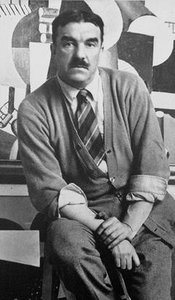
1881 - 1955 , France


Stay updated with the latest art news, exclusive offers, and decoration ideas.
Tell us about your project and our art experts will provide you with 3 personalized art suggestions.
Let Us Curate 3 Options Just for You - Free!


 Preview
 Send
Send Share
Share
 Details

 Download
 Similars
 X-Ray
X-Ray Diaporama

 Read More