x


 Ashcan School
 1924
1924 17.0 x 23.0 cm
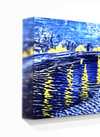
Hand-painted oil on canvas in your size and frame, made to order by our artists.
Pick from our preset sizes that match the artwork's original proportions.

You may enter your own dimensions to fit a specific frame or space. If your selected size does not match the original image's proportions, we will either crop the artwork or extend the painting with additional hand-painted elements. A digital mockup will be sent for your approval before production begins.
Please note that the on-screen preview does not reflect the actual cropping or extension. Only the mockup will accurately show the final composition.
While custom sizes are available, we recommend selecting a dimension from the predefined list to preserve the original proportions.
Worldwide Delivery () in 3/4 weeks instead of standard 5 weeks. (16 July). No compromise on quality.


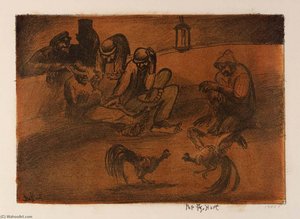
The Gamblers
Reproduction Size
George Overbury “Pop” Hart (1868-1933) wasn’t a name etched into the annals of art history until relatively recently, yet his vibrant watercolors offer a captivating window into early 20th-century America – a world brimming with travel, social change, and a burgeoning interest in depicting everyday life. Born in Cairo, Illinois, to a family involved in the printing industry, Hart’s artistic journey began not through formal training but through observation and a restless spirit that propelled him across continents. His early years were marked by itinerant work as a sign painter, a profession that honed his technical skills while simultaneously exposing him to the diverse visual landscapes of America and Europe. This period instilled in him a keen eye for detail and an appreciation for capturing fleeting moments – qualities that would become hallmarks of his distinctive style.
Hart’s formal artistic education began in Chicago, where he attended the Art Institute from 1894 to 1897. However, it was his travels—a defining characteristic of his life—that truly shaped his artistic vision. Beginning around 1898, Hart embarked on a series of extended journeys that took him to Mexico, Central America, North Africa, the Caribbean, and ultimately, Tahiti. These expeditions weren’t merely vacations; they were immersive experiences that fueled his art and provided him with an unparalleled understanding of diverse cultures and social dynamics. It was in Tahiti, shortly after the death of Paul Gauguin, that Hart truly found his artistic voice – a voice characterized by spontaneity, humor, and a fascination with the lives of ordinary people.
Returning to New York City in 1907, Hart became part of a vibrant artist community centered in Fort Lee, New Jersey. This group, including figures like Walt Kuhn, Arthur B. Davies, and Edward Hopper, represented a shift away from the rigid academic traditions of the time and embraced a more social realist approach. Hart’s style evolved during this period, incorporating elements of Impressionism, Post-Impressionism, and even touches of Social Realism – reflecting the diverse influences surrounding him. He was drawn to capturing scenes of daily life: bustling marketplaces, spirited cockfights (a frequent subject in his work), festive celebrations, and the simple pleasures of human interaction. His technique involved loose, expressive brushstrokes, often layering paint in a way that created a sense of movement and immediacy – a deliberate departure from the polished realism favored by many of his contemporaries.
Hart's mastery lay primarily in watercolor. He recognized its inherent qualities—its portability, quick drying time, and ability to capture subtle nuances of light and color—and exploited them with remarkable skill. Unlike many artists who meticulously planned their compositions, Hart often worked *en plein air*, directly on location, allowing his sketches to inform the final painting. His brushwork was characterized by a loose, almost improvisational quality – a deliberate rejection of rigid control in favor of capturing the essence of a moment. He employed a technique of layering paint in thin washes, allowing colors to bleed and blend together organically, creating a luminous and atmospheric effect.
His color palette was equally vibrant and expressive. Hart favored bright, saturated hues—particularly reds, yellows, and blues—that he used to create a sense of energy and excitement. He wasn’t afraid to use contrasting colors to draw the eye and emphasize key elements within his compositions. Furthermore, Hart's work is notable for its dynamic composition – often featuring multiple figures engaged in lively activity. This reflects his fascination with capturing the dynamism of everyday life and his ability to convey a sense of movement and spontaneity on paper.
While Hart’s travels exposed him to a wide range of subjects, he consistently returned to scenes of social interaction – particularly cockfighting and festive celebrations. These events provided him with ample opportunities to observe human behavior, capture the energy of crowds, and explore themes of competition, ritual, and community. His depictions of cockfights are not simply illustrations; they’re vibrant narratives filled with detail, humor, and a keen understanding of the participants' motivations. Similarly, his paintings of festivals convey a sense of joyous abandon – capturing the sights, sounds, and smells of these communal gatherings.
Beyond these specific subjects, Hart also painted landscapes, portraits, and still lifes—often infused with a distinctly personal style. He frequently depicted scenes from his travels, showcasing the beauty and diversity of the world around him. His work is characterized by an intimate perspective – he often focused on capturing the details of ordinary people’s lives, revealing their humanity and resilience.
Despite a relatively quiet career, George Overbury “Pop” Hart left behind a significant body of work that has gained increasing recognition in recent decades. His paintings are now held by major museums across the United States and Europe, including the Museum of Modern Art, the Brooklyn Museum, and the Smithsonian Institution. A comprehensive monograph on his life and art, published in 1986, helped to bring attention to his work and establish him as a significant figure in American watercolor painting.
Hart’s legacy extends beyond his artistic achievements. He represents a fascinating example of an artist who embraced travel and cultural exchange as integral components of his creative process. His paintings offer a unique glimpse into the early 20th century—a time of rapid social change, technological innovation, and a growing interest in exploring the world beyond one’s immediate surroundings. “Pop” Hart's vibrant watercolors continue to captivate viewers with their energy, humor, and profound appreciation for the beauty and complexity of human life.

1868 - 1933
Explore the captivating world of Jim Dine – Pop Art pioneer & master of autobiographical expression. Discover his iconic tools, robes, and hearts. Expert insights for art collectors.

Explore the captivating world of Pop Surrealism with BuyPopArt. Discover key artists like George Condo & Robert Williams, investment potential, and the movement's cultural impact. Expert insights for collectors.

Explore the captivating landscapes of George Elbert Burr, a pioneer of American Tonalism. Discover his masterful etchings, drypoints & watercolors – and learn about collecting this influential artist's work.

Explore the rise of American Regionalism in interwar art! Discover Grant Wood, Thomas Hart Benton & the movement's impact on American identity. Expert analysis & historical context.

Explore the captivating world of realism in art history! Discover iconic street scenes & genre paintings from masters like Courbet & Brown. Expert analysis & museum-quality reproductions at BuyPopArt.


Stay updated with the latest art news, exclusive offers, and decoration ideas.
Tell us about your project and our art experts will provide you with 3 personalized art suggestions.
Let Us Curate 3 Options Just for You - Free!


 Buy print
 Send
Send Share
Share
 Details

 Download
 Similars
 X-Ray
X-Ray Diaporama
 Read More
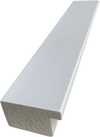
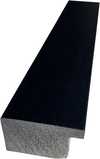
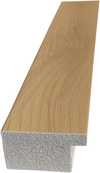
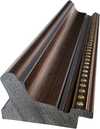
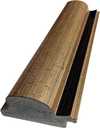
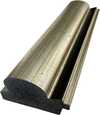
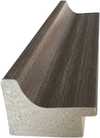
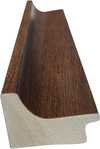
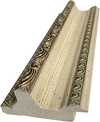
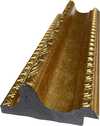
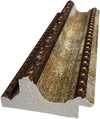
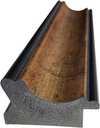
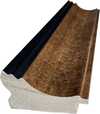
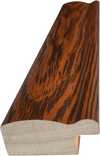
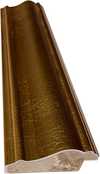
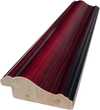
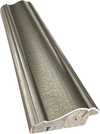
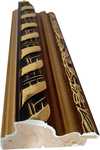
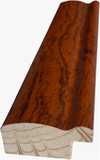
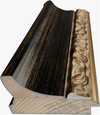
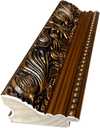
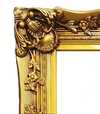
 Glass option is only available in size under 110 CM