Buy print Buy printBuy Image Buy Image SendSend
DetailsDetails Add to favorites Add to favorites DownloadDownload SimilarsSimilars X-RayX-Ray DiaporamaDiaporama

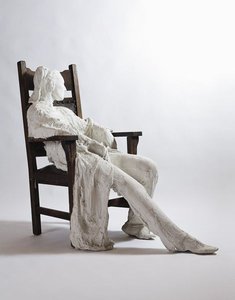
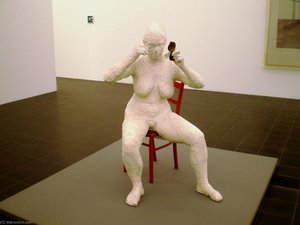
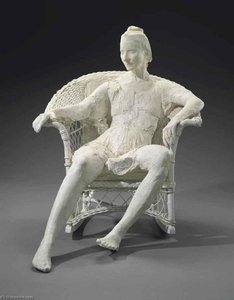
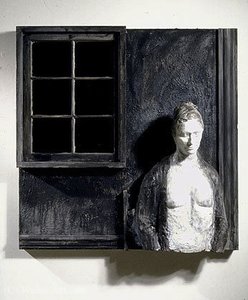
Woman in armchair

Discover George Segal's 'Woman in Armchair,' a striking modern sculpture blending raw textures and minimalist design. Perfect for art collectors seeking contemporary, tactile art with emotional depth.

Explore the haunting & iconic sculptures of George Segal (1924-2000), a key figure in Pop Art. Known for life-size casts depicting everyday people in melancholic urban scenes, he received the National Medal of Arts in 1999.

Hand Made Oil Reproduction

Hand-painted oil on canvas in your size and frame, made to order by our artists.

P118B $10
P118H $10
P118W $10
P438Z $10
P508JH $12
P508YH $12
P805H $10
P805Z $10
P919BZ $10
P919G $10
P919XJ $10
P959ZH $10
P968JZ $12
W106C $8
W218G $10
W218JH $8
W218Y $10
W307PJ $10
W316G $10
W316PJ $8
W316Y $10
W398PJ $8
W4111J $10
W500HY $15
W500JH $15
W692G $12
W849H $8
W940BG $15
W953PJ $8

Standard
custom
CM
INCH

Pick from our preset sizes that match the artwork's original proportions.

width
height

You may enter your own dimensions to fit a specific frame or space. If your selected size does not match the original image's proportions, we will either crop the artwork or extend the painting with additional hand-painted elements. A digital mockup will be sent for your approval before production begins.
Please note that the on-screen preview does not reflect the actual cropping or extension. Only the mockup will accurately show the final composition.
While custom sizes are available, we recommend selecting a dimension from the predefined list to preserve the original proportions.

Examples of what can be changed: Replace face with customer photo; Add pet (e.g., replace cat with dog); Include hidden message in background; Change background landscape or elements.
After order, BuyPopArt.com team will email client for instructions and provide a mockup preview

Worldwide Delivery () in 3/4 weeks instead of standard 5 weeks. (16 July). No compromise on quality.

why_choose_icon
Free Worldwide Express Shipping
why_choose_icon
High-Quality Linen Canvas
why_choose_icon
Full Shipping Insurance
why_choose_icon
Customs Tax Refund Guarantee
why_choose_icon
True Color Matching Guarantee
why_choose_icon
60-Day Return Policy (Defects Only)
why_choose_icon
100% Money-Back Guarantee
why_choose_icon
Bulk Discount Offer

Total Price

-

reproduction

Woman in armchair

Reproduction Medium

Reproduction Size

-

Total Price

-

Quick Facts

  • medium: Likely plaster or similar material, wooden chair
  • year: Unknown
  • notable_elements: Textural contrast, minimalist composition, contemplative pose
  • influences: Contemporary art, pop art movement
  • subject: Seated human figure in repose
  • title: Woman in armchair

Art Quiz

There is only one correct answer for each question.

Question 1:
Who is the artist of the sculpture 'Woman in Armchair'?
Question 2:
What material is 'Woman in Armchair' primarily made from?
Question 3:
Which art movement is George Segal associated with?
Question 4:
What is a notable feature of Segal's sculpture technique?
Question 5:
What emotional or thematic quality does 'Woman in Armchair' convey?

Artwork Description

Subject and Composition

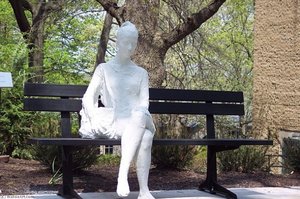
This evocative sculpture captures a contemplative woman seated in a simple armchair, inviting viewers into a moment of introspection and quiet repose. The figure’s relaxed posture, with one leg crossed and an arm resting gently on the chair’s armrest, embodies a sense of calm and inner thought. The minimalist background emphasizes the figure’s presence, making her the focal point of the piece and encouraging a personal connection with the viewer.

Stylistic Approach and Technique

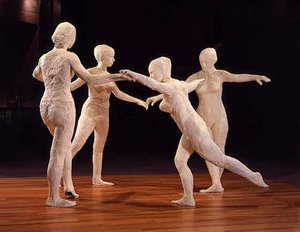
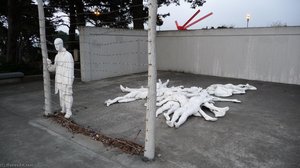
Blending elements of modern sculpture with raw, expressive textures, this artwork exemplifies a contemporary approach to figurative art. The artist employs a rough, plaster-like material, manipulated to create a tactile surface that emphasizes the organic, imperfect qualities of the human form. The use of plaster bandages—an innovative technique pioneered by the artist—results in hollow, textured shells that evoke a primal, visceral feeling. The monochromatic white finish accentuates the textured surface, highlighting the interplay of light and shadow, and adding depth to the sculpture’s emotional tone.

Historical Context and Artistic Significance

Created within the modernist and pop art movements, this sculpture reflects a shift towards raw expression and material honesty. The artist, a prominent figure in the late 20th century, sought to break away from traditional polished sculpture, embracing imperfection and immediacy. The rough surface and simplified form symbolize vulnerability and authenticity, resonating with themes of human fragility and introspection. This work stands as a testament to the artist’s innovative use of materials and his commitment to capturing genuine human emotion.

Symbolism and Emotional Impact

The seated figure, with her relaxed yet thoughtful pose, symbolizes introspection, vulnerability, and the universal human condition. The rough, unfinished surface suggests that inner strength often coexists with rawness and imperfection. The simplicity of the wooden chair contrasts with the textured figure, emphasizing the harmony between functional craftsmanship and expressive art. Viewers are invited to reflect on themes of rest, contemplation, and the beauty found in authenticity, making this sculpture a powerful centerpiece that evokes deep emotional resonance.

Interior Design and Collection Value

Perfectly suited for modern and minimalist interiors, this sculpture adds a touch of raw elegance and thoughtfulness to any space. Its tactile surface and contemplative subject make it an ideal focal point in living rooms, galleries, or corporate environments. As a high-quality reproduction, it offers collectors and interior designers an opportunity to own a piece that combines artistic innovation with timeless emotional depth. Whether displayed alone or as part of a curated collection, this sculpture promises to inspire and provoke meaningful conversations about art, humanity, and authenticity.


Artist Biography

George Segal (1924 – 2000): The Poetic Void of Everyday Life

George Segal was a pivotal figure in American Pop Art, renowned for his distinctive sculptural approach that combined meticulous craftsmanship with profound emotional resonance. Born in New York City in 1924 to Jewish immigrants from Eastern Europe, Segal’s upbringing instilled in him an appreciation for both artistic tradition and intellectual curiosity—a duality that would profoundly shape his creative vision. He pursued formal education at Stuyvesant High School, Pratt Institute, Cooper Union, and NYU, earning a teaching degree in 1949, establishing a foundation for his future career as an educator and artist.
  • Early Career & Influences: Segal’s artistic journey began with painting, absorbing influences from Surrealism and Abstract Expressionism, particularly the work of Franz Kline and Willem de Kooning. However, he swiftly transitioned to sculpture, recognizing its potential for conveying complex ideas through simplified forms.
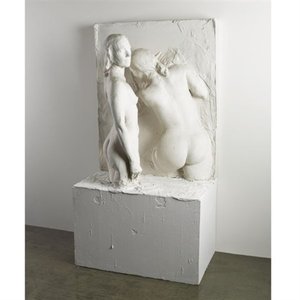
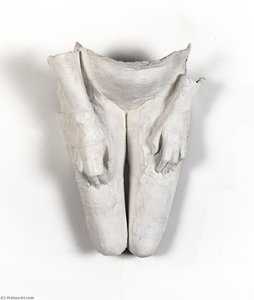
  • The Plaster Bandage Technique: Segal revolutionized sculptural technique by pioneering the use of plaster bandages—specially designed gauze strips impregnated with plaster—as his primary medium. This innovative method involved wrapping a model in bandages in sections, removing hardened forms, and reconstructing them with additional plaster to create hollow shells. Unlike traditional molds, these shells retained the texture of the bandages, resulting in sculptures that possessed an inherent physicality and vulnerability.

Sculptural Innovation: Life-Size Casts & Melancholic Urban Scenes

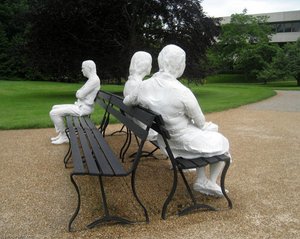
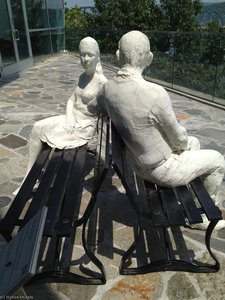
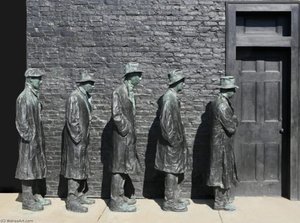
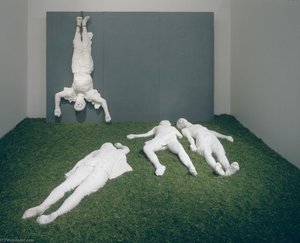
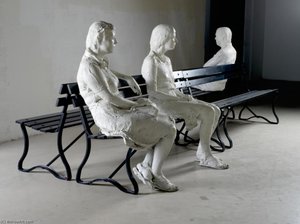
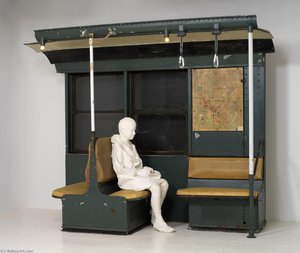
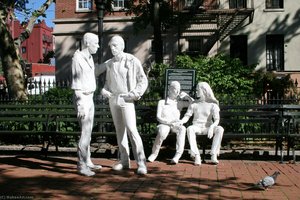
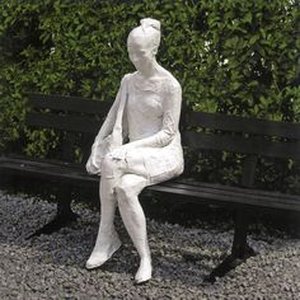
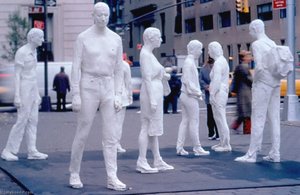
Segal’s sculptural output is characterized by its striking simplicity—life-size figures placed within meticulously constructed urban environments crafted from found objects like benches, bus shelters, and diner tables. These scenes evoke a sense of isolation and contemplation, mirroring the artist's own preoccupation with themes of mortality and human experience. The figures themselves are rendered in muted tones, devoid of excessive detail, contributing to their ghostly appearance and conveying an atmosphere of melancholic beauty. This deliberate reductionist style aligns perfectly with Pop Art’s rejection of emotional excess and its focus on confronting everyday realities.
  • The Process: Segal initially painted his sculptures white, reflecting the original plaster form. Later, he transitioned to bronze casting, sometimes patinating it white to emulate the texture of the plaster bandages—a testament to his commitment to preserving the materiality of his process.
  • Symbolism & Atmosphere: The figures’ stillness and anonymity serve as powerful symbols of human existence, prompting viewers to consider questions about identity, solitude, and the passage of time. Segal's environments amplify this effect, creating spaces that feel both familiar and unsettling.

Recognition & Legacy

George Segal’s contribution to American art was formally acknowledged in 1999 when he received the United States National Medal of Arts—a prestigious honor bestowed upon individuals who have made significant contributions to the arts. His sculptures continue to resonate with audiences worldwide, celebrated for their understated elegance and profound psychological depth. Segal's work stands as a cornerstone of Pop Art’s exploration of existential concerns within the context of modern life, cementing his place as one of the most influential sculptors of the 20th century.

Notable Works

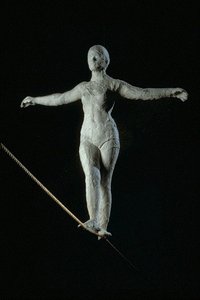
Some of Segal’s most celebrated pieces include “Three People on 4 Benches,” “Two Bathers,” and “The Tightrope Walker”—each embodying the artist's signature style and conveying a poignant meditation on human vulnerability and urban solitude. These sculptures are currently housed in prominent museums across North America and Europe, ensuring that Segal’s artistic vision will endure for generations to come.

Further Exploration

For more information about George Segal’s life and work, please refer to the Wikipedia article: Wikipedia.
George Segal

George Segal

1924 - 2000 , United States of America

Quick Facts

  • Artistic Movement Or Style: Pop Art
  • Artists Or Movements Influenced By This Artist: ['']
  • Artists Who Influenced This Artist: ['']
  • Date Of Birth: November 26, 1924
  • Date Of Death: June 9, 2000
  • Full Name: George Segal
  • Nationality: American
  • Notable Artworks:
    • Three People on 4 Benches
    • Two bathers
    • The tightrope walker
  • Place Of Birth: New York City, U.S.
Explore artworks organized by themes, styles, and characteristics.