Buy print Buy printBuy Image Buy Image SendSend
DetailsDetails Add to favorites Add to favorites DownloadDownload SimilarsSimilars X-RayX-Ray DiaporamaDiaporama

The Vexations of the Thinker

Explore Giorgio de Chirico’s ‘The Vexations of the Thinker,’ a surreal masterpiece of Metaphysical art. Discover its unsettling composition, symbolic depth & lasting legacy.

Explore the surreal world of Giorgio de Chirico (1888-1978), founder of Metaphysical art. Discover dreamlike cityscapes, philosophical themes & iconic mannequins. Influential to Surrealism.

Hand Made Oil Reproduction

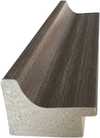
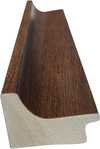
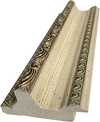
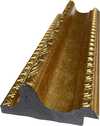
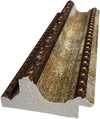
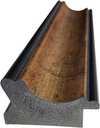
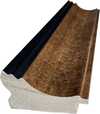
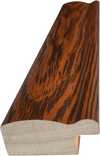
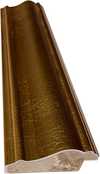
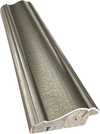
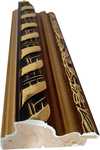
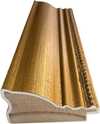
Hand-painted oil on canvas in your size and frame, made to order by our artists.
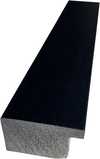
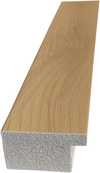
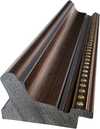
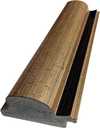
P118B $10
P118H $10
P118W $10
P438Z $10
P508JH $12
P508YH $12
P805H $10
P805Z $10
P919BZ $10
P919G $10
P919XJ $10
P959ZH $10
P968JZ $12
W106C $8
W218G $10
W218JH $8
W218Y $10
W307PJ $10
W316G $10
W316PJ $8
W316Y $10
W398PJ $8
W4111J $10
W500HY $15
W500JH $15
W692G $12
W849H $8
W940BG $15
W953PJ $8

Standard
custom
CM
INCH

Pick from our preset sizes that match the artwork's original proportions.

width
height

You may enter your own dimensions to fit a specific frame or space. If your selected size does not match the original image's proportions, we will either crop the artwork or extend the painting with additional hand-painted elements. A digital mockup will be sent for your approval before production begins.
Please note that the on-screen preview does not reflect the actual cropping or extension. Only the mockup will accurately show the final composition.
While custom sizes are available, we recommend selecting a dimension from the predefined list to preserve the original proportions.

Examples of what can be changed: Replace face with customer photo; Add pet (e.g., replace cat with dog); Include hidden message in background; Change background landscape or elements.
After order, BuyPopArt.com team will email client for instructions and provide a mockup preview

Worldwide Delivery () in 3/4 weeks instead of standard 5 weeks. (16 July). No compromise on quality.

why_choose_icon
Free Worldwide Express Shipping
why_choose_icon
High-Quality Linen Canvas
why_choose_icon
Full Shipping Insurance
why_choose_icon
Customs Tax Refund Guarantee
why_choose_icon
True Color Matching Guarantee
why_choose_icon
60-Day Return Policy (Defects Only)
why_choose_icon
100% Money-Back Guarantee
why_choose_icon
Bulk Discount Offer

Total Price

-

reproduction

The Vexations of the Thinker

Reproduction Medium

Reproduction Size

-

Total Price

-

Quick Facts

  • movement: Metaphysical art
  • artist: Giorgio de Chirico
  • year: 1915
  • style: Surrealism
  • dimensions: 46 x 38 cm
  • title: The Vexations of the Thinker

Art Quiz

There is only one correct answer for each question.

Question 1:
Giorgio de Chirico is most closely associated with which artistic movement?
Question 2:
What is a prominent characteristic of the figures in 'The Vexations of the Thinker' and other works by de Chirico?
Question 3:
Which philosopher's ideas significantly influenced de Chirico’s artistic exploration of reality?
Question 4:
The composition of 'The Vexations of the Thinker' aims to evoke what kind of feeling in the viewer?
Question 5:
What is a key element often found within De Chirico's Metaphysical paintings, symbolizing the passage of time?

Artwork Description

A Realm of Quietude: Decoding De Chirico’s ‘The Vexations of the Thinker’

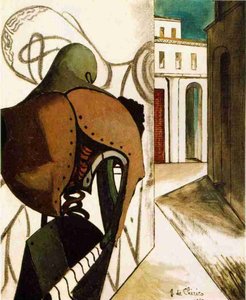
Giorgio de Chirico's *The Vexations of the Thinker*, painted in 1915, is a cornerstone of the Metaphysical art movement – a style that sought to unveil the hidden realities beneath the surface of everyday life. This small-scale oil on canvas (46 x 38 cm) isn’t merely a depiction of a man; it's an exploration of existential solitude and the weight of contemplation.

The Enigma of the Figure

The painting centers around a solitary male figure, presented from behind, seemingly lost in thought on a stark urban sidewalk. Dressed in conventional attire – suit and tie – he represents modern humanity, yet his anonymity is striking. He isn’t *who* he is, but rather *what* he embodies: the universal experience of introspection. His gaze is directed towards an unseen point, inviting us to project our own anxieties and ponderings onto his silent vigil. The surrounding architecture, rendered with a deliberate lack of detail, further emphasizes this sense of isolation. Other figures are subtly present in the background, yet they remain distant and uninvolved, amplifying the protagonist’s loneliness.

Metaphysical Style & Technique

De Chirico masterfully employs several key characteristics of Metaphysical painting. Unconventional perspective, stark shadows, and a dreamlike stillness create an unsettling atmosphere. The composition isn't concerned with realistic representation; instead, it prioritizes emotional resonance. His technique relies on precise lines and flat planes of color, minimizing texture to enhance the sense of artificiality. This deliberate simplification contributes to the painting’s haunting quality – it feels less like a memory and more like a carefully constructed stage for psychological drama. The clock visible on a building is a recurring motif in De Chirico's work, symbolizing the relentless passage of time and its impact on human consciousness.

Historical Context & Philosophical Roots

Born in Greece but largely working in Italy, De Chirico was deeply influenced by the philosophical ideas of Friedrich Nietzsche and Arthur Schopenhauer. Their exploration of existentialism, the irrationality of existence, and the burden of self-awareness permeate his work. *The Vexations of the Thinker* emerged during a period of immense social and political upheaval leading up to World War I – a time marked by uncertainty and anxiety. The painting can be seen as a reflection of this collective unease, capturing the sense of alienation and disorientation that characterized the modern experience.

Symbolism & Emotional Impact

The symbolism within *The Vexations of the Thinker* is open to interpretation, which is central to De Chirico’s intent. The empty spaces, the faceless figure, and the ambiguous setting all contribute to a feeling of profound melancholy. It's not about providing answers; it’s about evoking questions. The painting speaks to the inherent loneliness of human existence, the struggle for meaning in a chaotic world, and the burden of self-reflection. It is a powerful visual poem on the anxieties of modern life.

For Collectors & Interior Design

*The Vexations of the Thinker* offers a compelling statement piece for any art collection. Its subdued palette and thought-provoking imagery lend themselves well to various interior design schemes, particularly those seeking a touch of intellectual sophistication or a hint of melancholic beauty. A high-quality reproduction can serve as a focal point in a study, living room, or bedroom, inviting contemplation and sparking conversation. The painting’s enduring appeal lies in its ability to resonate with universal human experiences – making it a timeless addition to any space.

Further Exploration

  • Explore other works by Giorgio de Chirico to understand the evolution of his Metaphysical style.
  • Consider pairing this artwork with pieces from Surrealist artists who were directly influenced by De Chirico, such as René Magritte or Salvador Dalí.
  • Research the philosophical underpinnings of Metaphysical art to gain a deeper appreciation for its intellectual depth.

Artist Biography

A Dreamscape of the Mind: The Life and Art of Giorgio de Chirico

Born in 1888 in Volos, Greece, to Italian parents—a Genoese mother and a Sicilian father—Giorgio de Chirico’s artistic journey was one steeped in both classical heritage and a burgeoning sense of modern alienation. His early education at the Athens Polytechnic laid a foundation in traditional techniques, but it was his subsequent studies in Munich that truly ignited his creative spirit. There, amidst the intellectual ferment of pre-war Europe, he encountered the works of Arnold Böcklin and Max Klinger, artists whose symbolic landscapes and haunting imagery would deeply resonate with his own developing aesthetic. Equally influential were the philosophical currents of the time—the writings of Friedrich Nietzsche, Arthur Schopenhauer, and Otto Weininger—which explored themes of existentialism, the irrationality of human desire, and the subjective nature of reality. These ideas would become central to de Chirico’s groundbreaking artistic vision.

The Birth of Metaphysical Painting

Around 1909, a unique style began to emerge from de Chirico's explorations—a style that he himself termed “Metaphysical” art. This wasn’t merely a stylistic innovation; it was a profound attempt to capture the hidden realities beneath the surface of everyday life, to reveal the unsettling poetry lurking within familiar spaces. A pivotal moment occurred during a visit to Florence and an experience in Piazza Santa Croce, which sparked his iconic ‘Metaphysical Town Square’ series. These paintings are characterized by their eerie stillness, long dramatic shadows, illogical perspectives, and the presence of classical architecture juxtaposed with unsettling elements like faceless mannequins and looming statues. The effect is deeply disquieting, evoking a sense of nostalgia, isolation, and an almost unbearable longing for something lost or unattainable. De Chirico founded the Scuola Metafisica, profoundly impacting Surrealism, though he would later distance himself from its interpretations of his work. His paintings weren’t intended as illustrations of dreams, but rather as attempts to depict a reality beyond the visible world—a realm where time and space are fluid, and the boundaries between consciousness and unconsciousness blur. Notable works like *The Vexations of the Thinker*, *The Enigma of an Autumn Afternoon*, and *The Song of Love* exemplify this haunting aesthetic, inviting viewers to contemplate the mysteries of existence and the fragility of human perception.

A Shift in Style and a Lasting Legacy

Following World War I, around 1919, de Chirico’s artistic path took an unexpected turn. He rejected his earlier metaphysical approach, embracing instead a more traditional neoclassical or neo-baroque style. This shift was met with considerable controversy; many critics lamented the perceived decline in quality and accused him of abandoning the innovative spirit that had defined his early work. However, de Chirico remained steadfast in his artistic choices, revisiting themes from his past but rendering them with a different aesthetic sensibility. He continued to paint and exhibit prolifically throughout his life, exploring various styles and subjects while maintaining a consistent commitment to craftsmanship and technical skill. Despite the criticism, his influence on subsequent generations of artists cannot be overstated. His innovative use of space, perspective, and symbolism challenged conventional artistic norms and paved the way for new forms of expression.

Influences and Enduring Impact

De Chirico’s work stands as a crucial bridge between the late 19th-century Symbolist movement and the rise of Surrealism in the early 20th century. He was directly influenced by artists like Arnold Böcklin and Max Klinger, whose evocative imagery resonated with his own fascination with mythology and the subconscious mind. Philosophers such as Nietzsche and Schopenhauer provided him with a framework for exploring themes of existential angst, alienation, and the search for meaning in a seemingly meaningless world. However, de Chirico’s influence extended far beyond Surrealism. Artists like René Magritte and Salvador Dalí were deeply inspired by his metaphysical paintings, adopting his techniques of juxtaposition, illogical perspective, and symbolic imagery to create their own dreamlike worlds. His work also impacted later movements such as Magic Realism, which sought to depict everyday reality with a heightened sense of mystery and psychological depth. Today, de Chirico’s paintings are exhibited in major museums worldwide, including the Museum dedicated to his work near the Spanish Steps in Rome, ensuring that his legacy as one of the most important figures in 20th-century art remains secure. He left behind not just a body of artwork but a new way of seeing—a way of perceiving the world as a place of hidden meanings, unsettling beauty, and enduring mystery.

Key Influences & Artistic Lineage

  • Influenced By: Arnold Böcklin, Max Klinger, Friedrich Nietzsche, Arthur Schopenhauer.
  • Influenced: Surrealism, particularly artists like René Magritte and Salvador Dalí. His work also impacted later movements such as Magic Realism.
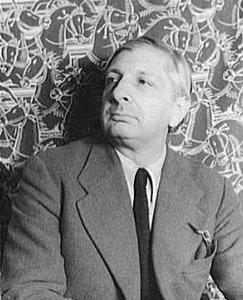
Giorgio de Chirico

Giorgio de Chirico

1888 - 1978 , Greece

Quick Facts

  • Artistic Movement Or Style: Metaphysical art
  • Artists Or Movements Influenced By This Artist:
    • Surrealism
    • René Magritte
    • Salvador Dalí
  • Artists Who Influenced This Artist:
    • Arnold Böcklin
    • Max Klinger
    • Friedrich Nietzsche
  • Date Of Birth: July 10, 1888
  • Date Of Death: 1978
  • Full Name: Giorgio de Chirico
  • Nationality: Italian
  • Notable Artworks:
    • The Vexations of the Thinker
    • The Enigma of an Autumn Afternoon
    • The Song of Love
  • Place Of Birth: Volos, Greece
Explore artworks organized by themes, styles, and characteristics.