

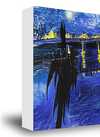
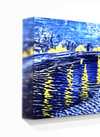
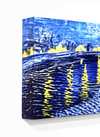
Museum-quality giclée or canvas print with fast production and flexible finish options.
Pick from our preset sizes that match the artwork's original proportions.

You may enter your own dimensions to fit a specific frame or space. If your selected size does not match the original image's proportions, we will either crop the artwork or extend the image with a mirrored or solid-fill edge. A digital mockup will be sent for your approval before production begins.
Please note that the on-screen preview does not reflect the actual cropping or extension. Only the mockup will accurately show the final composition.
While custom sizes are available, we recommend selecting a dimension from the predefined list to preserve the original proportions.
Worldwide Delivery () in 2 weeks instead of standard 4/5 weeks. (24 July)


Taste
Reproduction Size
In the vibrant, bustling heart of seventeenth-century Antwerp, a painter emerged whose brushwork whispered the elegance of royalty and the intimacy of domestic grace. Gonzales Coques, often affectionately known by his contemporaries as "the little Van Dyck," occupied a unique space in the Flemish Baroque movement. While his namesake, Anthony van Dyck, captured the grand, sweeping majesty of the English court, Coques mastered the art of the cabinet portrait—intimate, meticulously detailed works that brought a sense of refined nobility to the burgeoning middle class of the Low Countries. His life, beginning with his christening in Antwerp on December 8, 1614, was deeply intertwined with the artistic pulse of his home city, a place where tradition and innovation danced in every studio.
The foundations of Coques’s mastery were laid during his formative years under the guidance of legendary masters. His early training saw him apprenticed to Pieter Brueghel the Younger (or perhaps his son, Pieter Brueghel III), a lineage that undoubtedly gifted him with an eye for narrative detail and the subtle textures of the natural world. This education was further refined through his time in the studio of David Ryckaert, providing him with the technical rigor required to navigate the complex demands of portraiture. By 1640/41, Coques had achieved the prestigious status of master within the Antwerp Guild of Saint Luke, a milestone that signaled his arrival as a significant force in the Flemish art scene.
The defining characteristic of Coques’s oeuvre was his profound, almost spiritual, connection to the aesthetic of Anthony van Dyck. This was not merely a matter of imitation, but a sophisticated dialogue with style. Following Van Dyck’s return from England, Coques absorbed the master's use of dramatic chiaroscuro and the ability to capture fleeting, psychological nuances within a single gaze. There is a compelling historical suggestion that Coques may have even traveled to England alongside Van Dyck during the latter's final years, an experience that likely deepened his grasp of the aristocratic poise and fluid brushwork that would become his hallmark.
Unlike many of his contemporaries who drifted toward genre scenes or boisterous "merry companies," Coques carved out a niche for narrative portraits. He specialized in small-scale, cabinet-sized compositions that often featured family groups viewed from a slightly low perspective, lending an air of dignity to even the most private settings. His works, such as the evocative Portrait of a Married Couple in the Park, showcase a remarkable ability to balance the opulence of Baroque wealth with a palpable sense of domestic intimacy. Through his use of light and texture, he could render the shimmer of silk, the softness of lace, and the warmth of human connection with equal virtuosity.
Beyond the easel, Coques was a man of significant social and professional standing. His life was marked by both personal stability and professional expansion; he married the daughter of David Ryckaert, Catharina, and later entered into a second marriage with Catharina Rysheuvel. His influence extended far beyond the borders of Antwerp, as he traveled to The Hague, where he served not only as a portraitist for the House of Orange—working on commissions for figures such as Frederick Hendrik—but also as a shrewd and successful art dealer. This dual role allowed him to remain at the very center of the European art market, shaping the tastes of the era.
The historical significance of Gonzales Coques lies in his ability to democratize the grandeur of the Baroque. He took the lofty, larger-than-life language of courtly portraiture and distilled it into a format that was accessible, collectible, and deeply personal. His legacy is found in:
When he passed away in 1684, Coques left behind a body of work that remains a testament to the enduring power of elegance. He did not merely follow in the footsteps of Van Dyck; he walked alongside him, creating a parallel world of beauty that continues to captivate the modern eye with its luminous light and timeless grace.

1614 - 1684 , Belgium


Stay updated with the latest art news, exclusive offers, and decoration ideas.
Tell us about your project and our art experts will provide you with 3 personalized art suggestions.
Let Us Curate 3 Options Just for You - Free!


 Preview
 Buy Painting
 Send
Send Share
Share
 Details

 Download
 Similars
 X-Ray
X-Ray Diaporama
 Read More


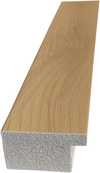
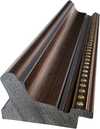
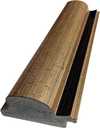

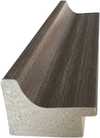
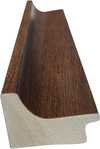
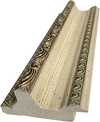
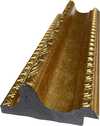
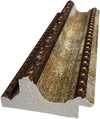
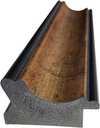
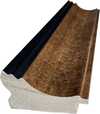
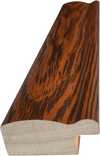
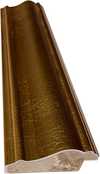


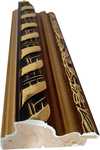

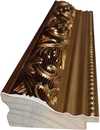
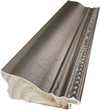
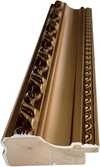
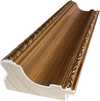
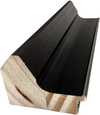
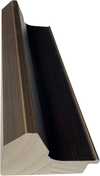
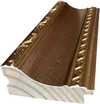
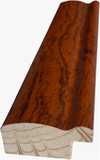
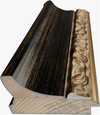
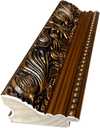
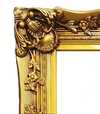
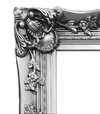
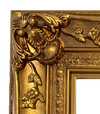
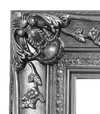
 Glass option is only available in size under 110 CM


