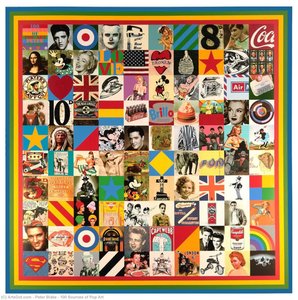
Purchase a high-resolution, enhanced digital image, far superior to the online preview.
Each file is meticulously prepared by our in-house specialists using advanced tools and expert manual retouching. We ensure every image has exceptional clarity, precise color accuracy, and fine detail.
The final file is delivered via email within 72 hours, optimized for immediate use in professional, editorial, and print environments. This is the same quality trusted by top-tier design studios, publishers, and galleries.
Download a high-resolution file for personal display, printing, and creative projects. ( Switch to Print Switch to hand made Painting)
When you choose BuyPopArt.com, you're not just getting an image - you're receiving a professionally enhanced digital artwork, crafted with precision and backed by a satisfaction guarantee. Here's everything that comes with your order, automatically:

Your high-resolution digital image file will be emailed to you within 72 hours of ordering - ready for immediate use.

Your artwork is professionally optimized using advanced AI tools and manual editing, ensuring maximum detail, clarity, and color accuracy.

Accidentally deleted or lost your file? No worries - we'll resend it to you anytime, free of charge.

Enjoy your artwork instantly with zero customs, duties, or delivery fees - digital downloads are always tax-free.

We ensure your digital image reflects the original colors as closely as possible using professional tools and color management.

If you're not satisfied with your digital image, we'll revise it or refund 100% within 60 days - no questions asked.

Not satisfied? Get a full refund within 60 days of receiving your digital file - no questions asked.

Buy 3 images, save 10% - Buy 5, save 15% - Buy 10+, save 20%. Great for creative projects, galleries, and agencies.

The year 1940 marked a pivotal, yet tragically brief, moment in the life of Paul Klee (1879-1940), a Swiss-born German artist whose work resonated with both childlike wonder and profound emotional depth. Born in Bern, Switzerland, into a family of musicians – his father a Kantor (organist) and his mother a piano teacher – Klee’s early life was steeped in artistic sensibility. This foundation, coupled with a restless intellectual curiosity, would profoundly shape the trajectory of his extraordinary career. The decade of 1940 witnessed not only the flourishing of his unique style but also the looming shadow of war, an event that ultimately cut short his life and irrevocably altered the course of his art.
Klee’s artistic development was a complex tapestry woven from diverse influences. Initially drawn to realism and academic training at the Kunstlerausschule in Munich, he quickly rejected these constraints, seeking a more expressive and personal approach. The impact of Wassily Kandinsky, a key figure in the early development of abstract art, proved particularly significant. Klee’s time teaching alongside Kandinsky at the Bauhaus school in Germany during the 1920s exposed him to revolutionary ideas about color theory and non-objective painting. He embraced these concepts, developing his own distinctive style characterized by playful lines, vibrant colors, and a dreamlike quality. His work frequently incorporated musical notation – he was a passionate musician – reflecting an underlying rhythm and structure beneath the seemingly chaotic surface of his compositions. The influence of Japanese art, particularly woodblock prints, is also evident in Klee’s use of flattened perspectives and simplified forms.
The events of 1940 were inextricably linked to the escalating tensions of World War II. As Europe descended into conflict, Klee found himself increasingly displaced, moving between Switzerland, France, and ultimately, Munich. The Nazi regime's growing hostility towards modern art and Jewish artists forced him to flee Germany in 1933. This period of exile profoundly impacted his work, shifting from the more overtly playful aspects of his earlier style to a deeper exploration of psychological themes and anxieties. The war years brought further displacement and hardship, culminating in his death in Muraltoa, Switzerland, in June 1940, likely due to Schizophrenia, which he had struggled with throughout his life.
Despite the turmoil of 1940, Klee continued to produce a remarkable body of work. *Ships in the Dark*, painted that year, exemplifies this period’s introspective mood. The painting depicts a small boat navigating a dark and uncertain sea, symbolizing both personal struggle and the broader anxieties of wartime Europe. Its muted colors and ambiguous forms evoke a sense of unease and vulnerability. Similarly, *Castle and Figures* reflects his ongoing fascination with architectural forms and human figures, rendered in a simplified, almost childlike style. The painting’s fragmented composition and distorted perspective create a dreamlike atmosphere, hinting at the instability and disorientation of the era.
Other notable works from 1940 include *Autumn*, a vibrant depiction of falling leaves that captures both the beauty and melancholy of the season. The use of bold colors and dynamic brushstrokes conveys a sense of movement and energy, while the simplified forms suggest a deeper symbolic meaning. *Zlatyu Boyadzhiev*, a portrait of the Bulgarian painter Zlatyu Boyadzhiev, showcases Klee’s ability to capture personality through subtle gestures and expressive lines. The painting is notable for its intimate portrayal of the subject, revealing both his physical presence and inner character.
Klee's time at the Bauhaus school was transformative, shaping not only his artistic style but also his pedagogical approach. He believed in fostering a holistic understanding of art, integrating elements of design, color theory, and psychology. His lectures on form and design theory, published posthumously as *Schriften zur Form und Gestaltungslehre*, remain highly influential among artists and designers today. At the Bauhaus, Klee experimented with various techniques, including watercolor, gouache, and lithography, developing a unique visual language characterized by spontaneity, improvisation, and a playful disregard for traditional conventions.
His influence extended beyond painting to encompass graphic design, illustration, and stage design. He designed book covers, posters, and theatrical sets, demonstrating his versatility as an artist and his ability to adapt his style to different media. The Bauhaus principles of functionalism and simplicity, combined with Klee’s expressive approach, helped to shape the development of modern art and design in the 20th century.
Paul Klee's work continues to resonate with audiences today due to its emotional honesty, intellectual depth, and artistic innovation. His exploration of themes such as anxiety, isolation, and the human condition remains profoundly relevant in a world grappling with complex challenges. His distinctive style – characterized by playful lines, vibrant colors, and dreamlike imagery – has influenced generations of artists, from Abstract Expressionists to contemporary painters. Klee’s legacy extends beyond his individual works; he represents a pivotal figure in the transition from traditional art to modern abstraction, embodying both the spirit of experimentation and the enduring power of artistic expression.
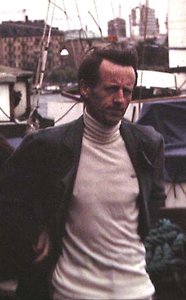
1940 - 2018 , Norway


Stay updated with the latest art news, exclusive offers, and decoration ideas.
Tell us about your project and our art experts will provide you with 3 personalized art suggestions.
Let Us Curate 3 Options Just for You - Free!


 Preview
 Send
Send Share
Share
 Details

 Download
 Similars
 X-Ray
X-Ray Diaporama
 Read More