Buy print Buy printBuy Image Buy Image SendSend
DetailsDetails Add to favorites Add to favorites DownloadDownload SimilarsSimilars X-RayX-Ray DiaporamaDiaporama

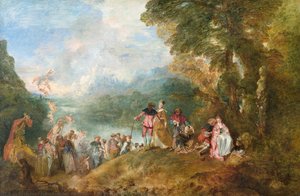
Landscape with Goat

Admire Jean-Antoine Watteau's 'Landscape with Goat,' a quintessential Rococo masterpiece depicting serene beauty and aristocratic leisure. Explore his enchanting style & discover exquisite reproductions at BuyPopArt.

Discover Jean-Antoine Watteau (1684-1721), the French Rococo master! Explore his idyllic 'fêtes galantes,' theatrical scenes, & influence on 18th-century art. View masterpieces like 'The Country Dance' & learn about his legacy.

Hand Made Oil Reproduction

Hand-painted oil on canvas in your size and frame, made to order by our artists.

P118B $10
P118H $10
P118W $10
P438Z $10
P508JH $12
P508YH $12
P805H $10
P805Z $10
P919BZ $10
P919G $10
P919XJ $10
P959ZH $10
P968JZ $12
W106C $8
W218G $10
W218JH $8
W218Y $10
W307PJ $10
W316G $10
W316PJ $8
W316Y $10
W398PJ $8
W4111J $10
W500HY $15
W500JH $15
W692G $12
W849H $8
W940BG $15
W953PJ $8

Standard
custom
CM
INCH

Pick from our preset sizes that match the artwork's original proportions.

width
height

You may enter your own dimensions to fit a specific frame or space. If your selected size does not match the original image's proportions, we will either crop the artwork or extend the painting with additional hand-painted elements. A digital mockup will be sent for your approval before production begins.
Please note that the on-screen preview does not reflect the actual cropping or extension. Only the mockup will accurately show the final composition.
While custom sizes are available, we recommend selecting a dimension from the predefined list to preserve the original proportions.

Examples of what can be changed: Replace face with customer photo; Add pet (e.g., replace cat with dog); Include hidden message in background; Change background landscape or elements.
After order, BuyPopArt.com team will email client for instructions and provide a mockup preview

Worldwide Delivery () in 3/4 weeks instead of standard 5 weeks. (16 July). No compromise on quality.

why_choose_icon
Free Worldwide Express Shipping
why_choose_icon
High-Quality Linen Canvas
why_choose_icon
Full Shipping Insurance
why_choose_icon
Customs Tax Refund Guarantee
why_choose_icon
True Color Matching Guarantee
why_choose_icon
60-Day Return Policy (Defects Only)
why_choose_icon
100% Money-Back Guarantee
why_choose_icon
Bulk Discount Offer

Total Price

-

reproduction

Landscape with Goat

Reproduction Medium

Reproduction Size

-

Total Price

-

Quick Facts

  • Title: Landscape with Goat
  • Influences: Nicolas Frémiet
  • Subject or theme: Rural landscape; Pastoral scene
  • Year: 1717
  • Artistic style: Idyllic; Elegant
  • Location: Private Collection
  • Movement: Rococo

Art Quiz

There is only one correct answer for each question.

Question 1:
What artistic style is Jean-Antoine Watteau primarily associated with?
Question 2:
The painting depicts a scene featuring a castle atop a mountain. What role does this element serve in conveying the artwork's mood?
Question 3:
What is notable about Watteau’s approach to portraying everyday life compared to many other artists of his time?
Question 4:
The image description mentions a goat grazing in the foreground. Why might this detail be considered significant?
Question 5:
Jean-Antoine Watteau’s early training involved sketching scenes from his hometown. What does this experience suggest about his artistic sensibilities?

Artwork Description

A Delicate Brushstroke: Jean-Antoine Watteau and the Idyllic Realm of Rococo

Jean-Antoine Watteau (1684-1721), a figure whose name resonates with the very essence of Rococo artistry, irrevocably transformed the artistic landscape of eighteenth-century France. Born in Valenciennes, amidst modest beginnings—his father a craftsman specializing in roofing—Watteau’s trajectory defied conventional expectations for artists of his time, embarking on a path marked by initial struggles for recognition within the Parisian art establishment.

Unlike many contemporaries who adhered to rigidly defined artistic doctrines, Watteau possessed an innate curiosity and observational acuity honed from childhood experiences sketching the vibrant tapestry of his hometown streets. This formative influence instilled in him a profound appreciation for everyday life—a fascination that would become a cornerstone of his oeuvre. His early training under local artists nurtured his talent and provided him with invaluable insights into capturing fleeting moments and conveying subtle emotions, characteristics that would define his distinctive style.

The Fête Galante: A Revolutionary Vision

Watteau’s artistic breakthrough arrived in Paris during the mid-1690s, where he swiftly gained patronage from influential figures like Madame de Montespan and Louis XIV. However, Watteau didn't simply embrace the prevailing trends; he actively challenged them. He spearheaded the development of the *fête galante*, a genre that represented a radical departure from the grandeur and theatricality of Baroque painting. Instead of depicting heroic narratives or monumental religious scenes, Watteau focused on idealized gatherings of aristocrats indulging in leisure activities—picnics, promenades, and masked balls—within exquisitely landscaped gardens.

These canvases weren’t merely decorative; they were imbued with a complex tapestry of symbolism reflecting the intellectual currents of the era. Watteau skillfully employed pastel hues—particularly pale pinks, blues, and greens—to evoke an atmosphere of ethereal beauty and tranquility. His brushstrokes were remarkably delicate, prioritizing softness and luminosity over dramatic chiaroscuro, mirroring the Rococo’s preoccupation with sensual pleasure and refined taste.

Technique & Legacy: Impressionistic Precursors

Watteau's technique—characterized by layering thin washes of pastel pigment—anticipates the Impressionist movement decades later. He meticulously blended colors to create subtle gradations and atmospheric effects, capturing the ephemeral quality of light and shadow with unprecedented finesse. This approach prioritized capturing the fleeting beauty of a particular moment rather than striving for absolute realism.

His influence extended far beyond his own lifetime, inspiring artists across Europe who sought to emulate his luminous palette and poetic vision. Watteau’s legacy continues to resonate today, reminding us that art can transcend mere representation—it can transport viewers into a realm of idealized emotion and aesthetic contemplation. Reproductions of his masterpieces offer an opportunity to experience the sublime beauty of Rococo artistry firsthand.

Artist Biography

A Delicate Brushstroke: The Life and Art of Jean-Antoine Watteau

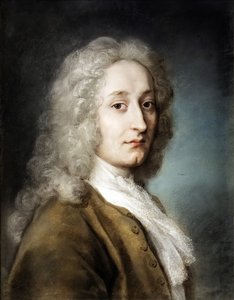
Jean-Antoine Watteau, a name synonymous with the blossoming Rococo style, emerged from the northern French city of Valenciennes in 1684. His brief but incandescent career irrevocably altered the course of eighteenth-century painting, shifting its focus from the grandeur and drama of the Baroque to an intimate world of elegance, leisure, and subtle emotion. Unlike many artists who followed a clearly defined path, Watteau’s journey was marked by initial struggles for recognition within the established art institutions of Paris. Born into a family of modest means—his father a master roofer—young Jean-Antoine displayed an early aptitude for drawing, initially sketching the colorful characters and bustling scenes of his hometown streets. This formative experience instilled in him a keen eye for observation and a fascination with everyday life, themes that would permeate his later work. His initial training under local artists Jacques-Albert Gérin and Julien provided a foundation, but it was his move to Paris around 1702 that truly ignited his artistic development.

From Theatrical Scenes to *Fêtes Galantes*

In the vibrant heart of Paris, Watteau entered the workshop of Claude Gillot, a painter specializing in theatrical designs and the popular genre of *fêtes galantes*—depictions of aristocratic outdoor entertainments. This apprenticeship proved pivotal. Gillot’s influence exposed Watteau to the world of commedia dell'arte, with its masked characters and playful narratives, which would become a recurring motif throughout his oeuvre. However, Watteau’s artistic sensibilities didn’t neatly align with the rigid categories favored by the Académie Royale de Peinture et de Sculpture. His genre paintings were deemed unsuitable for official recognition, leading to initial rejection when he attempted to compete for the prestigious Prix de Rome. Undeterred, and demonstrating a remarkable resilience, Watteau persevered, eventually gaining acceptance as a *maître amateur* in 1717—a status that allowed him to exhibit his work independently. This period marked a crucial turning point, allowing him to fully develop his unique style characterized by luminous colors, delicate brushwork, and an air of wistful melancholy. He began to move away from direct theatrical representation towards more poetic and evocative scenes, inventing the *fête galante* as a distinct genre—idyllic gatherings in park-like settings where aristocratic figures engaged in flirtatious pursuits and refined pastimes.

The Essence of Rococo: Style and Masterpieces

Watteau’s paintings are instantly recognizable for their distinctive qualities. He possessed an unparalleled ability to capture the elegance and refinement of aristocratic life, not through bombastic displays of power or wealth, but through subtle gestures, nuanced expressions, and a masterful use of light and color. His figures exude a poetic grace and a delicate emotional depth that sets them apart from the more formal portraits of his predecessors. The Country Dance (1718-1721), perhaps one of his most celebrated works, exemplifies this perfectly—a vibrant scene depicting carefree rustic life with exquisite detail and an underlying sense of longing. Other masterpieces such as Ceres (Summer) (1705) demonstrate his skill in portraying the beauty of nature and the human form, while The Embarkation for Cythera (1717) and its companion piece, Pilgrimage to Cythera, are iconic depictions of mythological journeys to the island of love, imbued with a sense of mystery and romantic yearning. Even his theatrical portraits, like Gilles (1719), possess an enigmatic quality that invites contemplation. Watteau’s technique was equally innovative; he employed a feathery brushstroke and a delicate layering of colors to create a shimmering effect, capturing the fleeting beauty of light and atmosphere.

Legacy and Enduring Influence

Watteau's artistic lineage is complex, drawing inspiration from diverse sources. He deeply admired Venetian Renaissance masters like Titian and Veronese, particularly their rich color palettes and dynamic compositions. The influence of Flemish artists such as Rubens is also evident in his energetic brushwork and sensuous figures. However, Watteau didn’t simply imitate these predecessors; he synthesized their influences into something entirely new and uniquely his own—a style that became the hallmark of Rococo painting. Despite a tragically short life—he succumbed to tuberculosis in 1721 at the age of just thirty-seven—Watteau left an indelible mark on art history. His work profoundly influenced generations of artists, including Fragonard and Boucher, who further developed the themes and techniques he pioneered. He redefined genre painting, elevating it to a level of artistic sophistication previously reserved for historical or religious subjects. Today, his paintings are treasured in major museums worldwide—from the National Gallery of Art in Washington D.C. to the Museo del Prado in Madrid—continuing to captivate audiences with their beauty, grace, and enduring appeal, solidifying his place as one of the most important and beloved artists of the Rococo period.
Jean-Antoine Watteau

Jean-Antoine Watteau

1684 - 1721 , France

Quick Facts

  • Artistic Movement Or Style: Rococo
  • Artists Or Movements Influenced By This Artist:
    • Fragonard
    • Boucher
  • Artists Who Influenced This Artist:
    • Titian
    • Veronese
    • Rubens
  • Date Of Birth: 1684
  • Date Of Death: 1721
  • Full Name: Jean-Antoine Watteau
  • Nationality: French
  • Notable Artworks:
    • The Country Dance
    • Ceres (Summer)
    • The Marriage Contract
    • Gilles
    • Cythera paintings
  • Place Of Birth: Valenciennes, France
Explore artworks organized by themes, styles, and characteristics.