

Museum-quality giclée or canvas print with fast production and flexible finish options. ( Buy Hand Made Painting Buy Image)
Pick from our preset sizes that match the artwork's original proportions.

You may enter your own dimensions to fit a specific frame or space. If your selected size does not match the original image's proportions, we will either crop the artwork or extend the image with a mirrored or solid-fill edge. A digital mockup will be sent for your approval before production begins.
Please note that the on-screen preview does not reflect the actual cropping or extension. Only the mockup will accurately show the final composition.
While custom sizes are available, we recommend selecting a dimension from the predefined list to preserve the original proportions.
Worldwide Delivery () in 2 weeks instead of standard 4/5 weeks. (16 August)


Two Camels
Reproduction Size
“Two Camels,” painted by John Frederick Lewis in 1843, stands as a quintessential example of Victorian Orientalist painting—a genre that captivated the imagination of artists and audiences alike during the era. More than just a depiction of desert animals, this watercolor masterpiece delves into complex themes of exploration, cultural fascination, and the romanticized portrayal of Eastern landscapes.
The painting’s central focus is undeniably on two camels traversing a sandy expanse. However, what elevates “Two Camels” beyond mere observation is the inclusion of a solitary figure perched atop one of them. This human element introduces an element of narrative and invites contemplation about the traveler's journey—a common motif in Orientalist art. Lewis meticulously captures the camels’ postures and movements, conveying a sense of dynamism that draws the viewer into the scene.
Lewis skillfully employs watercolor technique to achieve remarkable tonal range and textural detail. Watercolor allows for subtle blending and layering, capturing the ethereal quality of desert light—a hallmark of Orientalist painters who sought to convey atmosphere as much as accurate representation. The artist’s brushstrokes are delicate yet confident, demonstrating a mastery of color and form that is characteristic of his time.
“Two Camels” emerged during a period of intense British imperial expansion—a fervent desire to explore uncharted territories and establish dominion over distant lands. The Victorian fascination with the Orient stemmed from both scientific curiosity and romantic idealism. Artists like Lewis responded to this cultural zeitgeist by portraying exotic locales and peoples in ways that idealized their beauty and grandeur, often filtering them through European sensibilities.
Beyond its visual appeal, “Two Camels” carries symbolic weight. The camels themselves represent resilience, endurance, and the arduous journey of discovery—themes prevalent throughout Orientalist literature and art. Furthermore, the solitary figure symbolizes humanity’s ambition to conquer nature and transcend limitations. Lewis's deliberate framing contributes to this narrative dimension, prompting viewers to consider questions about perspective and cultural understanding.
"Two Camels" evokes a feeling of serene beauty combined with an underlying sense of adventure. The muted palette—dominated by sandy browns and pale blues—creates a tranquil atmosphere that contrasts sharply with the dramatic landscapes often depicted in Orientalist paintings. Lewis’s work continues to inspire artists and collectors today, serving as a reminder of Victorian Britain's artistic ambition and its enduring fascination with the mysteries of the East.
John Frederick Lewis, a prominent English Orientalist painter, was born on July 14, 1804, in London. He was the son of Frederick Christian Lewis, an engraver and landscape painter. This familial artistic background undoubtedly influenced his early development. His formal training began under the tutelage of Sir Thomas Lawrence, where he honed his skills alongside fellow artists like Edwin Landseer. This foundational period instilled in him a strong understanding of technique and composition.
Lewis’s artistic career unfolded through several distinct phases, each marked by evolving styles and thematic focuses:
Lewis created a substantial body of work celebrated for its meticulous detail and evocative atmosphere. Some of his most recognized pieces include:
Lewis’s style was shaped by several influences, most notably Sir Thomas Lawrence's emphasis on portraiture and composition. However, his direct observation of Middle Eastern cultures allowed him to develop a unique aesthetic characterized by:
Lewis’s contribution to the art world lies in his significant role in developing Orientalist painting. His meticulous representations of Islamic architecture, furnishings, and costumes set new standards for realism within the genre. He helped popularize a romanticized yet detailed vision of the Middle East among Western audiences. After returning to England in 1851, he continued to paint until his death on August 15, 1876, in Walton-on-Thames.
His work continues to be studied and admired for its artistic merit and historical insight into 19th-century perceptions of the Orient.

1804 - 1876 , United Kingdom

Explore the captivating Orientalist paintings of Carl Haag (1820-1915). Discover his detailed watercolors, Victorian landscapes & spiritual themes. Expert insights for collectors and art enthusiasts at BuyPopArt.
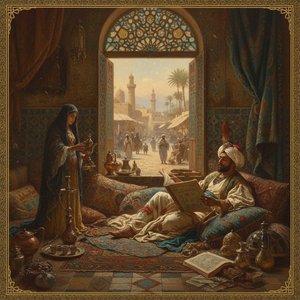
Explore the captivating Orientalist paintings of John Frederick Lewis! Discover his mastery of detail, genre scenes & influence on 19th-century British art. Learn about his life, techniques & legacy at BuyPopArt.

Explore the luminous landscapes of John Frederick Kensett, a master of Luminism and key figure in the Hudson River School. Discover his serene paintings & enduring legacy with BuyPopArt.

Explore the captivating history of detail in art – from Renaissance masterpieces to modern movements like Precisionism. Discover how specificity shapes narrative, value & collector appeal. Expert insights at BuyPopArt.

Explore the life & art of George Barret Sr., a pioneer of British pastoral painting. Discover his influence on Romantic landscape art, patronage, and collecting tips from BuyPopArt.


Stay updated with the latest art news, exclusive offers, and decoration ideas.
Tell us about your project and our art experts will provide you with 3 personalized art suggestions.
Let Us Curate 3 Options Just for You - Free!


 Preview
 Send
Send Share
Share
 Details

 Download
 Similars
 X-Ray
X-Ray Diaporama


 Read More




































 Glass option is only available in size under 110 CM


