Marc Chagall: A Life in Color and Imagination
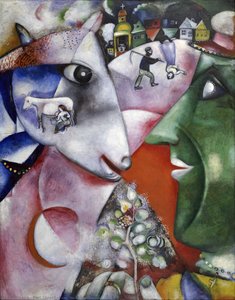
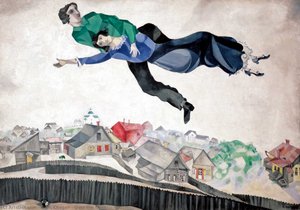
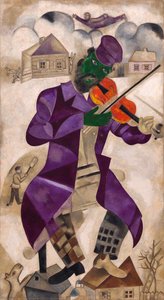
Marc Chagall (1887-1985) was a Russian and French artist. An early modernist, he was associated with the École de Paris, as well as several major artistic styles and created works in a wide range of artistic formats, including painting, drawings, book illustrations, stained glass, stage sets, ceramics, tapestries and fine art prints. Chagall was born Moishe Shagal in 1887, into a Hasidic Jewish family in Liozna, near Vitebsk, Belarus, but at that time in the Pale of Settlement of the Russian Empire. Before World War I, he travelled between Saint Petersburg, Paris, and Berlin. During that period, he created his own mixture and style of modern art, based on his ideas of Eastern European and Jewish folklore. He spent the wartime years in his native Belarus, becoming one of the country's most distinguished artists and a member of the modernist avant-garde, founding the Vitebsk Arts College. He later worked in and near Moscow in difficult conditions during hard times in Russia following the Bolshevik Revolution, before leaving again for Paris in 1923. During World War II, he escaped occupied France to the United States, where he lived in New York City for seven years before returning to France in 1948.
Art critic Robert Hughes referred to Chagall as “the quintessential Jewish artist of the twentieth century”. According to art historian Michael J. Lewis, Chagall was considered to be “the last survivor of the first generation of European modernists”. For decades, he “had also been respected as the world’s pre-eminent Jewish artist”. He was known for his ability to blend reality with fantasy, creating unique and captivating scenes. His use of naïve art techniques added a sense of innocence and purity to the painting, making it both visually appealing and emotionally powerful. Chagall's work continued to inspire artists today, and his contributions to the naïve art movement were undeniable.
Naïve Art Movement
Naïve art, also known as primitivism, is characterized by its simplicity and lack of formal training. This movement was popularized in the early 20th century and often featured dreamlike scenes with a focus on spirituality. Chagall's work fits perfectly into this category, as he drew inspiration from his Jewish heritage and biblical stories. He explored themes of exile, faith, and folklore—elements deeply rooted in Jewish tradition—translating them into vibrant visual language.
Painting Description
- Title: Moses Receiving the Tablets of Law (9)
- Artist: Marc Chagall
- Year Created: 1963
- Dimensions: 46 x 38 cm
- Medium: Charcoal, Gouache, Oil on Canvas
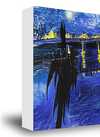
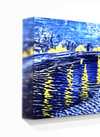
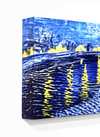
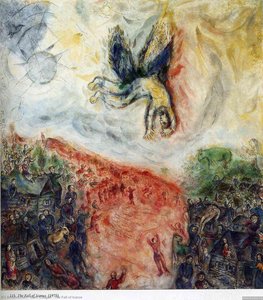
The painting depicts Moses standing in front of a crowd, with his hands raised as if receiving the tablets from God. The scene is filled with people in various positions, and two birds are visible - one near the top left corner and another towards the center-right area. Chagall’s masterful use of color—particularly yellows and blues—creates an atmosphere of solemn grandeur, mirroring the biblical narrative itself. The composition is deliberately asymmetrical, emphasizing the central figure of Moses and conveying a sense of dynamism and movement.
Symbolism and Composition
The painting captures the essence of faith and spirituality through its vibrant colors and detailed composition. Moses, a central figure in Jewish history, is shown in a moment of divine communication. The birds symbolize freedom and spiritual ascension, representing hope amidst adversity—a recurring motif throughout Chagall’s oeuvre. The crowd embodies the collective experience of witnessing this pivotal event, highlighting the importance of community and tradition.
Chagall's Style
Marc Chagall was known for his ability to blend reality with fantasy, creating unique and captivating scenes. His style combined elements of Cubism, Surrealism, and Expressionism, resulting in images that are both recognizable and dreamlike. He achieved this effect through flattened perspectives, distorted figures, and fantastical landscapes—techniques that defied conventional artistic conventions. Chagall’s distinctive visual language speaks to universal themes of longing, memory, and the human condition.
Relevance in Modern Art
Chagall's work continues to inspire artists today, and his contributions to the naïve art movement are undeniable.
Moses Receiving the Tablets of Law (9) is a testament to his skill and creativity, showcasing how traditional themes can be reinterpreted through modern artistic styles. It remains a powerful reminder of the enduring influence of biblical narratives on art and culture.
Wikipedia.org - Naïve Art For more information on naïve art and Marc Chagall's contributions to this movement, visit
Wikipedia.org - Naïve Art.
Photo Description: The painting is a colorful depiction of Moses receiving the tablets from God. The scene features several people in various positions, including one person holding a book above their head. There are also two birds visible in the painting, with one located near the top left corner and another towards the center-right area. The main focus is on Moses, who appears to be standing in front of a crowd of people. He is holding his hands up as if he's receiving the tablets from God. The image captures the essence of faith and spirituality through its vibrant colors and detailed composition.
Size: 46 x 38 cm
Date: 1963