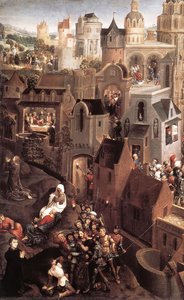
Oil On PanelEarly Netherlandish
 1480Renaissance
 48.0 x 17.0 cm
Hand-painted oil on canvas in your size and frame, made to order by our artists. ( Switch to Print Switch to Image)





























Pick from our preset sizes that match the artwork's original proportions.

You may enter your own dimensions to fit a specific frame or space. If your selected size does not match the original image's proportions, we will either crop the artwork or extend the painting with additional hand-painted elements. A digital mockup will be sent for your approval before production begins.
Please note that the on-screen preview does not reflect the actual cropping or extension. Only the mockup will accurately show the final composition.
While custom sizes are available, we recommend selecting a dimension from the predefined list to preserve the original proportions.
Worldwide Delivery () in 3/4 weeks instead of standard 5 weeks. (5 August). No compromise on quality.


St. Stephen
Reproduction Size
In the quiet, luminous realm of Early Netherlandish painting, few masters captured the intersection of human dignity and divine grace as tenderly as Hans Memling. His portrait of St. Stephen, dating to approximately 1480, serves as a breathtaking window into the spiritual fervor of the fifteenth century. The painting presents us with a figure of profound solemnity; St. Stephen is depicted not merely as a historical martyr, but as a living presence, his gaze and posture inviting the viewer into a moment of silent contemplation. Clad in the heavy, textured robes characteristic of the period, the saint holds a book—a symbol of the sacred word and the wisdom he carried—which acts as a focal point for both the composition and the soul.
The brilliance of this work lies in Memling’s unparalleled ability to marry meticulous detail with an atmospheric softness. As a student of the great Rogier van der Weyden, Memling inherited a mastery of oil technique that allowed him to render textures with almost tactile precision. In this piece, one can sense the weight of the fabric and the delicate interplay of light upon the saint's skin. Beyond the central figure, the artist subtly introduces a landscape populated by distant figures and verdant trees, creating a sense of depth that breathes life into the frame. This masterful use of perspective ensures that while the subject remains the emotional anchor, the world around him feels expansive and infinitely detailed.
Every element within this composition is imbued with layers of meaning designed to resonate with the faithful. The book held by St. Stephen is more than a mere attribute; it represents the foundation of faith and the transmission of divine truth. The background, far from being a simple backdrop, serves as a testament to the interconnectedness of the sacred and the natural world. By placing the saint within an outdoor setting, Memling suggests that the presence of the divine is woven into the very fabric of the natural landscape. This technique was a hallmark of the Bruges masters, aiming to evoke a sense of wonder at the beauty of creation.
For the discerning collector or interior designer, this reproduction offers more than just visual splendor; it provides an emotional anchor for any space. The painting’s palette, rich yet harmonious, possesses a timeless quality that complements both classical and contemporary settings. Whether placed in a sunlit study or a grand gallery, the portrait of St. Stephen brings with it an aura of tranquility and intellectual depth. It is a piece that demands a second look, rewarding the observer with new discoveries in every brushstroke—from the subtle shadows in the folds of his robe to the ethereal light filtering through the distant trees.
Owning a high-quality reproduction of such a masterpiece allows one to preserve the legacy of the Flemish Primitives. It is an invitation to surround oneself with history, craftsmanship, and the enduring power of sacred art. In an era of fleeting digital images, the profound, steady presence of Memling’s St. Stephen offers a rare opportunity to reconnect with the slow, deliberate beauty of the Renaissance spirit.

Germany

Explore 10 iconic portrait paintings – from Mona Lisa to Van Gogh’s self-portraits. Discover the stories behind these masterpieces, artistic techniques & find museum-quality art reproductions for your home at BuyPopArt.com.

Journey into the world of Early Netherlandish painting! Explore 10 masterpieces by Jan van Eyck, Rogier van der Weyden & more. Discover stunning detail, symbolism & Renaissance art for your home decor. Find museum-quality reproductions on BuyPopArt.com

Journey into the Early Netherlandish Renaissance! Explore 10 iconic paintings by Jan van Eyck, Rogier van der Weyden & more. Discover stunning detail, symbolism, and oil painting techniques. Find museum-quality art reproductions for your home at BuyPopArt.com.

Commission a timeless oil portrait from skilled artists at BuyPopArt. Preserve your family's legacy with museum-quality paintings, crafted to cherish for generations. Expert guidance & personalized service.

Explore the captivating world of vintage portrait art! Discover styles, techniques & the enduring appeal of 19th-century masterpieces. Expert restoration, custom reproductions & appraisal services at BuyPopArt.


Stay updated with the latest art news, exclusive offers, and decoration ideas.
Tell us about your project and our art experts will provide you with 3 personalized art suggestions.
Let Us Curate 3 Options Just for You - Free!


 Preview
 Send
Send Share
Share
 Details

 Download
 Similars
 X-Ray
X-Ray Diaporama
 Read More







 Glass option is only available in size under 110 CM