Artist Biography
A Pioneer of Kinetic Form: The Life and Art of Miloslav Chlupáč
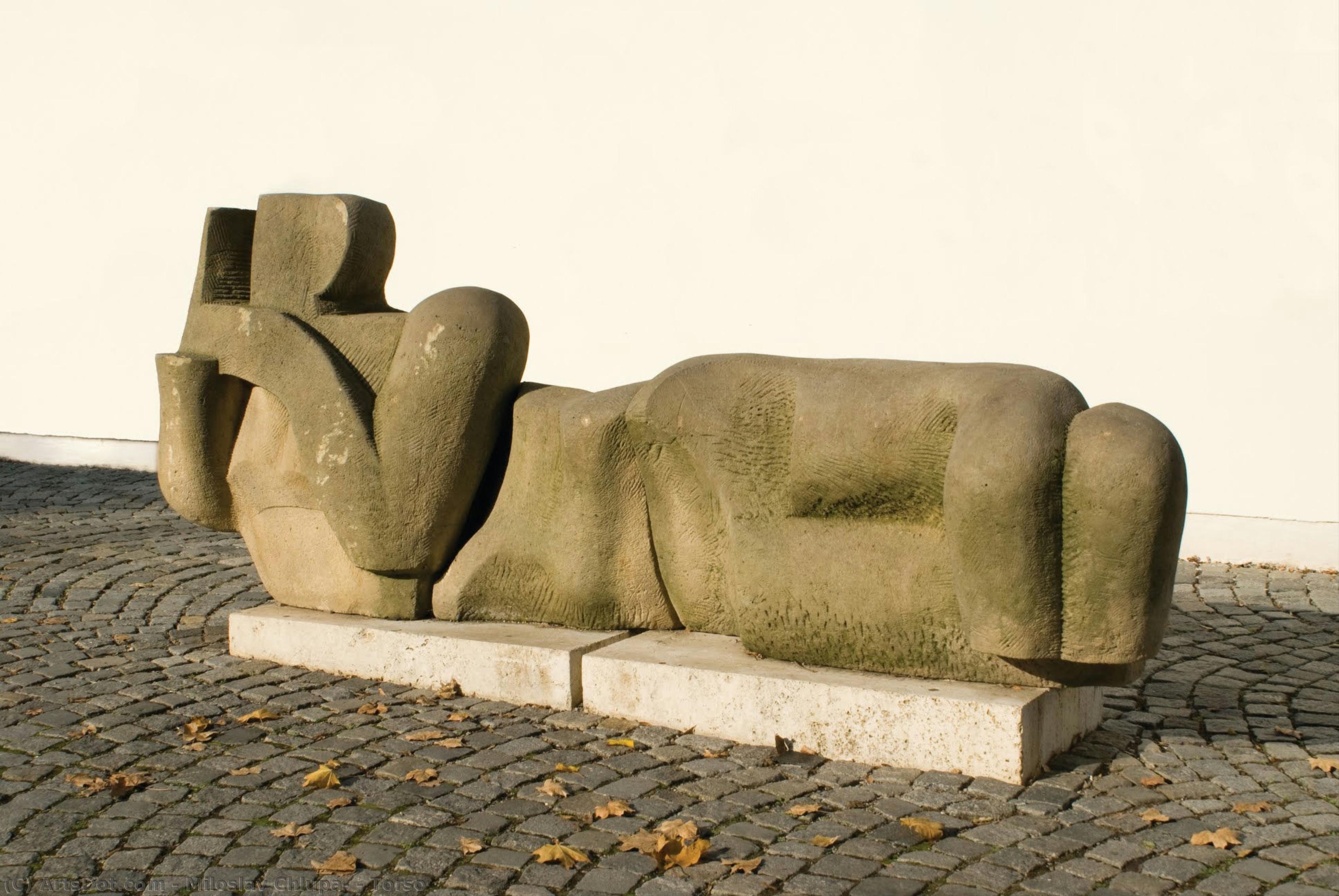
Miloslav Chlupáč, born in Prague in 1935 and passing away in 2008, stands as a pivotal figure in the development of Czech sculpture during the latter half of the twentieth century. His work wasn’t merely about shaping materials; it was an exploration of movement, perception, and the very essence of sculptural space. Chlupáč emerged from a period of intense political upheaval, his artistic journey deeply intertwined with the socio-political climate of Czechoslovakia, first under communist rule and then through its eventual transition to democracy. Initially drawn to medicine, he quickly abandoned that path following the closure of Czech universities by the Nazi regime, instead finding himself apprenticed to a stonemason. This early immersion in the physicality of stone would prove foundational, though his artistic vision soon expanded far beyond traditional static forms. He continued his studies at the Academy of Applied Arts in Prague under Josef Wagner, becoming actively involved in student politics and advocating for reforms within the institution itself.
The Radicalization of Form: UB 12 and Early Collaborations
Chlupáč’s artistic identity truly began to coalesce with his co-founding of the UB 12 group in the late 1950s. This collective, comprised of avant-garde artists, sought to break away from socialist realism and explore new modes of expression. It was during this period that Chlupáč’s signature style – sculpture incorporating moving parts – began to take shape. He wasn't interested in simply representing form; he wanted to *activate* it, to imbue his creations with a sense of life and dynamism. This approach represented a radical departure from the established norms of sculpture, challenging viewers to reconsider their understanding of three-dimensional space and the relationship between object and observer. Simultaneously, Chlupáč forged strong collaborative relationships with architects throughout the 1960s, integrating his sculptures into architectural projects and blurring the boundaries between disciplines. These collaborations weren’t merely decorative; they were integral components of the overall design, reflecting a holistic approach to artistic creation.
A European Recognition: Conceptual Depth and International Acclaim
The originality of Chlupáč's work quickly garnered attention beyond Czechoslovakia’s borders. His sculptures, characterized by their intricate mechanisms and conceptual depth, were recognized for their unique contribution to the European art scene. He became one of the few Czech sculptors included in the *New Dictionary of Modern Sculpture*, published in Paris in 1970 – a testament to his growing international reputation. This recognition was particularly significant given the political constraints under which he operated. His work wasn’t simply aesthetically innovative; it represented a subtle form of resistance, a refusal to conform to the dictates of socialist realism. The moving parts within his sculptures can be interpreted as metaphors for change and transformation, reflecting a desire for greater freedom and expression.
Persecution and Resilience: Art Under Normalization
The Warsaw Pact invasion of Czechoslovakia in 1968 marked a turning point in Chlupáč’s career. The subsequent period of “Normalization” brought with it increased censorship and political repression, effectively silencing many dissenting voices within the art community. Chlupáč found himself among those persecuted for his artistic beliefs, losing opportunities to exhibit and facing significant obstacles in pursuing his work. Despite these challenges, he refused to abandon his creative vision. Forced into relative isolation, he turned increasingly towards painting, though even this avenue of expression was curtailed by the political climate. This period underscores the courage and resilience required to maintain an artistic identity under oppressive conditions. His wife, sculptor Věra Janoušková, shared in these struggles, becoming a steadfast partner in both life and art.
Legacy and Enduring Significance
The Velvet Revolution of 1989 brought about a dramatic shift in Czechoslovakia’s political landscape, allowing Chlupáč to re-emerge as a prominent figure in the art world. He once again exhibited his work internationally, participated in sculpture symposia, and shared his knowledge through teaching positions at summer academies. His legacy extends beyond his individual sculptures; he inspired generations of Czech artists to challenge conventions and explore new forms of expression. Chlupáč’s contribution lies not only in the technical innovation of incorporating movement into sculpture but also in the conceptual depth of his work, which continues to resonate with audiences today. His sculptures are a testament to the power of art as a form of resistance, a celebration of freedom, and an enduring exploration of the human condition. His originality and conceptual approach give his sculpture a lasting European significance.

 Buy Hand Made Painting





 Preview
 Send
Send Share
Share
 Details

 Download
 Similars
 X-Ray
X-Ray Diaporama

 Read More




































 Glass option is only available in size under 110 CM


