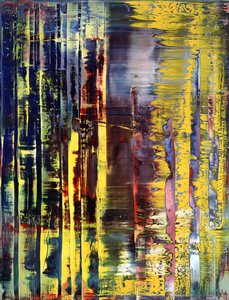
Acrylic On CanvasWallArtContemporary Abstract Expressionism
 91.0 x 65.0 cm
 Galleria Civica di Arte Moderna e Contemporanea Torino
Museum-quality giclée or canvas print with fast production and flexible finish options. ( Buy Hand Made Painting Buy Image)





























Pick from our preset sizes that match the artwork's original proportions.

You may enter your own dimensions to fit a specific frame or space. If your selected size does not match the original image's proportions, we will either crop the artwork or extend the image with a mirrored or solid-fill edge. A digital mockup will be sent for your approval before production begins.
Please note that the on-screen preview does not reflect the actual cropping or extension. Only the mockup will accurately show the final composition.
While custom sizes are available, we recommend selecting a dimension from the predefined list to preserve the original proportions.
Worldwide Delivery () in 2 weeks instead of standard 4/5 weeks. (18 August)


Composition
Reproduction Size
Pierre Soulages’ “Composition” stands as a testament to his singular obsession—the exploration of black pigment not merely as an absence of color, but as an active participant in the creation of visual experience. Executed in 1957, this monumental etching and aquatint – measuring 25 7/8 x 19 3/4 inches (65.7 x 50.1 cm) – resides within the MoMA collection, a cornerstone of Soulages’ artistic legacy.
Born in Rodez, France, in 1919, Soulages embarked on his artistic journey fueled by encounters with the monumental sculptures of Auguste Rodin and the Romanesque churches of his region. Influenced profoundly by Henri Matisse's exploration of color harmonies, he swiftly rejected conventional chromatic palettes, prioritizing instead the profound depths achievable through monochrome. This decision wasn’t driven by aesthetic preference; it stemmed from a deeply rooted conviction that black possessed an inherent luminosity—a hidden radiance capable of revealing itself only when confronted with light.
Soulages' distinctive “Outrenoir” style – translating roughly to "beyond black" – represents a radical departure from prevailing artistic trends. Rejecting the expressive gestures and rapid brushstrokes favored by contemporaries like Mathieu and Hartung, Soulages adopted a deliberate pace, mirroring the meditative rhythm of Eastern practices such as mikado. This meticulous approach demanded unwavering concentration and patience—a conscious effort to resist the impulsive impulses of Western art.
The etching itself showcases an intricate layering of textures achieved through multiple aquatint plates. The dominant black structure commands attention, punctuated by smaller, overlapping forms that create a dynamic interplay between solidity and suggestion. These shapes aren’t merely decorative; they actively engage with the light projected onto the surface, producing subtle variations in tonal intensity—a masterful demonstration of Soulages' understanding of how pigment interacts with illumination.
Beyond its formal qualities, “Composition” embodies a symbolic resonance rooted in Soulages’ fascination with prehistoric cave paintings and Romanesque architecture. He sought to recapture the primordial spirit of these ancient traditions, channeling their contemplative stillness into his artistic practice. The painting invites viewers to contemplate the relationship between darkness and light—not as opposing forces but as interdependent elements that contribute to the richness and complexity of visual perception.
Soulages’ unwavering devotion to black continues to inspire artists and collectors alike. His monumental “Polyptyque,” completed in 2009, exemplifies this enduring commitment, presenting a textured expanse of earthy browns and grays—a captivating testament to Soulages' mastery of impasto technique and his profound exploration of the visual potential inherent within monochrome.
Pierre Soulages (1919-2022) was a French abstract painter, engraver, and sculptor. Celebrated as “the world’s greatest living artist” by François Hollande in 2014, Soulages dedicated his life to exploring the depths of black – not as an absence of color, but as a presence brimming with light and texture.
Born in Rodez, Aveyron, France, in 1919, Soulages’ artistic journey began with explorations of museums in Paris before World War II. He sought his vocation amidst the masterpieces of the past. Following military service during the war, he established a studio in Paris and debuted his work at the Salon des Indépendants in 1947. He also briefly worked as a stage set designer.
Soulages' artistic development was marked by a relentless pursuit of expressing light through the medium of black. He wasn’t interested in black for its somber connotations, but rather for its capacity to reflect and absorb light, creating an interplay of shadow and illumination. This led him to develop his signature style, which he termed ‘Outrenoir’ – literally “beyond black.”
He explained that Outrenoir isn't simply about the color black; it represents a different realm altogether, akin to saying "beyond the Channel" for England or "beyond the Rhine" for Germany. It signifies a space beyond conventional understanding of the color itself.
Soulages’ technique involved applying paint in thick layers, often manipulating it with tools like spoons, rakes, and rubber implements to create textured surfaces. These textures were crucial for capturing and reflecting light. He employed scraping, digging, and etching movements to achieve smooth or rough effects, disrupting the uniformity of the black surface.
In his later work, he began experimenting with varying pigment densities – mixing matte and glossy blacks – further enhancing the interplay of light and shadow. He often preferred suspending his paintings like walls in the middle of a room, believing they should “look inside of us” rather than acting as windows to another world.
Soulages’ fascination with black stemmed from an early interest in prehistoric art and a desire for purity and primal expression. He saw parallels between his work and the cave paintings of our ancestors, created using charcoal on dark rock surfaces.
His influence extends to numerous contemporary artists who explore abstraction, texture, and the expressive potential of limited color palettes. He left behind a legacy that challenges conventional perceptions of color and light, demonstrating that even in darkness, profound beauty and luminosity can be found. He is considered a pivotal figure in Tachism, an informal style of abstract expressionism.
Pierre Soulages’ work represents a significant contribution to post-war abstract art. His unwavering dedication to exploring the nuances of black and light established him as a unique and influential voice in the artistic landscape, captivating audiences worldwide for over seven decades.

1919 -

Master the high-impact world of contemporary abstraction. Discover how bold colors, textures, and modern movements like Abstract Expressionism can transform your space with premium, high-energy art curated for the design-conscious professional.

Dive into the high-energy world of Lyrical Abstraction. Explore how bold colors, fluid motion, and emotional depth define this modern masterpiece movement. Discover iconic artists and learn to bring this vibrant, soulful energy into your contemporary space.

Discover the power of Neo-Abstract art. Explore how bold geometric forms and high-impact visual energy are redefining modern design. Learn to curate sophisticated, high-energy spaces with the latest trends in contemporary abstraction and structural color.


Stay updated with the latest art news, exclusive offers, and decoration ideas.
Tell us about your project and our art experts will provide you with 3 personalized art suggestions.
Let Us Curate 3 Options Just for You - Free!


 Preview
 Send
Send Share
Share
 Details

 Download
 Similars
 X-Ray
X-Ray Diaporama
 Read More







 Glass option is only available in size under 110 CM