x


Hand-painted oil on canvas in your size and frame, made to order by our artists.
Pick from our preset sizes that match the artwork's original proportions.

You may enter your own dimensions to fit a specific frame or space. If your selected size does not match the original image's proportions, we will either crop the artwork or extend the painting with additional hand-painted elements. A digital mockup will be sent for your approval before production begins.
Please note that the on-screen preview does not reflect the actual cropping or extension. Only the mockup will accurately show the final composition.
While custom sizes are available, we recommend selecting a dimension from the predefined list to preserve the original proportions.
Worldwide Delivery () in 3/4 weeks instead of standard 5 weeks. (16 July). No compromise on quality.


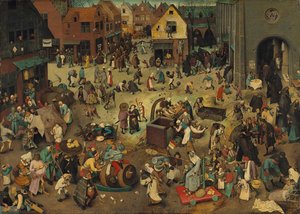
The Battle between Lent and Carnival
Reproduction Size
Immerse yourself in the vibrant chaos and subtle moral commentary of this captivating work by Pieter Bruegel the Younger. A masterful reproduction of a scene deeply rooted in Northern Renaissance tradition, this painting offers a fascinating glimpse into the everyday life – and underlying anxieties – of 16th-century Flanders.
The artwork presents a bustling panorama of village activity, seemingly depicting a lively festival. However, closer inspection reveals a complex interplay of behaviors: revelry alongside gambling, feasting bordering on gluttony, and music interwoven with potential conflict. This isn’t simply a celebration; it's a microcosm of human existence, showcasing both its joys and follies. The scene is often interpreted as an allegory for the struggle between indulgence (Carnival) and repentance (Lent), embodying the fleeting nature of earthly pleasures.
Bruegel the Younger expertly carries on the legacy of his father, Pieter Bruegel the Elder, employing the meticulous detail and realistic representation characteristic of Early Netherlandish painting. Executed in oil on wood panel – a technique allowing for rich layering and subtle glazing – the work showcases remarkable texture and depth. The composition is deliberately complex, lacking a single focal point to mirror the chaotic energy of life itself. A dynamic arrangement guides the eye through layers of figures and buildings, creating an immersive experience.
Created during a period of significant social and religious upheaval, this painting reflects the anxieties and moral considerations of its time. The Reformation was reshaping Europe, and artists like Bruegel were increasingly exploring themes of human fallibility and the tension between worldly desires and spiritual devotion. This work serves as both a record of contemporary life and a cautionary tale about the dangers of excess.
Beyond its realistic depiction of village life, the painting is rich in symbolism. Specific details – such as figures carrying fish or eggs – may allude to gluttony, fertility, or other moral concepts. The contrasting imagery of revelry and potential judgment invites viewers to contemplate the consequences of their actions and the ephemeral nature of earthly pleasures. The lack of a clear narrative encourages individual interpretation, making this artwork endlessly engaging.
This painting evokes a complex emotional response – a blend of fascination, amusement, and perhaps even unease. Its dynamic composition and vibrant details draw the viewer in, while its underlying moral message prompts reflection. As an addition to any interior, it offers a sophisticated focal point, sparking conversation and adding depth to your space. Whether displayed in a traditional study or a contemporary living area, this reproduction will undoubtedly captivate and inspire.

1525 - 1569 , Belgium

Journey through the Northern Renaissance! Explore 10 iconic paintings by Jan van Eyck, Dürer & Bosch. Discover their stories, techniques & lasting impact. Find museum-quality art reproductions & elevate your home decor on .

Explore the captivating world of Early Netherlandish painting! Discover Jan van Eyck, Hans Memling & more. Uncover symbolism, techniques & the legacy of these Flemish masters. A comprehensive guide for art enthusiasts.

Journey through 10 legendary 'Oil on Panel' masterpieces by Van Eyck, Bosch & Bruegel. Explore the stories behind these iconic Renaissance & Baroque paintings and find museum-quality art reproductions to elevate your home decor. Discover all masterpieces on !

Journey into the world of Early Netherlandish painting! Explore 10 masterpieces by Jan van Eyck, Rogier van der Weyden & more. Discover stunning detail, symbolism & Renaissance art for your home decor. Find museum-quality reproductions on BuyPopArt.com

Explore the captivating world of Early Netherlandish painting (15th-16th centuries). Discover Jan van Eyck, Hans Memling & more. Uncover revolutionary techniques and hidden symbolism in this definitive guide.


Stay updated with the latest art news, exclusive offers, and decoration ideas.
Tell us about your project and our art experts will provide you with 3 personalized art suggestions.
Let Us Curate 3 Options Just for You - Free!


 Buy print
 Send
Send Share
Share
 Details

 Download
 Similars
 X-Ray
X-Ray Diaporama

 Read More




































 Glass option is only available in size under 110 CM