Buy Painting Buy PaintingBuy Image Buy Image SendSend
DetailsDetails Add to favorites Add to favorites DownloadDownload SimilarsSimilars X-RayX-Ray DiaporamaDiaporama

Glorious Techniculture

Discover Richard Hamilton: Pop Art pioneer known for 'Just What Is It?' & iconic collages. Explore his influential work on consumerism, modern life, & art history.

Giclée / Art Print

Museum-quality giclée or canvas print with fast production and flexible finish options.

Standard
custom
CM
INCH

Pick from our preset sizes that match the artwork's original proportions.

width
height

You may enter your own dimensions to fit a specific frame or space. If your selected size does not match the original image's proportions, we will either crop the artwork or extend the image with a mirrored or solid-fill edge. A digital mockup will be sent for your approval before production begins.
Please note that the on-screen preview does not reflect the actual cropping or extension. Only the mockup will accurately show the final composition.
While custom sizes are available, we recommend selecting a dimension from the predefined list to preserve the original proportions.

Worldwide Delivery () in 2 weeks instead of standard 4/5 weeks. (16 July)

why_choose_icon
Free Worldwide Express Shipping
why_choose_icon
High-Quality Linen Canvas
why_choose_icon
Full Shipping Insurance
why_choose_icon
Customs Tax Refund Guarantee
why_choose_icon
True Color Matching Guarantee
why_choose_icon
60-Day Return Policy (Defects Only)
why_choose_icon
100% Money-Back Guarantee
why_choose_icon
Bulk Discount Offer

Total Price

-

reproduction

Glorious Techniculture

Giclée / Art Print

Reproduction Size

-

Total Price

-

Collectible Description

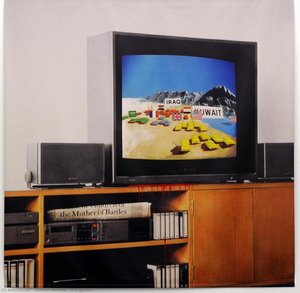
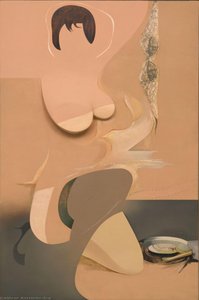
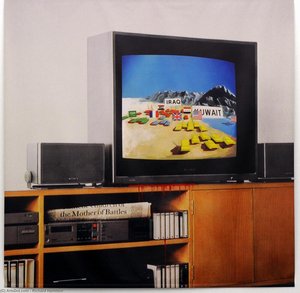
Richard Hamilton, a British artist and a pioneer of the Pop Art movement, created the painting "Glorious Techniculture" in 1964. This artwork is a quintessential representation of the fusion between popular culture and fine art, reflecting the era's fascination with technology and consumerism.

The Painting's Composition

"Glorious Techniculture" features a man standing next to a guitar with a hole in it, surrounded by various objects such as scissors, a train, an umbrella, and a handbag. The painting is characterized by its eclectic mix of styles, blending elements from advertising, magazine illustrations, and different painterly techniques.

Art Historical References

Hamilton's work draws inspiration from several art historical movements: - Cubist collage, evident in the depiction of the guitar belonging to Tony Conn. - The early photomontages of the Berlin Dadaists, reflected in the pasted photographs of machine parts. - Marcel Duchamp's last painted work "Tu m'" (1918), which shares a similar disparity in styles.

Pop-Fine-Art

Hamilton coined the term "Pop-Fine-Art" to describe his approach, which combines popular culture with fine art. This blend is a deliberate mix of earlier approaches by Dadaists and Futurists, reflecting Hamilton's belief in the positive fusion of these styles.

Exhibitions and Provenance

"Glorious Techniculture" has been exhibited at several notable museums: - Tate Gallery, London (1970) - The Solomon Guggenheim Museum, New York (1973) - Royal Academy of Arts, London (1991) It is currently part of the collection at the Lehmbruck Museum, Germany.

Conclusion

"Glorious Techniculture" by Richard Hamilton is a seminal work in the Pop Art movement, showcasing the artist's innovative approach to blending popular culture and fine art. Its complex composition and rich art historical references make it a fascinating piece for both art enthusiasts and scholars. For those interested in exploring more of Richard Hamilton's works or other Pop Art pieces, visit Richard Hamilton: Glorious Techniculture on BuyPopArt.com. Additionally, you can find similar artworks by other artists like Roy Lichtenstein: Crying girl and Andy Warhol: Thirteen Most Wanted Men.

Artist Biography

Early Life and Artistic Foundations

Richard Hamilton, born in Pimlico, London, in 1922, emerged from a working-class background with an innate artistic sensibility. From a young age, drawing captivated him, serving as an early outlet for his burgeoning creativity. His formal training began at the Royal Academy School of Art, where he encountered fellow students who shared his growing fascination with popular culture—a nascent interest that would define his career trajectory. This initial period was crucial in shaping Hamilton’s artistic vocabulary and introducing him to a network of like-minded individuals. He later refined his skills at the Slade School of Art under the tutelage of William Coldstream, solidifying his technical foundation while simultaneously challenging conventional artistic boundaries. These formative years instilled in him not only mastery of traditional techniques but also a critical perspective on the established art world and its relationship to the rapidly changing social landscape of post-war Britain.

The Birth of Pop Art: ‘Just What Is It That Makes Today’s Homes So Different, So Appealing?’

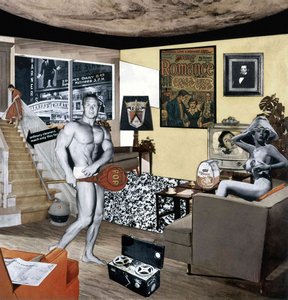
Hamilton is rightfully considered one of the pioneers of the Pop Art movement, a revolutionary force that burst onto the art scene in the 1950s. While the American iteration often receives greater attention, Hamilton's contribution was foundational. His most iconic work, ‘Just What Is It That Makes Today’s Homes So Different, So Appealing?’, created in 1956 for the ‘This is Tomorrow’ exhibition at the Whitechapel Gallery, stands as a watershed moment in art history. This large-scale collage wasn't merely an artwork; it was a declaration—a bold and provocative response to the burgeoning consumer culture of post-war America and its increasing influence on British society. The work is a dazzling assemblage of images sourced from magazines, advertisements, and popular media, meticulously arranged within the confines of a domestic interior. Pin-ups, food products, furniture, and everyday objects are juxtaposed with symbols of modernity—a television set, a tape recorder, and even a lollipop—creating a vibrant, chaotic, and undeniably compelling visual statement. The collage’s very title is a rhetorical question, inviting viewers to contemplate the allure and anxieties of modern life. It wasn't simply about depicting consumer goods; it was about dissecting their psychological impact and exploring the seductive power of advertising.

Experimentation and Evolution: Collage as a Language

Hamilton didn’t confine himself to a single style or subject matter. Throughout his career, he relentlessly experimented with various techniques and materials, but collage remained central to his artistic practice. He elevated collage from a mere technique to a sophisticated language capable of conveying complex ideas about perception, memory, and the relationship between art and reality. His work often involved intricate layering, fragmentation, and juxtaposition of images, creating dynamic compositions that challenged traditional notions of representation. My Marilyn (Paste Up), for example, demonstrates his fascination with celebrity culture and the manipulation of imagery in mass media. He wasn’t simply reproducing existing images; he was deconstructing them, recontextualizing them, and exposing their underlying structures. This commitment to experimentation extended beyond collage, encompassing printmaking, painting, and even computer-assisted design.

Legacy and Influence: A Lasting Impact on Art History

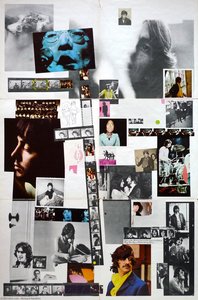
Richard Hamilton's influence extends far beyond the confines of Pop Art. His groundbreaking work paved the way for generations of artists who sought to engage with popular culture, consumerism, and the complexities of modern life. He challenged the boundaries between high art and low culture, blurring the lines between artistic expression and everyday experience. His willingness to embrace new technologies and explore unconventional materials pushed the limits of artistic practice. Notably, his design for the album cover of The Beatles’ ‘The White Album’, a limited-edition print with a unique serial number on each copy, exemplifies his ability to seamlessly integrate art into popular culture. Hamilton's work has been exhibited in prestigious museums and galleries worldwide, including the Kunsthalle Tübingen in Germany, solidifying his position as a major figure in 20th-century art. He passed away on September 13, 2011, but his legacy continues to inspire artists and scholars alike. His pioneering spirit, intellectual rigor, and unwavering commitment to experimentation ensure that his work will remain relevant for generations to come.

Further Exploration

richard hamilton

richard hamilton

1922 - 2011 , United Kingdom

Quick Facts

  • Artistic Movement Or Style: Pop Art
  • Artists Or Movements Influenced By This Artist:
    • Andy Warhol
    • Pop Art movement
  • Date Of Birth: 1922
  • Date Of Death: 2011
  • Full Name: Richard Hamilton
  • Nationality: British
  • Notable Artworks:
    • Just What Is It?
    • My Marilyn (paste up)
    • The White Album cover
  • Place Of Birth: London, UK
Explore artworks organized by themes, styles, and characteristics.