Hand-painted oil on canvas in your size and frame, made to order by our artists. ( Switch to Print Switch to Image)





























Pick from our preset sizes that match the artwork's original proportions.

You may enter your own dimensions to fit a specific frame or space. If your selected size does not match the original image's proportions, we will either crop the artwork or extend the painting with additional hand-painted elements. A digital mockup will be sent for your approval before production begins.
Please note that the on-screen preview does not reflect the actual cropping or extension. Only the mockup will accurately show the final composition.
While custom sizes are available, we recommend selecting a dimension from the predefined list to preserve the original proportions.
Worldwide Delivery () in 3/4 weeks instead of standard 5 weeks. (10 August). No compromise on quality.


The Exposition Universelle
Reproduction Size
Édouard Manet’s “The Exposition Universelle” isn't merely a painting; it’s a vibrant, almost frantic snapshot of a pivotal moment in Parisian history – the 1867 World’s Fair. More than just documenting an event, Manet masterfully captures the energy, the ambition, and even the slightly chaotic spirit of this monumental gathering, transforming a simple outdoor scene into a compelling tableau of social interaction and burgeoning modernity. The painting, executed in oil on canvas, immediately draws the eye with its dynamic composition and carefully orchestrated details, offering a glimpse into a world brimming with innovation, commerce, and the promise of a rapidly changing France.
Manet’s approach diverges sharply from the prevailing academic style of the time. He eschews meticulous detail in favor of a looser, more expressive brushstroke, prioritizing capturing the *feeling* of the scene over photographic accuracy. Notice how he flattens the background, blurring the distinction between foreground and distance – a technique that anticipates Impressionism’s focus on light and atmosphere. The figures themselves are rendered with a remarkable immediacy, their gestures and expressions conveying a sense of lively conversation and casual enjoyment. This deliberate simplification of form reflects Manet's interest in portraying modern life as it unfolded, rather than idealizing it through classical conventions.
The painting depicts a bustling gathering on the Champ de Mars, the vast public space chosen for the Exposition Universelle. The scene is populated with a diverse array of Parisians: elegantly dressed ladies engaged in animated conversation, gentlemen sporting top hats and frock coats, children playing amidst scattered objects, and vendors hawking their wares. Manet doesn’t offer a specific narrative; instead, he presents a collection of individuals caught in the flow of daily life, creating a rich tapestry of social interaction. The inclusion of elements like the dog, the horse, the umbrellas, and the bench subtly hint at the various activities taking place – a leisurely stroll, a game of cards, a moment of respite from the excitement of the fair.
Beyond its depiction of Parisian society, “The Exposition Universelle” also reflects the broader urban transformation occurring in France during this period. The World’s Fair itself was a symbol of progress and innovation, showcasing new technologies, architectural marvels, and artistic achievements. Manet's painting serves as a visual record of this era, capturing not only the physical landscape but also the spirit of optimism and ambition that characterized 19th-century France. The clock on the wall, a relatively modern addition to the scene, subtly underscores the increasing importance of timekeeping in a rapidly industrializing world.
Manet’s decision to paint this particular scene was undoubtedly deliberate. He wasn't simply documenting an event; he was making a statement about his artistic vision and his engagement with the modern world. The painting can be interpreted as a challenge to traditional academic art, which often focused on historical or mythological subjects. By choosing a contemporary subject and employing a more informal style, Manet signaled his intention to break free from established conventions and explore new ways of representing reality.
The composition itself is laden with symbolic meaning. The figures are arranged in a loose, asymmetrical manner, creating a sense of movement and dynamism. The bright colors and bold brushstrokes contribute to the painting’s overall energy and excitement. Even the seemingly mundane details – the scattered objects, the casual gestures – are imbued with significance, reflecting Manet's keen eye for capturing the nuances of everyday life. The inclusion of the horse and dog, common elements in Parisian street scenes, adds a touch of familiarity and reinforces the painting’s connection to contemporary reality.
“The Exposition Universelle” remains one of Manet's most celebrated works, admired for its vibrant energy, innovative technique, and insightful portrayal of Parisian society. Reproductions of this painting offer a remarkable opportunity to experience the immediacy and dynamism of Manet’s vision. When selecting a reproduction, consider the quality of the print – a high-resolution image will capture the subtle nuances of color and brushstroke that are essential to appreciating the painting's full impact. This artwork stands as a testament to Manet’s pioneering spirit and his enduring influence on the development of modern art.
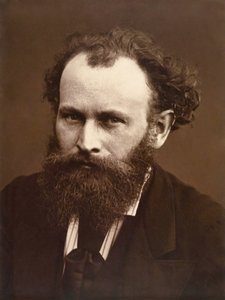
1832 - 1883 , France

Journey through Impressionism's heart with 10 iconic paintings by Monet, Renoir & Degas. Explore light, color & the stories behind these masterpieces. Find museum-quality art reproductions and elevate your home decor on BuyPopArt.com.
Journey through Impressionism's radiant world! Explore 10 masterpieces by Monet, Renoir & Degas that revolutionized art. Discover the stories behind these iconic paintings and find museum-quality reproductions for your home at .

Explore the life & art of Alice Pike Barney, a pioneering American Impressionist painter who defied convention and fostered Washington D.C.'s vibrant arts scene. Discover her unique style, portraits, and lasting legacy.
Explore 25 iconic Édouard Manet paintings, from 'Le Déjeuner sur l'herbe' to 'Olympia'. Discover the stories behind these Impressionist masterpieces & find museum-quality art reproductions for your home. Explore the full collection online at BuyPopArt.com!

Journey through art history with our guide to 10 legendary oil on canvas masterpieces! Explore iconic works by Van Gogh, Monet & Rembrandt. Find museum-quality reproductions and elevate your home decor at . Discover all masterpieces online.


Stay updated with the latest art news, exclusive offers, and decoration ideas.
Tell us about your project and our art experts will provide you with 3 personalized art suggestions.
Let Us Curate 3 Options Just for You - Free!


 Preview
 Send
Send Share
Share
 Details

 Download
 Similars
 X-Ray
X-Ray Diaporama

 Read More







 Glass option is only available in size under 110 CM