
Hand-painted oil on canvas in your size and frame, made to order by our artists. ( Switch to Print Switch to Image)





























Pick from our preset sizes that match the artwork's original proportions.

You may enter your own dimensions to fit a specific frame or space. If your selected size does not match the original image's proportions, we will either crop the artwork or extend the painting with additional hand-painted elements. A digital mockup will be sent for your approval before production begins.
Please note that the on-screen preview does not reflect the actual cropping or extension. Only the mockup will accurately show the final composition.
While custom sizes are available, we recommend selecting a dimension from the predefined list to preserve the original proportions.
Worldwide Delivery () in 3/4 weeks instead of standard 5 weeks. (10 August). No compromise on quality.


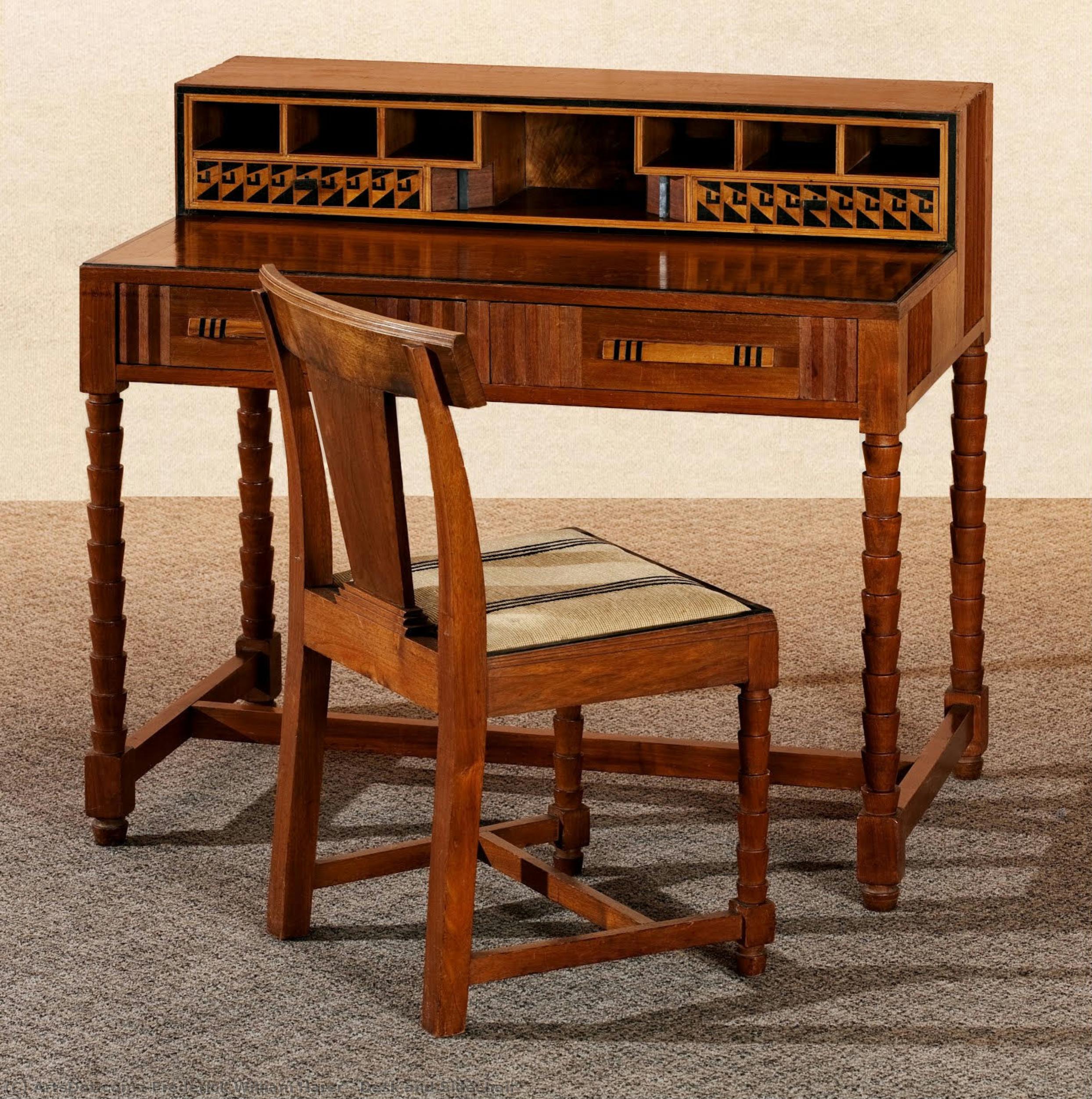
Desk and Sidechair
Reproduction Size
The image before us – “Desk and Sidechair” by Frederick William Harer – isn't merely a depiction of furniture; it’s a carefully constructed narrative of early 20th-century American artistry. Crafted in the early 1930s, during a pivotal moment for modernist design, this rectilinear desk and accompanying side chair offer a tangible connection to the New Hope group of artists, a collective that sought to infuse everyday objects with beauty and purpose. Harer’s work, largely defined by his exceptional skill as a framemaker, reveals a deep understanding of form, texture, and the subtle power of decorative embellishment – qualities that elevated his furniture beyond simple functionality.
This piece emerged during a fascinating period in American art history – September 1933, to be precise. Harer’s furniture was showcased at an exhibition organized by the loosely affiliated “Independents,” a group of New Hope modernist artists who were challenging traditional artistic conventions and seeking to integrate art into everyday life. This event marked a significant moment for Harer, solidifying his reputation as a designer pushing boundaries within the established aesthetic landscape. The influence of figures like Thomas Anschutz and William Merritt Chase, whom Harer studied under, is subtly present in the piece’s formal qualities.
The rectilinear style, favored by the New Hope group, represented a rejection of Victorian excess and an embrace of simplicity and functionality. It was a deliberate move towards a more honest and direct expression of form – a philosophy deeply rooted in the Arts & Crafts movement's emphasis on craftsmanship and natural materials.
Harer’s mastery lay not just in his design sense but also in his technical prowess. The desk and chair are constructed from wood, likely maple or oak, a common choice for furniture makers of the era. However, it's the meticulous application of gold leaf – a signature element of Harer’s work – that truly elevates this piece. The gilded frame surfaces, extending onto the desk and chair, create a shimmering effect, adding depth and richness to the composition. This technique, combined with incised detailing, demonstrates a remarkable level of skill and patience.
"Desk and Sidechair" evokes a sense of quiet contemplation and timeless elegance. The piece speaks to an era where craftsmanship was valued above mass production, and beauty was found in the details. It’s a reminder of a slower pace of life, inviting us to appreciate the simple pleasures of work and reflection. This reproduction offers a chance to own a tangible link to this remarkable artist and his contribution to American design – a piece that will undoubtedly become a cherished addition to any discerning collection or interior space.

1879 - 1949 , United States of America

Elevate your collection with BuyPopArt.com's professional framing and custom wraps. Discover premium solid wood frames, extended edge oils, and bespoke finishes designed to transform high-impact art into museum-grade masterpieces.


Stay updated with the latest art news, exclusive offers, and decoration ideas.
Tell us about your project and our art experts will provide you with 3 personalized art suggestions.
Let Us Curate 3 Options Just for You - Free!


 Preview
 Send
Send Share
Share
 Details

 Download
 Similars
 X-Ray
X-Ray Diaporama


 Read More







 Glass option is only available in size under 110 CM


