Oil On CanvasWallArtGothic Romanticism
 179019th Century
 77.0 x 64.0 cm
 Goethe-Museum
Hand-painted oil on canvas in your size and frame, made to order by our artists. ( Switch to Print Switch to Image)





























Pick from our preset sizes that match the artwork's original proportions.

You may enter your own dimensions to fit a specific frame or space. If your selected size does not match the original image's proportions, we will either crop the artwork or extend the painting with additional hand-painted elements. A digital mockup will be sent for your approval before production begins.
Please note that the on-screen preview does not reflect the actual cropping or extension. Only the mockup will accurately show the final composition.
While custom sizes are available, we recommend selecting a dimension from the predefined list to preserve the original proportions.
Worldwide Delivery () in 3/4 weeks instead of standard 5 weeks. (8 August). No compromise on quality.


The Nightmare
Reproduction Size
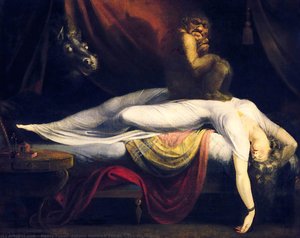
Henry Fuseli's "The Nightmare," completed in 1790, remains one of the most arresting and unsettling images in art history. More than just a depiction of a sleeping woman, it is a profound exploration of the subconscious, a gateway to anxieties and hidden desires rendered with masterful Romantic sensibility. The painting’s enduring power lies not only in its dramatic composition but also in its ability to tap into universal fears – those lurking within our own dreams and shadowed by the potential for darkness within humanity.
The scene itself is deceptively simple: a woman, seemingly lost in slumber, lies prone on a bed. Yet, surrounding her are elements that immediately evoke unease. A horse’s head, grotesquely large and hanging over the edge of the bed, dominates the upper portion of the canvas, its presence simultaneously menacing and suggestive. Below, a sleek black cat sits calmly, an emblem of indifference or perhaps a harbinger of impending doom. And on the right, a diminutive gnome-like figure observes the scene with unsettling intensity – often interpreted as Fuseli himself, intruding upon this private nightmare.
Fuseli’s technical skill is immediately apparent in his use of chiaroscuro, the dramatic contrast between light and dark. The pale skin of the woman is illuminated by a single, unseen source, casting the rest of the scene into deep shadow. This technique isn't merely stylistic; it actively contributes to the painting’s emotional impact, isolating the figure and amplifying her vulnerability. He employed oil paints on canvas, layering thin glazes to achieve a luminous effect while utilizing bold brushstrokes to define the forms – particularly the muscular physique of the horse and the angular features of the gnome.
The overall style is firmly rooted in the Romantic movement, characterized by an emphasis on emotion, imagination, and the sublime. Fuseli’s work anticipates the darker currents of Gothic horror that would flourish in subsequent decades, yet it possesses a unique sensitivity and psychological depth. The flattened perspective, deliberately eschewing traditional spatial realism, further enhances the dreamlike quality of the scene, transporting the viewer into the unsettling realm of the subconscious.
“The Nightmare” is rich in symbolic meaning, inviting multiple interpretations. The horse, a recurring motif in Fuseli’s work, has been variously interpreted as representing sexual desire, repressed emotions, or even the destructive forces of nature. The cat, with its enigmatic gaze, embodies indifference and perhaps a lurking presence – a subtle reminder of the dangers that can lie hidden beneath the surface. The gnome figure is particularly intriguing, suggesting the artist's own engagement with the dreamscape, blurring the lines between observer and participant.
Beyond these specific symbols, the painting speaks to broader themes of vulnerability, fear, and the struggle against internal demons. It’s a potent reminder that our dreams are not merely random firings of neurons but reflections of our deepest anxieties and desires. The woman's posture – limp, helpless, and filled with terror – resonates powerfully across time, tapping into a primal human experience.
"The Nightmare" was initially met with considerable controversy, its unsettling imagery shocking audiences of the late 18th century. However, it quickly gained recognition as a masterpiece of Romantic art, profoundly influencing subsequent generations of artists and writers. Currently housed in the Goethe-Museum in Frankfurt, Germany, this painting continues to captivate viewers with its haunting beauty and enduring psychological resonance. Its impact can be seen in countless works that followed, solidifying Fuseli’s place as a pioneer of Gothic horror and a master of evoking emotional intensity through art.

1741 - 1825 , Switzerland
Journey through 25 iconic artworks at the Metropolitan Museum of Art! Explore Van Gogh, Monet, Rembrandt & more. Discover art history, inspiring stories, and museum-quality reproductions to elevate your home decor. Explore the full collection on BuyPopArt.com.
Journey through 25 iconic James Abbott McNeill Whistler paintings! Explore his masterpieces of Aestheticism, from 'Nocturne in Black and Gold' to captivating portraits. Find museum-quality art reproductions & elevate your home decor with BuyPopArt.com. Discover the full collection online.
Explore 25 iconic artworks from Washington DC's National Gallery of Art! Discover masterpieces by Cézanne, Matisse & Picasso. Find museum-quality art reproductions and elevate your home decor with timeless paintings. Explore the full collection online at BuyPopArt.com.
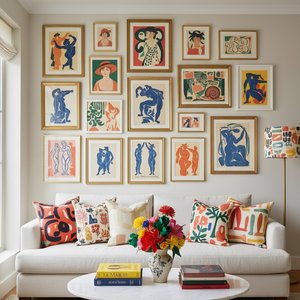
Journey through Henri Matisse's 25 most iconic paintings! Explore Fauvism, vibrant colors & the stories behind masterpieces like 'The Dance'. Find museum-quality art reproductions and curated decor ideas to elevate your space. Discover all masterpieces on BuyPopArt.com.
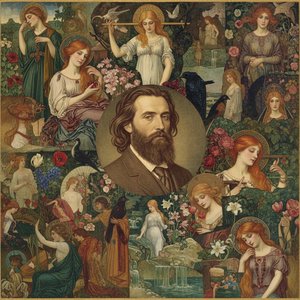
Explore 25 iconic artworks by Dante Gabriel Rossetti, a leading Pre-Raphaelite artist. Discover the stories behind masterpieces like 'Proserpine' & 'Beata Beatrix'. Find museum-quality art reproductions and elevate your home decor with BuyPopArt.com.


Stay updated with the latest art news, exclusive offers, and decoration ideas.
Tell us about your project and our art experts will provide you with 3 personalized art suggestions.
Let Us Curate 3 Options Just for You - Free!


 Preview
 Send
Send Share
Share
 Details

 Download
 Similars
 X-Ray
X-Ray Diaporama
 Read More







 Glass option is only available in size under 110 CM