

 Ink On PaperOtherZen Buddhism
 177019th Century
 114.0 x 48.0 cm
 Kimbell Art Museum
Hand-painted oil on canvas in your size and frame, made to order by our artists. ( Switch to Print Switch to Image)
Pick from our preset sizes that match the artwork's original proportions.

You may enter your own dimensions to fit a specific frame or space. If your selected size does not match the original image's proportions, we will either crop the artwork or extend the painting with additional hand-painted elements. A digital mockup will be sent for your approval before production begins.
Please note that the on-screen preview does not reflect the actual cropping or extension. Only the mockup will accurately show the final composition.
While custom sizes are available, we recommend selecting a dimension from the predefined list to preserve the original proportions.
Worldwide Delivery () in 3/4 weeks instead of standard 5 weeks. (10 August). No compromise on quality.


Two Gibbons Reaching for the Moon
Reproduction Size
The world of Japanese art in the mid-Edo period was a tapestry woven with tradition and daring innovation, and few artists embodied this duality as brilliantly as Itō Jakuchū. His 1770 painting, "Two Gibbons Reaching for the Moon," isn’t merely a depiction of primates; it's a profound meditation on aspiration, illusion, and the very nature of perception. This monochrome ink wash masterpiece, now housed in collections like those at the Kimbell Art Museum, invites us to contemplate not just what we see, but what we *seek* – a timeless theme resonating across cultures and centuries.
The scene is deceptively simple: two gibbons, a mother and her infant, hang suspended from a slender branch. Their posture—a desperate, almost comical reach towards the upper right corner of the canvas—immediately draws the eye. They aren’t grasping at tangible objects; instead, they are straining to capture the reflected light of the moon, shimmering faintly on the water below. This subtle detail is crucial – it's not a literal representation of moonlight, but rather its *impression*, its ethereal quality. Jakuchū masterfully conveys this through the use of delicate washes and carefully placed brushstrokes, creating an atmosphere of quiet yearning.
Jakuchū’s artistic journey was deeply intertwined with Zen Buddhist philosophy. Following a period of seclusion at the Obaku Zen temple of Sekihoji, south of Kyoto – a time marked by intense introspection and a shift towards monochrome ink-wash painting – he began to explore themes of impermanence and the illusory nature of reality. This painting perfectly encapsulates this philosophical stance. The gibbons’ pursuit of the moon's reflection serves as an allegory for humanity’s constant striving after unattainable ideals, mirroring the Buddhist concept that all worldly desires are ultimately fleeting and deceptive.
The choice of subject matter – monkeys – is also significant. In Japanese folklore, monkeys are often associated with cleverness, mischief, and a certain playful detachment from the constraints of human existence. Jakuchū utilizes this association to create a scene that is both humorous and poignant, suggesting a gentle critique of our own relentless pursuit of illusory goals.
“Two Gibbons Reaching for the Moon” exemplifies Jakuchū’s distinctive style – a radical departure from the rigid conventions of the established Kano school. He abandoned meticulous detail in favor of expressive brushwork, prioritizing capturing the *essence* of his subjects rather than their precise likeness. The painting is executed entirely in monochrome ink wash (sumi-e), utilizing varying densities and pressures to create subtle tonal shifts and a remarkable sense of texture. Notice how the loose, gestural strokes define the curves of the branch and the bodies of the gibbons, while the negative space—the areas left unpainted—is just as crucial in shaping the composition.
The flattened perspective, characteristic of sumi-e, further emphasizes the painting’s focus on capturing a fleeting moment. There's no attempt to create depth or simulate three-dimensionality; instead, Jakuchū presents us with a carefully constructed image that invites contemplation and interpretation. The pale grey-white background serves as a neutral canvas, allowing the dark silhouettes of the gibbons to stand out dramatically.
Beyond its technical brilliance, “Two Gibbons Reaching for the Moon” possesses a profound emotional resonance. The painting evokes a sense of wistful longing—a recognition that our aspirations often exceed our grasp. The gibbons’ earnest efforts are both endearing and slightly heartbreaking, reminding us of the inherent limitations of human endeavor. Yet, there's also an underlying current of joy and acceptance; Jakuchū doesn’t condemn their pursuit but rather celebrates it with a gentle humor.
The painting’s enduring appeal lies in its ability to tap into universal themes—the search for meaning, the acceptance of impermanence, and the beauty found in fleeting moments. It's a testament to Jakuchū’s artistic genius and his profound understanding of the human condition – a timeless masterpiece that continues to captivate viewers centuries after its creation.

1716 - 1800 , Japan

Explore 10 iconic monochrome artworks – from Yves Klein to Rothko – that masterfully showcase color intensity. Discover the stories behind these timeless paintings & find museum-quality reproductions for your home at .
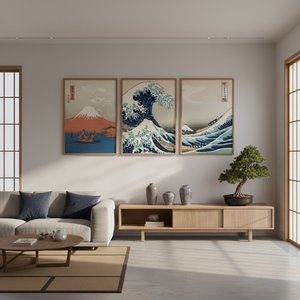
Journey through Katsushika Hokusai’s 25 most iconic artworks, including *The Great Wave*. Explore the ukiyo-e master's history, style & timeless Japanese woodblock prints. Find museum-quality reproductions for your home at BuyPopArt.com.

Explore the captivating world of Tōshūsai Sharaku, the enigmatic Edo period ukiyo-e master. Discover his iconic Kabuki actor portraits and unravel the mystery behind this fleeting artistic genius. Learn about his unique style & lasting legacy.

Explore 10 iconic paintings dominated by graphite tones – from Rembrandt's chiaroscuro to Goya’s drama. Discover art history, techniques & find museum-quality reproductions for your home at . Explore the full collection online.
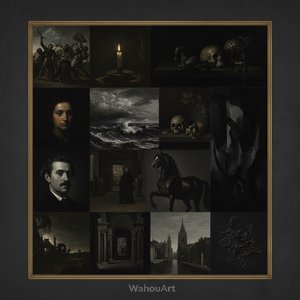
Delve into the power of 'Ivory Black' with 10 iconic paintings by masters like Rembrandt & Caravaggio. Explore dramatic chiaroscuro, gothic moods & timeless art history. Find museum-quality reproductions and elevate your home decor at


Stay updated with the latest art news, exclusive offers, and decoration ideas.
Tell us about your project and our art experts will provide you with 3 personalized art suggestions.
Let Us Curate 3 Options Just for You - Free!


 Preview
 Send
Send Share
Share
 Details

 Download
 Similars
 X-Ray
X-Ray Diaporama
 Read More




































 Glass option is only available in size under 110 CM


