220.0 x 116.0 cm
 Viafarini
Museum-quality giclée or canvas print with fast production and flexible finish options. ( Buy Hand Made Painting Buy Image)
Pick from our preset sizes that match the artwork's original proportions.

You may enter your own dimensions to fit a specific frame or space. If your selected size does not match the original image's proportions, we will either crop the artwork or extend the image with a mirrored or solid-fill edge. A digital mockup will be sent for your approval before production begins.
Please note that the on-screen preview does not reflect the actual cropping or extension. Only the mockup will accurately show the final composition.
While custom sizes are available, we recommend selecting a dimension from the predefined list to preserve the original proportions.
Worldwide Delivery () in 2 weeks instead of standard 4/5 weeks. (12 August)


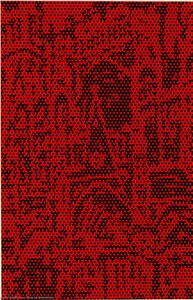
Red Screen
Reproduction Size
In the quiet intersection where light meets shadow, and where the visible dissolves into the invisible, lies the profound creative universe of Silvio Wolf Busch. Born in Milan in 1952, an artist whose work serves as a bridge between the tangible world and the ephemeral realms of memory and perception, Wolf Busch has spent a lifetime investigating the very essence of the image. His journey is not merely one of technical mastery but a philosophical quest to understand how we witness time. By blending the rigorous discipline of photography with the expansive possibilities of installation art, he invites his audience to step beyond the frame and inhabit a space where presence and absence coexist in a delicate, haunting dance.
The foundations of his intellectual approach were laid in the classrooms of Italy, where he immersed himself in the study of Philosophy and Psychology. This academic grounding provided him with the conceptual tools to treat the photographic medium not as a tool for documentation, but as a vessel for metaphor. Seeking to refine his technical language, he moved to London, studying at the London College of Printing. It was here that he earned his Higher Diploma in Advanced Photography, a period that allowed him to marry his deep-seated interest in human consciousness with the structural complexities of lens-based art. This dual identity—as both thinker and maker—is what allows his work to transcend simple representation, turning every photograph into a site of psychological inquiry.
To understand the soul of Wolf Busch’s work, one must look toward the legacy of Spatialism. Growing up in the shadow of Milanese masters like Lucio Fontana, the artist was profoundly moved by the movement's ambition to break the two-dimensional constraints of the canvas. Just as Fontana used perforations and cuts to introduce a new dimension of space, Wolf Busch utilizes the photographic medium to explore voids, openings, and the "elsewhere." His early explorations focused on the limits of the photographic plane, often creating large-format works and polyptychs that challenged the traditional, narrative expectations of photography. He moved away from the idea of the photograph as a testimonial record, instead seeking a subjective reality where light could obscure as much as it revealed.
This fascination with the threshold—the boundary between what is seen and what is felt—became the hallmark of his evolving style. In his celebrated "Icons of Light" series, for instance, he utilized reflected light to wipe out imagery, leaving behind an evocative emptiness that provoked a deep desire in the viewer to see beyond the instant of blindness. Through this technique, he transformed the act of looking into an act of meditation, forcing the spectator to confront the absence of the subject as a powerful form of presence in itself.
As his career progressed from the mid-1980s onward, Wolf Busch’s artistic vocabulary expanded far beyond the borders of the printed photograph. He began to integrate moving images, projections, light, and sound into complex, site-specific installations. These multi-media projects are designed to engage with the architectural and social history of their locations, turning galleries and public spaces into living, breathing ecosystems of sensory experience. His work does not merely sit upon a wall; it inhabits a room, responding to the cultural personality of the space and establishing a symbolic relationship with its history.
The significance of his contribution to contemporary art is reflected in his global footprint and academic influence:
Today, living and working between the vibrant art scenes of Milan and New York, Silvio Wolf Busch continues to push the boundaries of what it means to perceive. His work remains a testament to the power of the image to act as a threshold—a place where we can encounter the simultaneous existence of the past and the present, the here and the elsewhere, and the beautiful mystery of the unseen.

1952 - , Italy


Stay updated with the latest art news, exclusive offers, and decoration ideas.
Tell us about your project and our art experts will provide you with 3 personalized art suggestions.
Let Us Curate 3 Options Just for You - Free!


 Preview
 Send
Send Share
Share
 Details

 Download
 Similars
 X-Ray
X-Ray Diaporama
 Read More




































 Glass option is only available in size under 110 CM