PreviewPreview Buy Painting Buy PaintingBuy Image Buy Image SendSend
DetailsDetails Add to favorites Add to favorites DownloadDownload SimilarsSimilars X-RayX-Ray DiaporamaDiaporama

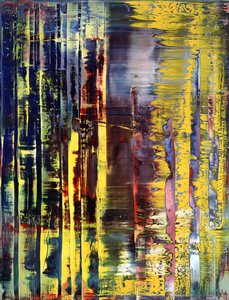
Celebration

Explore Thornton Dial’s ‘Celebration,’ a dynamic abstract painting of swirling lines & figures in grey & orange. Expressive abstraction meets emotional depth – a unique piece by the acclaimed artist.

Thornton Dial (1928-2016) was a groundbreaking African American artist renowned for his monumental assemblage sculptures & paintings crafted from found materials, powerfully addressing themes of Black history and social justice.

Giclée / Art Print

Museum-quality giclée or canvas print with fast production and flexible finish options.

Standard
custom
CM
INCH

Pick from our preset sizes that match the artwork's original proportions.

width
height

You may enter your own dimensions to fit a specific frame or space. If your selected size does not match the original image's proportions, we will either crop the artwork or extend the image with a mirrored or solid-fill edge. A digital mockup will be sent for your approval before production begins.
Please note that the on-screen preview does not reflect the actual cropping or extension. Only the mockup will accurately show the final composition.
While custom sizes are available, we recommend selecting a dimension from the predefined list to preserve the original proportions.

Worldwide Delivery () in 2 weeks instead of standard 4/5 weeks. (25 July)

why_choose_icon
Free Worldwide Express Shipping
why_choose_icon
High-Quality Linen Canvas
why_choose_icon
Full Shipping Insurance
why_choose_icon
Customs Tax Refund Guarantee
why_choose_icon
True Color Matching Guarantee
why_choose_icon
60-Day Return Policy (Defects Only)
why_choose_icon
100% Money-Back Guarantee
why_choose_icon
Bulk Discount Offer

Total Price

-

reproduction

Celebration

Giclée / Art Print

Reproduction Size

-

Total Price

-


Artist Biography

Early Life and the Seeds of Creation

Thornton Dial, born in 1928 amidst the cotton fields of Ewloe, Alabama, emerged from a landscape steeped in hardship and resilience. His beginnings were profoundly shaped by the realities of the Jim Crow South – raised initially by his teenage mother, Mattie Bell, and later nurtured by his great-grandmother and then his second cousin, Buddy Jake Dial. This upbringing on a former plantation instilled within him an intimate understanding of labor, poverty, and the enduring spirit of African Americans in rural Alabama. Formal education extended only to third grade, yet this lack was compensated for by a rich immersion in the practical skills and oral traditions of his community. It was Buddy Jake Dial, a farmer and self-taught sculptor who crafted figures from found materials, who first ignited Thornton’s creative spark. These early observations—the transformation of discarded objects into something meaningful—would become foundational to his artistic practice. The young Thornton absorbed not just the *how* of making, but also the ethos of resourcefulness and imaginative repurposing that would define his future work.

From Metalworker to Visionary Assemblagist

For thirty years, Thornton Dial’s life was anchored by the demanding physicality of labor as a metalworker at the Pullman Standard Plant in Bessemer, Alabama. This experience wasn't merely a means of survival; it honed skills—a mastery of materials, an understanding of structure and form—that would later prove invaluable to his art. Initially, however, Dial’s creative impulses manifested not as “art” but as “making things”—decorative objects fashioned from the detritus of daily life in his yard. These early creations were a personal outlet, a quiet exploration of materials and form. The turning point came in 1987 with his introduction to artist Lonnie Holley, who then brought Dial to the attention of William Arnett, a collector and historian deeply committed to documenting African American vernacular art. Arnett recognized the profound power and originality of Dial’s work, championing it and bringing it to a wider audience. The closure of the Pullman Standard Plant in 1981 proved unexpectedly liberating; it allowed Dial to dedicate himself fully to his artistic vision, transforming his “making things” into large-scale assemblages that resonated with both personal history and broader social commentary.

A Symphony of Found Objects: Style and Themes

Thornton Dial’s art is immediately recognizable for its expressive density and monumental scale. He didn't seek out pristine materials; instead, he embraced the discarded—rope, bones, buckets, corrugated tin, wire, wood scraps—transforming them into complex, layered compositions. These assemblages aren’t simply collections of objects; they are narratives woven from the fabric of American experience. His work frequently confronts difficult truths: the legacy of slavery and racial discrimination, the struggles of poverty and homelessness, the horrors of war, and the impact of natural disasters. The tiger emerged as a recurring motif in his art—a potent symbol of survival, resilience, and the ongoing fight for civil rights. Dial’s attention also extended to the vernacular architecture and often-overlooked lives prevalent in the rural South, giving voice to those marginalized by society. His paintings, often integrated into these assemblages, further amplify these themes, employing vibrant colors and expressive brushstrokes that echo the emotional weight of his subject matter. He wasn't merely depicting reality; he was *reconstructing* it, imbuing discarded materials with new meaning and power.

Recognition and Enduring Legacy

The recognition Thornton Dial received later in life was a testament to the enduring power of his vision. His work found its way into prestigious collections including those of the Museum of Modern Art, the Whitney Museum of American Art, the Smithsonian American Art Museum, and the Metropolitan Museum of Art—a landmark acquisition of ten works in 2014. Inclusion in the 2000 Whitney Biennial solidified his place within the contemporary art world, challenging conventional notions of artistic training and expression. Crucially, William Arnett’s Souls Grown Deep Foundation played an instrumental role in preserving and documenting Dial's work, alongside that of other African American vernacular artists, ensuring their stories would be told for generations to come. Thornton Dial is now recognized as a pioneering figure who bridged the gap between folk traditions and contemporary fine art, demonstrating that artistic genius can flourish outside the confines of formal education and institutional support. He passed away in 2016 at the age of 87, leaving behind a body of work that continues to provoke, inspire, and challenge viewers to confront the complexities of American history and identity. His legacy is not just as an artist, but as a storyteller, a witness, and a powerful voice for those often unheard.
Thornton Dial

Thornton Dial

1928 - 2016 , United States of America

Quick Facts

  • Artistic Movement Or Style: Assemblage, Folk Art
  • Artists Or Movements Influenced By This Artist:
    • Thornton Dial Jr.
    • Ronald Lockett
  • Artists Who Influenced This Artist:
    • Buddy Jake Dial
    • Lonnie Holley
  • Date Of Birth: 1928-09-28
  • Date Of Death: 2016-01-25
  • Full Name: Thornton Dial
  • Nationality: American
  • Notable Artworks:
    • Monument to the Minds...
    • The Bat Lady
  • Place Of Birth: Ewloe, USA
Explore artworks organized by themes, styles, and characteristics.