x


 Oil On CanvasWallArtHigh Renaissance
 1550
1550 61.0 x 68.0 cm
Hand-painted oil on canvas in your size and frame, made to order by our artists.





























Pick from our preset sizes that match the artwork's original proportions.

You may enter your own dimensions to fit a specific frame or space. If your selected size does not match the original image's proportions, we will either crop the artwork or extend the painting with additional hand-painted elements. A digital mockup will be sent for your approval before production begins.
Please note that the on-screen preview does not reflect the actual cropping or extension. Only the mockup will accurately show the final composition.
While custom sizes are available, we recommend selecting a dimension from the predefined list to preserve the original proportions.
Worldwide Delivery () in 3/4 weeks instead of standard 5 weeks. (16 July). No compromise on quality.


Mater Dolorosa
Reproduction Size
Titian’s 1550 depiction of the Mater Dolorosa – “Mother of Sorrows” – is not merely a portrait; it's an intensely felt meditation on suffering, faith, and the profound dignity of human emotion. Executed in oil on canvas with his signature mastery of color and texture, this intimate work transcends its devotional subject matter to become a timeless exploration of the human condition. The painting’s power resides primarily in its composition: a woman, identified as Mary, presented in a posture of deep contemplation, her gaze fixed downwards, enveloped by a rich blue cloth that dominates the frame. This deliberate framing isolates her, intensifying the sense of sorrow and vulnerability.
Created during the height of Titian’s career in Venice, this Mater Dolorosa exemplifies the Venetian school's innovative approach to oil painting. Unlike the more restrained styles favored by Northern European artists, Titian embraced color with unrestrained enthusiasm, layering pigments thickly to create a rich, tactile surface. This technique, known as ‘impasto,’ is evident in the texture of the canvas, adding depth and dynamism to the image. The scale of the work – 61 x 68 cm – suggests it was intended for private devotion rather than grand public display, reflecting the intimate nature of its subject matter.
Historical Context: The painting reflects the religious fervor of the High Renaissance and the widespread popularity of Marian devotion in Venice. The image aligns with the iconography of the Virgin Mary as a figure of compassion and suffering, frequently depicted during this period.Beyond its devotional function, the Mater Dolorosa is laden with symbolic meaning. The pose itself – kneeling in prayer with her head bowed – represents humility, repentance, and acceptance of God’s will. The blue cloth, a traditional symbol of mourning, reinforces this theme. Titian's ability to capture such raw emotion—a palpable sense of grief and vulnerability—is what elevates this work beyond a simple representation of the Virgin Mary. It speaks to universal human experiences of loss, pain, and faith.
BuyPopArt offers meticulously crafted hand-painted reproductions of Titian’s Mater Dolorosa, ensuring that you experience the full impact of this masterpiece. Each reproduction is created using archival materials and traditional techniques, faithfully replicating Titian's original color palette and textural nuances. This artwork would be a stunning addition to any collection or interior space, offering a powerful reminder of beauty, sorrow, and the enduring strength of the human spirit.
Tiziano Vecellio, known to the world as Titian, stands as a monumental figure of the Italian Renaissance—perhaps its most celebrated colorist and a master who redefined the possibilities of oil painting. Born around 1490 in Pieve di Cadore, nestled amidst the dramatic landscapes of the Venetian Alps, his journey from humble beginnings to international acclaim is a testament to prodigious talent and an unwavering dedication to artistic innovation. The details surrounding Titian’s early life remain somewhat shrouded in mystery, but we know he was one of several children born to Gregorio Vecellio, a military man, and Lucia. Recognizing their sons' potential, the family arranged for young Tiziano and his brother Francesco to apprentice with an artist in Venice—a decision that would irrevocably alter the course of art history.
Venice at the turn of the 16th century was a vibrant hub of commerce, culture, and artistic ferment. Titian’s initial training took place within the workshop of Sebastiano Zuccato, a mosaicist, followed by brief periods under the tutelage of Gentile Bellini and, crucially, his brother Giovanni. However, it was his association with Giorgione—a fellow Venetian painter whose work possessed an ethereal poetic quality—that proved most formative. The two artists collaborated on several projects, including the exterior frescoes for the Fondaco dei Tedeschi, a bustling trading post for German merchants. Even in these early works, Titian’s exceptional skill was evident, earning him recognition among his contemporaries and foreshadowing the brilliance that would soon blossom.
Titian’s artistic development can be characterized by a remarkable versatility and an ongoing exploration of painterly techniques. His early works, heavily influenced by Giorgione, exhibit a delicate lyricism and a masterful use of color to create atmospheric effects. Paintings like *A Man with a Quilted Sleeve* (circa 1509) demonstrate his emerging talent for portraiture, capturing not only the physical likeness of his subjects but also their inner character. As he matured, Titian began to move away from Giorgione’s subtle tonalities and embrace a bolder, more dramatic approach to color. *The Visitation of Mary and Elizabeth* (now in the Accademia, Venice) exemplifies this shift, showcasing his growing confidence in handling complex compositions and vibrant hues.
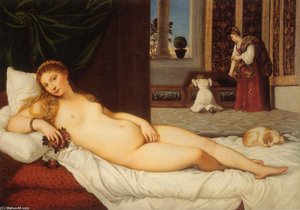
Throughout his long career, Titian consistently pushed the boundaries of artistic expression. He experimented with different brushstrokes—from smooth, blended surfaces to loose, expressive marks—and developed a unique technique for layering colors to create luminous effects. His portraits became renowned for their psychological depth and realistic portrayal of textures and fabrics. Simultaneously, he excelled in mythological and religious subjects, imbuing them with a sensuality and dramatic intensity that captivated audiences. A prime example is *Venus of Urbino*, a masterpiece that redefined the depiction of the female nude and established Titian as a leading figure in Venetian painting.
Titian’s talent attracted the attention of powerful patrons from across Europe. He served as court painter to Emperor Charles V, King Philip II of Spain, and Pope Paul III, among others. This patronage not only provided him with financial security but also allowed him to create monumental works that showcased his artistic prowess on a grand scale. His ability to adapt his style to the tastes of different courts while maintaining his own distinctive voice is a testament to his exceptional skill and diplomatic finesse.
The impact of Titian’s work extended far beyond his lifetime. His innovative use of color, his loose brushwork, and his emphasis on capturing the emotional essence of his subjects profoundly influenced generations of artists. From Peter Paul Rubens and Rembrandt to Eugène Delacroix and Édouard Manet, countless painters drew inspiration from his masterpieces. He is considered a pivotal figure in the transition from the High Renaissance to the Baroque period, paving the way for new artistic styles and approaches.
Titian passed away in Venice in 1576, leaving behind an extraordinary body of work that continues to inspire awe and admiration. His paintings can be found in museums around the world, including the Galleria Palatina in Florence, the Prado Museum in Madrid, and the National Gallery in London. To experience a Titian is to encounter a master craftsman at the peak of his powers—a painter who possessed an unparalleled ability to capture the beauty, drama, and complexity of the human condition.
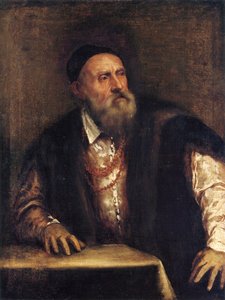
1490 - 1576 , Italy
Transform your cherished photos into timeless oil paintings with BuyPopArt's expert artists. Museum-quality reproductions & custom portraits, crafted to last a lifetime. Discover the art of personal legacy.

Journey through art history with our guide to 10 legendary oil on canvas masterpieces! Explore iconic works by Van Gogh, Monet & Rembrandt. Find museum-quality reproductions and elevate your home decor at . Discover all masterpieces online.

Explore 10 Renaissance Humanism masterpieces by Leonardo da Vinci, Michelangelo & Raphael. Discover the stories behind these iconic paintings & sculptures and bring timeless art into your home with museum-quality reproductions from BuyPopArt.com. Explore the full collection online!

BuyPopArt offers exquisite hand-painted oil painting reproductions & custom portraits crafted by skilled artists. Invest in a timeless legacy piece – museum quality, personalized art with guaranteed satisfaction. Explore our collection today!
Journey through the Uffizi Gallery's 25 most iconic Renaissance artworks! Explore Botticelli, Leonardo da Vinci & Michelangelo’s masterpieces. Find museum-quality art reproductions and curated decor ideas to bring timeless Italian beauty into your home. Discover all masterpieces on BuyPopArt.com


Stay updated with the latest art news, exclusive offers, and decoration ideas.
Tell us about your project and our art experts will provide you with 3 personalized art suggestions.
Let Us Curate 3 Options Just for You - Free!


 Buy print
 Send
Send Share
Share
 Details

 Download
 Similars
 X-Ray
X-Ray Diaporama
 Read More







 Glass option is only available in size under 110 CM