

 Oil On CanvasWallArtAbstract Expressionism
 1939Early Medieval
 97.0 x 87.0 cm
Purchase a high-resolution, enhanced digital image, far superior to the online preview.
Each file is meticulously prepared by our in-house specialists using advanced tools and expert manual retouching. We ensure every image has exceptional clarity, precise color accuracy, and fine detail.
The final file is delivered via email within 72 hours, optimized for immediate use in professional, editorial, and print environments. This is the same quality trusted by top-tier design studios, publishers, and galleries.
Download a high-resolution file for personal display, printing, and creative projects. ( Buy Print Buy Hand Made Painting)
When you choose BuyPopArt.com, you're not just getting an image - you're receiving a professionally enhanced digital artwork, crafted with precision and backed by a satisfaction guarantee. Here's everything that comes with your order, automatically:

Your high-resolution digital image file will be emailed to you within 72 hours of ordering - ready for immediate use.

Your artwork is professionally optimized using advanced AI tools and manual editing, ensuring maximum detail, clarity, and color accuracy.

Accidentally deleted or lost your file? No worries - we'll resend it to you anytime, free of charge.

Enjoy your artwork instantly with zero customs, duties, or delivery fees - digital downloads are always tax-free.

We ensure your digital image reflects the original colors as closely as possible using professional tools and color management.

If you're not satisfied with your digital image, we'll revise it or refund 100% within 60 days - no questions asked.

Not satisfied? Get a full refund within 60 days of receiving your digital file - no questions asked.

Buy 3 images, save 10% - Buy 5, save 15% - Buy 10+, save 20%. Great for creative projects, galleries, and agencies.
Willem de Kooning's “Seated Man,” painted in 1939, isn’t merely a depiction of a man at rest; it’s a potent distillation of the artist’s evolving approach to capturing human emotion and experience. This oil on canvas, measuring a modest yet significant 97 x 87 cm, currently resides within the Hirshhorn Museum and Sculpture Garden in Washington D.C., offering viewers an intimate glimpse into the mind of a pivotal figure in the New York School of art. De Kooning’s work during this period represents a fascinating crossroads – a deliberate exploration of realism interwoven with the burgeoning abstraction that would define his legacy, creating a dynamic tension within each piece.
The painting immediately draws the eye to its central subject: a man seated in a chair, his posture relaxed yet imbued with an underlying sense of contemplation. His arms are crossed, suggesting both vulnerability and self-possession. The deliberate use of color – primarily yellows and browns – contributes significantly to the work’s mood. The bright yellow shirt contrasts sharply with the darker tones of the figure's clothing and the chair, creating a visual rhythm that guides the viewer’s gaze across the canvas. Notably, de Kooning eschews a completely smooth finish; visible brushstrokes are prominent, adding texture and immediacy to the scene – a characteristic hallmark of his style.
The composition itself is carefully constructed to establish a clear dialogue between form and space. The man occupies the left side of the frame, anchoring the viewer’s attention while simultaneously allowing the right half of the canvas to be dominated by a dining table. This arrangement isn't arbitrary; it subtly suggests a domestic scene, a moment of quiet contemplation or perhaps even a shared meal. Two bowls are placed on the table, one closer to the center and the other slightly further away – a detail that invites speculation about their contents and the context of the gathering. A bottle is positioned in the upper left corner, adding another layer of visual interest and subtly directing the eye upwards.
The placement of these objects isn’t simply decorative; it contributes to the painting's overall sense of ambiguity. Is this a portrait of an individual lost in thought? Or does it represent a broader commentary on human interaction and the rituals of daily life? De Kooning deliberately avoids providing easy answers, leaving the interpretation open to the viewer’s own sensibility.
“Seated Man” is deeply rooted in de Kooning's early experimentation with abstract expressionism. While retaining elements of realism – particularly in the depiction of the man’s face and posture – the painting demonstrates a willingness to distort and fragment forms, anticipating the more radical gestures that would characterize his later work. This exploration of the human figure, often rendered with a sense of unease or even violence, reflects de Kooning's broader engagement with themes of identity, alienation, and the complexities of modern life. His work during this period was profoundly influenced by artists like Jackson Pollock and Franz Kline, whose techniques he absorbed and adapted to his own unique vision.
“Seated Man” stands as a significant testament to de Kooning’s contribution to the development of abstract expressionism. It exemplifies his ability to balance realism with abstraction, capturing not only the outward appearance of a subject but also its underlying emotional state. The painting's blend of observation and invention makes it a compelling study for art enthusiasts and scholars alike, offering insights into the artist’s creative process and his place within the broader context of 20th-century art. Reproductions of this powerful work offer a tangible connection to a pivotal moment in artistic history, allowing viewers to experience de Kooning's vision firsthand.
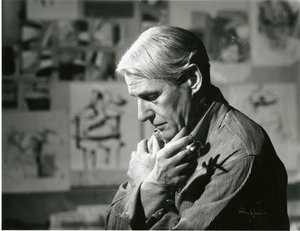
1904 - 1997 , Netherlands


Stay updated with the latest art news, exclusive offers, and decoration ideas.
Tell us about your project and our art experts will provide you with 3 personalized art suggestions.
Let Us Curate 3 Options Just for You - Free!


 Preview
 Send
Send Share
Share
 Details

 Download
 Similars
 X-Ray
X-Ray Diaporama
 Read More