x

 Oil On CanvasWallArtAbstract Expressionism
 1952Modern
 147.0 x 192.0 cm
Hand-painted oil on canvas in your size and frame, made to order by our artists.





























Pick from our preset sizes that match the artwork's original proportions.

You may enter your own dimensions to fit a specific frame or space. If your selected size does not match the original image's proportions, we will either crop the artwork or extend the painting with additional hand-painted elements. A digital mockup will be sent for your approval before production begins.
Please note that the on-screen preview does not reflect the actual cropping or extension. Only the mockup will accurately show the final composition.
While custom sizes are available, we recommend selecting a dimension from the predefined list to preserve the original proportions.
Worldwide Delivery () in 3/4 weeks instead of standard 5 weeks. (16 July). No compromise on quality.


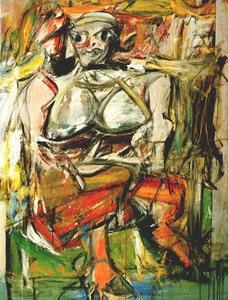
Woman I
Reproduction Size
Painted between 1950 and 1952, this iconic work stands as a pivotal achievement within Willem de Kooning’s celebrated “Woman” series. More than just a portrait, it's a visceral exploration of the female form – and, by extension, a raw depiction of post-war societal anxieties, fractured identity, and primal emotion.
Emerging in the aftermath of World War II, Abstract Expressionism sought to break from traditional artistic conventions. De Kooning was a leading figure in this movement, often dubbed the “New York School,” which shifted the center of the art world from Paris to America. This painting exemplifies the style’s hallmarks: energetic brushwork, non-representational forms, and an emphasis on spontaneous, gestural application of paint. It rejects serene beauty in favor of a powerful, almost unsettling honesty.
The figure is deliberately distorted and fragmented, barely recognizable as a conventional representation of the female body. De Kooning employed vigorous brushstrokes, layering thick impasto – visible texture created by thickly applied paint – to build up the surface. This technique isn’t about precise depiction; it's about conveying feeling through physicality. The swirling background seems to engulf the figure, creating a sense of claustrophobia and internal turmoil. Notice the interplay between vertical and horizontal strokes, suggesting both confinement and instability.
The color palette is deliberately jarring – a clash of vibrant reds, greens, yellows, and whites punctuated by stark blacks and grays. The dominant reds evoke passion, anger, or even violence, while the greens hint at decay or envy. White serves as both a grounding element and a highlight, intensifying the painting’s luminosity but also its rawness. These aren't harmonious colors; they are deliberately discordant, mirroring the emotional complexity of the subject matter.
This artwork isn’t easily categorized or understood. It resists simple interpretation, instead inviting viewers to confront their own emotions and anxieties. The tilted head, grimacing mouth, and staring eyes convey a sense of anguish and vulnerability. Some critics interpret the confining lines as symbolic of societal pressures placed upon women, while others see it as a broader representation of human suffering in the modern age. Regardless of interpretation, the painting’s emotional impact is undeniable.
“Woman I” remains one of the most significant and influential paintings of the 20th century. A high-quality reproduction allows you to bring this powerful work into your home or office, serving as a captivating focal point and sparking conversation. Its bold aesthetic complements modern and contemporary interiors, adding depth, complexity, and a touch of intellectual sophistication.
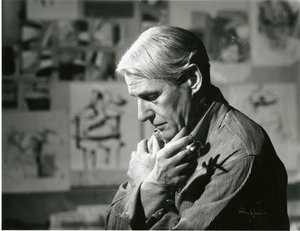
1904 - 1997 , Netherlands

Explore the profound emotional depth & formal innovation of Abstract Expressionism. Discover key artists, collecting insights, and investment potential with expert guidance. Learn more now.

Explore the profound legacy of Henry Wolf, a pivotal figure in Abstract Expressionism and post-war visual culture. Discover his impact on graphic design, photography, and art collecting with BuyPopArt.
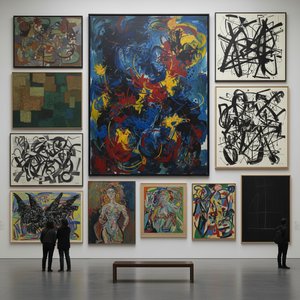
Explore 10 defining Abstract Expressionism masterpieces by Pollock, Rothko & de Kooning. Discover the stories behind these iconic paintings and find museum-quality art reproductions to elevate your home decor on .

Explore the revolutionary art of Jackson Pollock & Abstract Expressionism. Discover his iconic drip paintings, lasting impact, and considerations for collecting this pivotal American artist. Expert insights at BuyPopArt.

Explore the captivating world of Cy Twombly with BuyPopArt. Discover the emotional depth & artistic significance behind his abstract calligraphy. Expert insights for collectors.


Stay updated with the latest art news, exclusive offers, and decoration ideas.
Tell us about your project and our art experts will provide you with 3 personalized art suggestions.
Let Us Curate 3 Options Just for You - Free!


 Buy print
 Send
Send Share
Share
 Details

 Download
 Similars
 X-Ray
X-Ray Diaporama
 Read More







 Glass option is only available in size under 110 CM