

 Oil On CanvasWallArtClassicism
 1757Renaissance
 45.0 x 42.0 cm
Purchase a high-resolution, enhanced digital image, far superior to the online preview.
Each file is meticulously prepared by our in-house specialists using advanced tools and expert manual retouching. We ensure every image has exceptional clarity, precise color accuracy, and fine detail.
The final file is delivered via email within 72 hours, optimized for immediate use in professional, editorial, and print environments. This is the same quality trusted by top-tier design studios, publishers, and galleries.
Download a high-resolution file for personal display, printing, and creative projects. ( Buy Print Buy Hand Made Painting)
When you choose BuyPopArt.com, you're not just getting an image - you're receiving a professionally enhanced digital artwork, crafted with precision and backed by a satisfaction guarantee. Here's everything that comes with your order, automatically:

Your high-resolution digital image file will be emailed to you within 72 hours of ordering - ready for immediate use.

Your artwork is professionally optimized using advanced AI tools and manual editing, ensuring maximum detail, clarity, and color accuracy.

Accidentally deleted or lost your file? No worries - we'll resend it to you anytime, free of charge.

Enjoy your artwork instantly with zero customs, duties, or delivery fees - digital downloads are always tax-free.

We ensure your digital image reflects the original colors as closely as possible using professional tools and color management.

If you're not satisfied with your digital image, we'll revise it or refund 100% within 60 days - no questions asked.

Not satisfied? Get a full refund within 60 days of receiving your digital file - no questions asked.

Buy 3 images, save 10% - Buy 5, save 15% - Buy 10+, save 20%. Great for creative projects, galleries, and agencies.
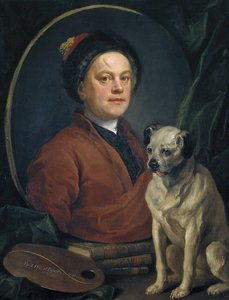
William Hogarth’s Self-Portrait, painted in 1757, offers a captivating window into the life and artistic practice of one of Britain’s most significant artists. This oil on canvas (45 x 42 cm) exemplifies Classicism while revealing Hogarth's unique personality and dedication to his craft. More than just a likeness, it is a statement about an artist’s role in society and their commitment to observation and skill.
Hogarth was celebrated for his self-portraits, often depicting himself actively engaged in artistic endeavors. In this particular work, he portrays himself seated comfortably on a chair, his hands firmly holding a brush and palette. His focused gaze is directed towards the canvas before him, where he appears to be working on a drawing or painting. The attire suggests an artist at work, reinforcing the subject’s identity as Hogarth himself. The composition skillfully highlights the artist's dedication; it centers around his figure and his creative process. A subtle presence in the background adds depth to the scene, potentially representing another observer or simply part of Hogarth’s artistic environment. The use of light and shadow defines forms and creates a sense of realism, characteristic of the period.
During the 18th century, self-portraits held considerable significance beyond mere representation. They served as demonstrations of an artist’s skill, artistic prowess, and even social standing. Hogarth's Self-Portrait aligns perfectly with this tradition, showcasing his ability to blend realism with classical elements—a hallmark of the Classicism movement prevalent at the time. The painting reflects a growing emphasis on individual expression and the importance of documenting one’s own likeness within the artistic community.
This Self-Portrait is significant not only for its depiction of Hogarth but also for its contribution to Western art history. The Renaissance and Baroque periods witnessed a surge in self-portraiture as artists sought to express their individuality and artistic vision. Hogarth’s work continues this trend, reflecting his unique perspective within the Classicism movement. The unfinished sketch on the easel symbolizes ongoing creative exploration and the process of bringing an idea to life. It suggests that art is not merely a finished product but a continuous journey of observation, experimentation, and refinement. The carefully rendered details—the brush, palette, and clothing—speak to Hogarth’s mastery of oil painting techniques.
Today, William Hogarth's Self-Portrait remains a celebrated piece in the history of art. It stands as a testament to enduring artistic techniques and the importance of self-expression. For those interested in exploring more works by Hogarth or similar artists, consider examining his other portraits and series, which offer further insights into his unique perspective and satirical commentary on 18th-century society.
1697 - 1764 , United Kingdom


Stay updated with the latest art news, exclusive offers, and decoration ideas.
Tell us about your project and our art experts will provide you with 3 personalized art suggestions.
Let Us Curate 3 Options Just for You - Free!


 Preview
 Send
Send Share
Share
 Details

 Download
 Similars
 X-Ray
X-Ray Diaporama
 Read More