The Enduring Legacy of Still Life: A Historical Foundation
A still life (pl.: still lifes) is a work of art depicting mostly inanimate subject matter, typically commonplace objects which are either natural (food, flowers, dead animals, plants, rocks, shells, etc.) or human-made (drinking glasses, books, vase...
From the ancient Roman frescoes depicting luscious fruits to the meticulously rendered game birds adorning Renaissance tables, the impulse to capture the beauty and transience of inanimate objects has resonated throughout art history. More than mere depictions of things, still life – or stilleven as it came to be known in Dutch – represents a profound engagement with materiality, symbolism, and the very nature of perception. Its origins are deeply intertwined with funerary practices; early examples served to provide sustenance for the deceased in the afterlife, evolving over centuries into explorations of wealth, abundance, and ultimately, mortality. The genre’s quiet power lies not in grand narratives but in its ability to distill meaning from the everyday, transforming humble objects into eloquent statements about life, death, and the human condition. This early fascination with representing the tangible world laid the groundwork for the blossoming of still life as a distinct artistic category during the 16th and 17th centuries.
Dutch Masters & The Golden Age of Still Life – Symbolism & Technique
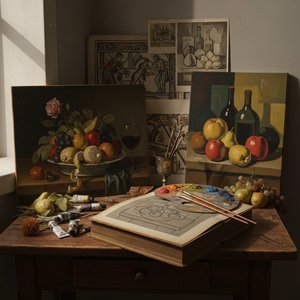 Silent Narratives: Exploring the Enduring Appeal of Still Life Painting Across Centuries
Explore the rich history of still life painting with BuyPopArt. Discover Dutch Masters, decode vanitas symbolism & learn about collecting timeless art. Expert insights and museum-quality reproductions.
The 17th-century Dutch Republic witnessed an unprecedented flourishing of still life painting, driven by a burgeoning merchant class eager to display their prosperity and refined tastes. Artists like Willem Claesz Heda and Pieter Claesz specialized in “breakfast pieces” – meticulously arranged displays of bread, cheese, wine, and pewter, often imbued with subtle moralizing messages. A half-peeled lemon might symbolize decay, while an overturned goblet could allude to the fleeting nature of earthly pleasures. These weren’t simply attractive compositions; they were visual vanitas symbols—reminders of the inevitability of death and the importance of spiritual contemplation. The technical mastery displayed by these artists is breathtaking. They achieved a remarkable realism through precise observation, masterful use of light and shadow (chiaroscuro), and an uncanny ability to render textures – the sheen of silver, the roughness of bread crusts, the delicate translucence of glass. This period also saw the rise of specialized subgenres: flower paintings, often featuring exotic blooms imported at great expense, and depictions of elaborate banquets showcasing culinary artistry.
American Still Life Painting: Roesen, Peto & National Identity
 Severin Roesen: Evoking National Identity Through American Still Life Painting
Explore the captivating world of Severin Roesen, a major American still life painter influenced by Dutch masters. Discover his lush compositions and the symbolism within his art – a window into 19th-century America.
While deeply influenced by Dutch traditions, American still life painting developed its own distinct character in the 19th century. Severin Roesen emerged as a major figure, creating lush, vibrant compositions that celebrated the bounty of the American landscape and the nation’s growing agricultural prosperity. His paintings are characterized by their abundance – overflowing fruit baskets, gleaming glassware, and meticulously arranged tablescapes—often reflecting a sense of optimism and national pride. John Frederick Peto, another prominent American still life artist, brought a different sensibility to the genre. Known for his trompe l'oeil works, Peto created paintings that were astonishingly realistic, often depicting everyday objects like lunch boxes, books, and pipes with such precision that they seemed to leap off the canvas. His work evokes a sense of quiet contemplation and nostalgia, capturing the simplicity and dignity of American life. Both Roesen and Peto utilized symbolism, but their focus shifted towards representing uniquely American experiences and values.
Modernist Transformations: From Realism to Abstraction in the 20th Century
 Still Life with Muffins, (painting)
Alfred Henry Maurer’s "Still Life with Muffins" (1930) – a captivating modernist still life. Explore this unique American painting's cubist & fauvist style. Hand-painted reproduction available.
The 20th century witnessed a radical departure from traditional still life painting as artists began to explore abstraction and subjective expression. Cubism, with its fragmented forms and multiple perspectives, fundamentally altered the way objects were represented. Artists like Pablo Picasso and Georges Braque deconstructed still life subjects, analyzing them from various angles and reassembling them in dynamic compositions. Fauvism, characterized by bold colors and expressive brushwork, further challenged conventional notions of realism. Alfred Henry Maurer’s “Still Life with Muffins” (1930) exemplifies this modernist sensibility – a captivating composition that embraces cubist and fauvist styles, prioritizing color and form over precise representation. This period also saw the rise of Surrealism, which incorporated dreamlike imagery and unexpected juxtapositions into still life compositions, exploring the subconscious mind and challenging viewers’ perceptions of reality. The focus shifted from depicting objects themselves to exploring their emotional resonance and symbolic potential.
Curating for Your Villa: Selecting Art That Reflects Your Style
When curating art for a villa – a space often associated with elegance, refinement, and personal expression – it’s essential to consider the overall aesthetic and create a harmonious atmosphere. A carefully chosen still life can serve as a focal point in a dining room or library, adding warmth, sophistication, and intellectual depth. Consider the color palette of your interior; a vibrant floral painting by Duncan Grant might complement a light-filled breakfast nook, while a more subdued Dutch master could enhance the gravitas of a formal study. Think about the symbolism you wish to convey – abundance, tranquility, or contemplation—and select artworks that resonate with your personal values and lifestyle. Don’t be afraid to mix styles; a contemporary abstract still life can create an intriguing contrast alongside traditional works. The key is to create a cohesive collection that reflects your unique taste and enhances the beauty of your space.
The Art of Reproduction: Bringing Masterpieces into Your Home with BuyPopArt.com
Acquiring original masterpieces can be prohibitively expensive, but thankfully, high-quality reproductions offer an accessible way to enjoy the beauty and inspiration of art history. BuyPopArt.com specializes in museum-quality reproductions created by skilled artists who meticulously recreate the details and nuances of iconic paintings. Whether you desire a hand-painted oil reproduction on canvas or a vibrant giclée print, we offer a range of customization options to suit your preferences – size, framing, and even personalized adjustments. Our commitment to quality ensures that each piece is faithful to the original while adding a touch of elegance to your home. We believe that art should be accessible to everyone, and our reproductions allow you to transform your villa into a personal gallery, filled with works that inspire, delight, and enrich your life. Explore our extensive collection today and discover the perfect pieces to elevate your entertaining spaces.