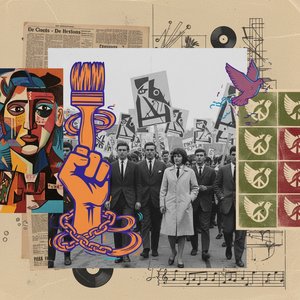
The Rise of Social Realism: Documenting Post-War Disquiet
 Echoes of Society: Exploring Social Realism's Enduring Legacy in Art
Explore the powerful world of Social Realism art! Discover key artists, masterpieces & its profound social commentary. Expert insights into this influential movement's history and enduring legacy.
The aftermath of World War II left a profound scar on the collective psyche, a sense of disillusionment that permeated art and society alike. While Abstract Expressionism sought to explore inner emotional landscapes, another current began to emerge – Social Realism. This wasn’t merely a stylistic choice; it was a deliberate turning *towards* reality, but not in celebration. Artists felt compelled to depict the hardships endured by ordinary people, the economic anxieties of rebuilding nations, and the often-unseen consequences of conflict. It represented a rejection of escapism, a commitment to bearing witness. Think of artists like Käthe Kollwitz, whose powerfully emotive prints and drawings chronicled the suffering of war and poverty with unflinching honesty – her work served as a precursor to the broader movement that would gain momentum in the decades following 1945. The focus wasn’t on individual heroism or grand narratives, but on the collective experience of struggle, often portraying laborers, marginalized communities, and the quiet dignity found amidst adversity. This commitment to representing the “real” world, however bleak, resonated deeply with a public grappling with its own uncertainties.
Neue Sachlichkeit's Unflinching Gaze: A German Response to Societal Turmoil
 Neue Sachlichkeit: Objectivity, Realism & Social Commentary in Interwar German Art
Explore Neue Sachlichkeit – the pivotal German art movement critiquing Weimar society with unflinching realism. Discover key artists like Dix & Grosz, its historical context, and collecting insights for discerning investors.
Emerging in Germany during the Weimar Republic, Neue Sachlichkeit – New Objectivity – offered a particularly stark and critical response to societal upheaval. Unlike the romanticized depictions of war prevalent before it, Neue Sachlichkeit artists like Otto Dix and George Grosz presented a brutally honest portrayal of post-war German life. Their paintings weren’t about glorifying sacrifice; they were scathing indictments of corruption, moral decay, and the psychological trauma inflicted by conflict. Dix's series *The War* is perhaps the most iconic example – a harrowing sequence of images depicting the horrors of trench warfare with visceral detail and unflinching realism. Grosz similarly used satire and caricature to expose the hypocrisy and decadence of the bourgeois class. The technique was deliberately cold and precise, eschewing emotional expression in favor of objective observation. This wasn’t about beauty or idealism; it was about confronting uncomfortable truths, forcing viewers to acknowledge the dark underbelly of their society. The movement's influence extended beyond painting, impacting photography and graphic design, all united by a shared desire for clarity and directness.
Pop Art’s Embrace of Mass Culture: Irony, Critique, and the Everyday
Pop art, emerging in the 1950s, draws inspiration from popular culture, as a revolt against traditional art, and is popular, transient, and mass-produced.
By the mid-20th century, a new force was reshaping Western culture: mass media. Advertising, comic books, and consumer products were becoming increasingly ubiquitous, permeating every aspect of daily life. Pop Art, born in both Britain and the United States, responded to this shift with an audacious embrace of these previously “lowbrow” subjects. Artists like Andy Warhol challenged traditional notions of art by elevating everyday objects – Campbell’s Soup cans, Coca-Cola bottles, celebrity portraits – to the level of high art. Warhol's silkscreen prints weren’t simply reproductions; they were commentaries on consumerism, fame, and the blurring lines between art and commerce. Roy Lichtenstein appropriated imagery from comic strips, meticulously recreating Ben-Day dots and bold colors to question originality and authorship. The movement wasn’t necessarily a celebration of mass culture, but rather a complex engagement with it – often employing irony and satire to critique its superficiality and pervasive influence. Pop Art reflected a society saturated with images, questioning the very definition of art in an age of mechanical reproduction.
Countercultural Currents & Artistic Rebellion: Challenging the Status Quo
A counterculture is a culture whose values and norms of behavior are opposed to those of the current mainstream society, and sometimes diametrically opposed to mainstream cultural mores. A countercultural movement expresses the ethos and aspirations ...
The 1960s witnessed a seismic shift in social and political values. The Civil Rights Movement, anti-war protests, and the rise of feminism challenged established norms and sparked a wave of countercultural rebellion. This spirit of dissent found expression in art that rejected traditional forms and embraced experimentation. Artists began to question authority, explore alternative lifestyles, and challenge conventional notions of beauty and morality. The Beat Generation, with figures like Allen Ginsberg, paved the way for this artistic upheaval, rejecting materialism and embracing spontaneity and personal liberation. Alex Katz’s portraits, while seemingly straightforward in their realism, captured a sense of cool detachment and individual identity that resonated with the countercultural ethos. This period saw an explosion of diverse artistic practices – from psychedelic posters to performance art – all united by a shared desire for social change and self-expression. The boundaries between art and life became increasingly blurred as artists sought to create work that was directly engaged with the political and cultural issues of their time.
Portraits of a Generation: Capturing Identity in a Time of Change
 Marlon Brando
Discover the striking 1966 monochrome photograph of Marlon Brando on a motorcycle, capturing rebellious youth, raw emotion, and gritty realism. Perfect for art collectors seeking iconic, high-contrast street photography.
Amidst these broader movements, portraiture underwent a significant transformation. Artists moved beyond traditional representations of power and status, seeking instead to capture the complexities of individual identity in a rapidly changing world. Marlon Brando, as depicted by Andy Warhol in 1966, became an icon of rebellious youth and raw emotion. The monochrome photograph captured not just his physical likeness but also a sense of defiance and vulnerability. These portraits weren’t simply about documenting appearance; they were about exploring the psychological states of individuals grappling with societal pressures and personal anxieties. Artists experimented with new techniques – from silkscreen printing to bold color palettes – to convey a sense of immediacy and authenticity. The focus shifted from idealized representations to more honest and nuanced portrayals of human experience, reflecting the growing emphasis on individuality and self-expression.
Collecting 1960s Art: Navigating Movements and Investing in Legacy
Today, art from the 1960s represents a significant investment opportunity for discerning collectors. Works by artists associated with Social Realism, Neue Sachlichkeit, Pop Art, and the counterculture movement continue to appreciate in value as their historical significance becomes increasingly recognized. When building a collection, it’s crucial to understand the nuances of each movement – the key artists, stylistic characteristics, and underlying themes. Andy Warhol's silkscreens remain highly sought after, but exploring lesser-known figures within Pop Art can also yield rewarding discoveries. Similarly, works by Otto Dix and George Grosz offer a powerful glimpse into a turbulent period of German history. Consider the provenance of each piece – its exhibition history, previous ownership, and condition – as these factors significantly impact value. At BuyPopArt.com, we specialize in handmade oil paintings and museum-quality prints, offering a curated selection of 1960s art to suit every taste and budget. Our team of experts can provide personalized guidance on building your collection, ensuring you acquire pieces that are both aesthetically pleasing and historically significant.