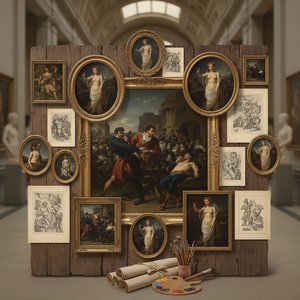
Hendrick de Fromantiou: A Master of Trompe l'oeil and Royal Patronage
Hendrik de Fromantiou (1633 – after 1693) stands as a pivotal figure in Dutch Baroque painting, celebrated primarily for his innovative use of trompe l’œil—a technique that brilliantly deceived the eye—and his influential role advising Frederick William III, Elector of Brandenburg. Born in Maastricht, Netherlands, Fromantiou's artistic journey unfolded against the backdrop of Amsterdam’s burgeoning art market and solidified his reputation in The Hague during the latter half of the 17th century.
- Early Years & Training: Fromantiou began honing his craft under Gerrit van Uylenburgh, a prominent Amsterdam dealer known for showcasing Italian masterpieces. This formative experience instilled in him an appreciation for classical aesthetics and meticulous observation—skills that would become hallmarks of his distinctive style.
- Amsterdam Period (1658-1670): During this period, Fromantiou’s canvases graced the homes of wealthy patrons and gained recognition within artistic circles. His works often depicted opulent interiors adorned with richly textured fabrics and gleaming glassware, reflecting the grandeur of the era.
- The Brandenburg Commission & The Forgery Scandal: Fromantiou's career took a dramatic turn when Frederick William III entrusted him with overseeing the royal collection in Potsdam. Recognizing that Van Uylenburgh had misrepresented several paintings as originals—a practice rife with deception—Fromantiou bravely challenged the accepted artistic dogma of his time, advocating for a return assessment based on scientific scrutiny. This courageous stance cemented his legacy as an advocate for authenticity and intellectual honesty within the art world.
- Marriage & Potsdam Legacy: He married Elisabeth van Voorsthuysen, daughter of Philip Wouwerman, another influential painter, establishing a family rooted in artistic tradition. Fromantiou continued to reside in Potsdam until his death, leaving behind a substantial body of work that continues to captivate viewers with its masterful illusionistic effects and nuanced depictions of still life subjects—particularly fruit and glass.
- Notable Works & Style: Fromantiou’s oeuvre is characterized by an unparalleled command of trompe l'œil, where he seamlessly integrated painted elements into the architectural space, creating astonishingly realistic illusions. His paintings exemplify the Baroque fascination with materiality and sensory experience, capturing the shimmering beauty of polished surfaces and the vibrant colors of fruit—a testament to his artistic vision and enduring influence on subsequent generations of painters.
His contribution extends beyond individual artworks; Fromantiou’s insistence on rigorous verification methods fundamentally reshaped perceptions of art history. Today, his legacy persists in museums across Europe, where visitors marvel at the breathtaking realism achieved through his innovative technique—a reminder that artistic integrity and intellectual curiosity can transform our understanding of the past.